Use Cycle-and-Soak Irrigation to Reduce Runoff
Runoff Means Water Is Arriving Too Fast
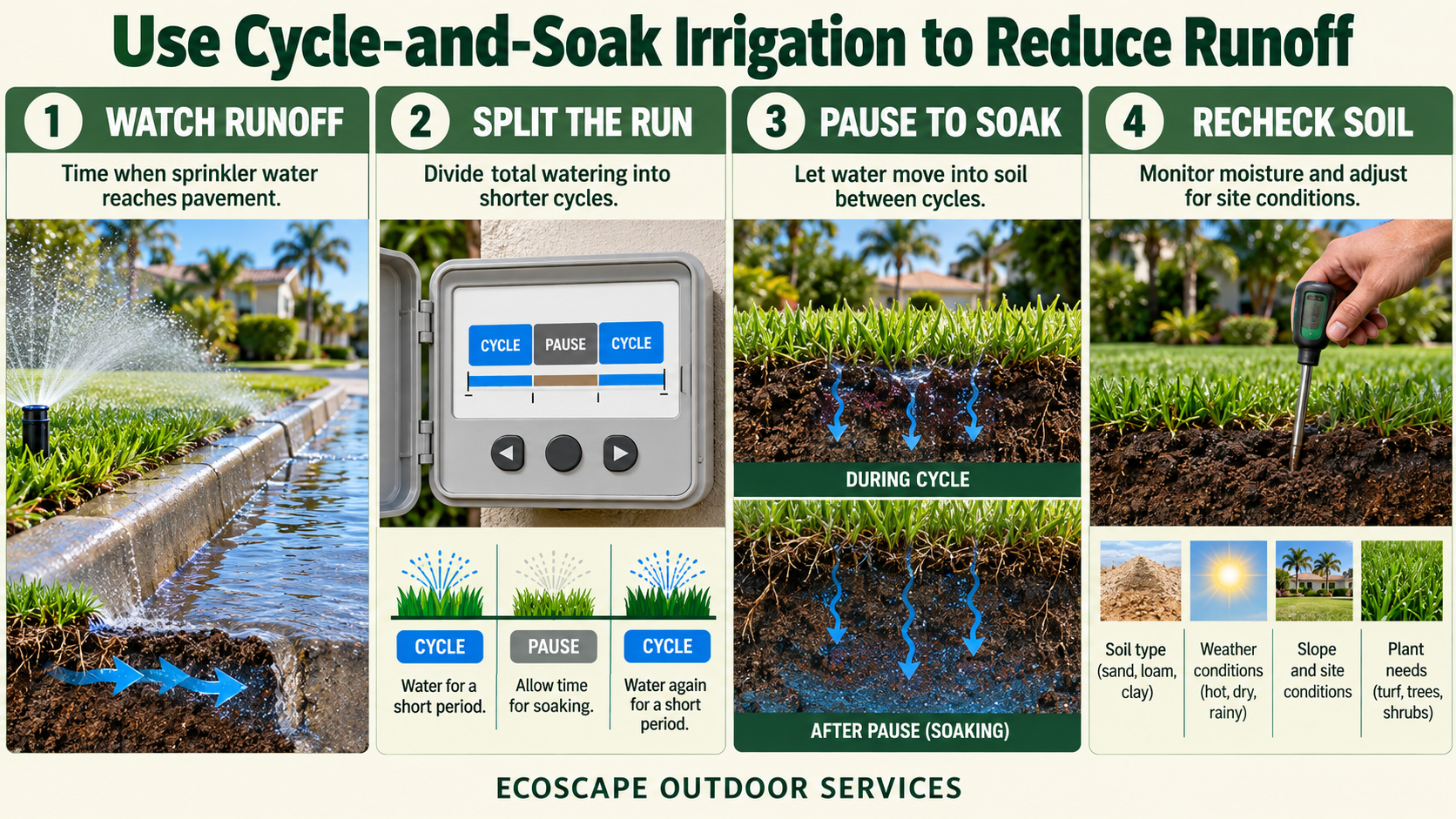
A sprinkler zone can apply the correct total amount of water and still waste much of it when the soil cannot absorb the full run time at once. Slopes, compacted turf, heavy soil pockets, thatch, and intense spray rates allow water to move toward sidewalks and drains. Cycle-and-soak scheduling divides one watering event into shorter cycles separated by rest periods. The pause gives water time to move into the root zone before the next cycle begins.
Find the Runoff Point
Run one zone while watching the lawn, bed edges, driveway, and lowest part of the property. Record how many minutes pass before water begins moving across the surface. Repeat the observation in several seasons because dry soil, saturated soil, plant growth, and sprinkler condition change the result. If runoff starts after six minutes, a continuous fifteen-minute schedule wastes water. The exact timing belongs to the site, not a generic controller setting.
Split the Total Run Time
Divide the required run time into two or three shorter cycles. For example, replace one long run with three brief runs that add up to the same total. Insert enough soak time between cycles for the surface water to disappear. Program all zones carefully so the controller rotates through them without exceeding permitted watering windows. Confirm the controller supports multiple start times or cycle-and-soak features before changing the schedule.
Correct Hardware Problems First
Scheduling cannot fix a broken head, mismatched nozzle, low pressure, or spray aimed at pavement. Inspect each zone for leaks, misting, blocked patterns, sunken heads, and mixed equipment. Match precipitation rates within the zone whenever possible. Move or adjust heads that water walls and walkways. Perform a catch-cup test to compare output. Once coverage is even, use cycle-and-soak timing to address the soil’s absorption limit rather than masking mechanical waste.
Match the Season and Surface
Florida summer rain can eliminate the need for scheduled watering, while dry spring weather increases demand. Use a working rain sensor and check soil moisture before running the system. Turf, shrub beds, rotors, sprays, and drip zones need different scheduling. A steep lawn may require shorter cycles than a flat bed. Stay within current local watering rules. Cycle-and-soak improves absorption, but it does not justify watering when rainfall already supplied enough moisture.
Avoid Excessive Cycling
Do not create so many short cycles that water remains only on the blades and never reaches roots. Watch actual infiltration and verify moisture below the surface. Avoid scheduling cycles so close together that no soaking occurs. Do not increase the total run time automatically when splitting the program. Keep written records of the old and new settings. Recheck after controller updates, power loss, daylight changes, or service visits because saved programs can change unexpectedly.
Review the Results
Inspect the property during the next two watering days. Look for reduced pavement flow, even turf response, and moisture reaching the root zone. Ecoscape Outdoor Services evaluates South Tampa irrigation coverage, controller programming, rain sensors, sprinkler alignment, and drainage together. We build schedules around the property’s equipment and soil response. A measured cycle-and-soak program protects water, keeps nutrients and soil on the property, and delivers more of each irrigation minute to the plants.