Use Pressure-Regulated Spray Bodies to Reduce Irrigation Misting
What Irrigation Misting Looks Like
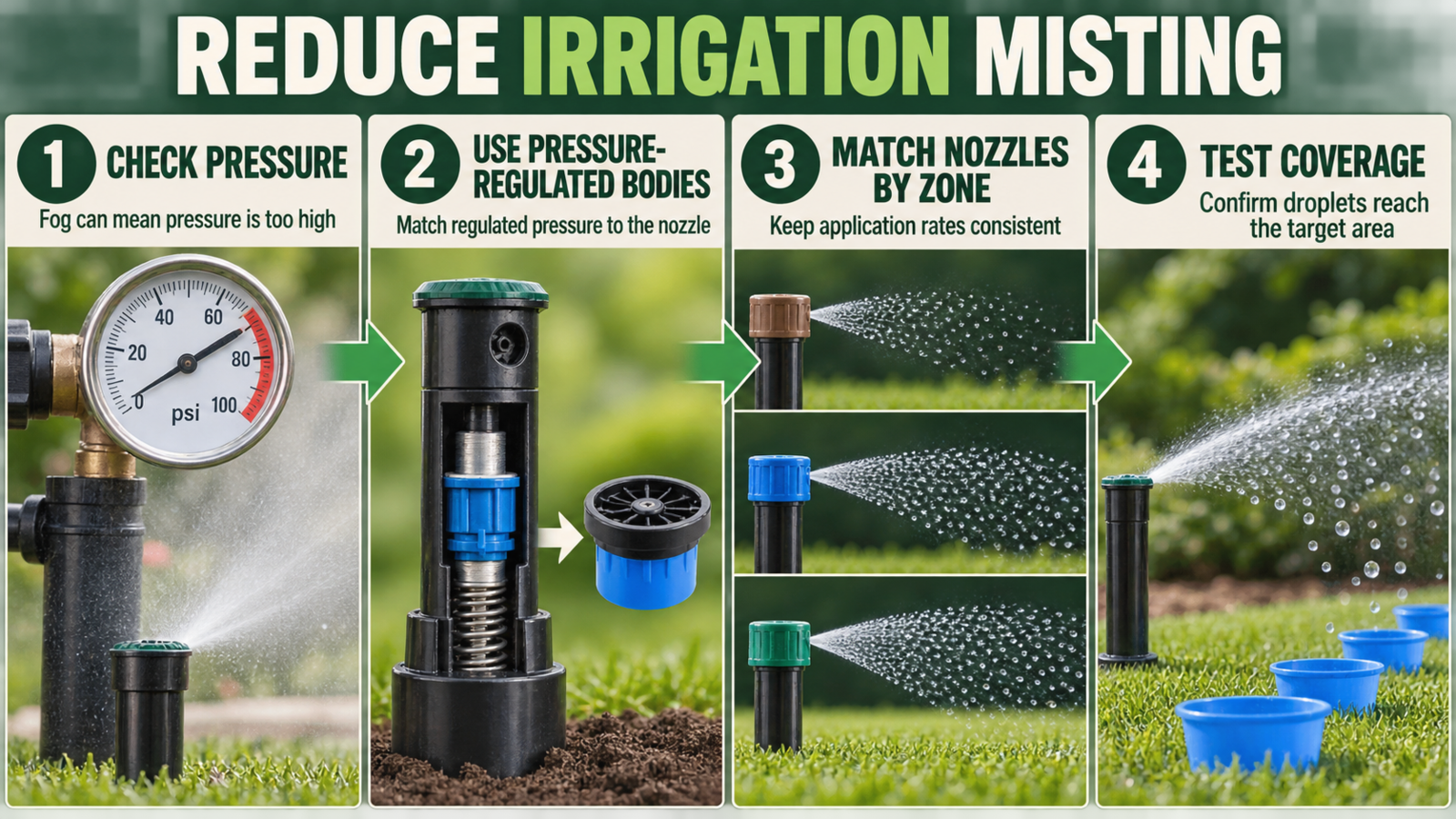
A properly operating spray zone should produce visible droplets that travel to the intended turf or planting bed. When water leaves the nozzles as a fine fog, excessive pressure may be breaking the stream into particles that drift before reaching the soil. On a breezy Florida morning, that mist can move onto pavement, walls, or neighboring areas. The system may look powerful while delivering uneven moisture. Dry patches, wet sidewalks, and a hazy cloud above several heads are useful clues that the zone needs evaluation.
Why High Pressure Reduces Control
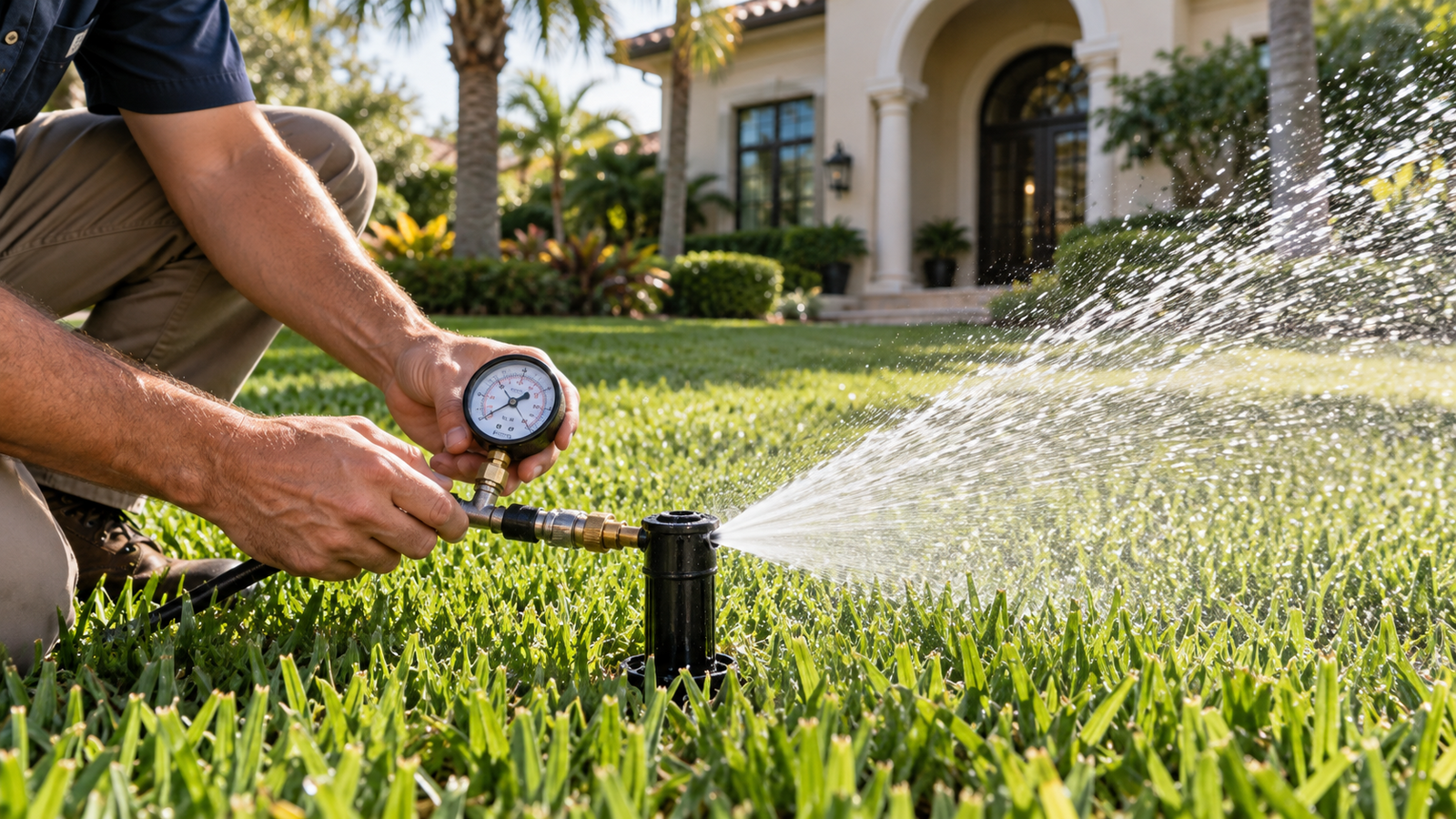
Spray nozzles are designed to operate within a pressure range. Pressure above that range can distort the pattern, increase atomization, and shorten effective throw. Extending run time does not correct the distribution problem. It may only waste more water where the spray already lands. Pressure can vary between zones and even between heads because of elevation, pipe sizing, mixed components, or municipal supply changes. A gauge reading at the operating head is more useful than guessing from appearance alone.
How Regulated Spray Bodies Help
A pressure-regulated spray body contains an internal regulator that limits pressure at the nozzle while the zone is running. The result can be larger droplets, a more stable pattern, and less drift when the nozzle and body are correctly matched. Regulation at each head is especially helpful when supply pressure exceeds the nozzle specification or varies across a zone. It is not a cure for every irrigation problem. Broken pipes, clogged screens, poor spacing, undersized valves, and mixed spray and rotor heads still require separate correction.
Test Before Replacing Components
Run one zone at a time and note which heads mist, fail to rise fully, or overspray hard surfaces. Check for leaks around stems and unusually wet soil that could indicate a damaged fitting. An irrigation pressure gauge and the nozzle manufacturer's specifications help confirm whether high pressure is present. Record the existing body and nozzle models before choosing replacements. Do not assume every head needs the same part. Florida landscapes often contain additions from several repair cycles, so the zone should be mapped before work begins.
Match the Body, Nozzle, and Layout
Select a regulated body with an operating pressure appropriate for the installed nozzle. Keep precipitation rates compatible within each zone, and use matched nozzles where the design calls for them. Set arcs to water plants and turf rather than sidewalks, fences, or buildings. Heads should be level, retract completely, and sit near finished grade. After replacement, use catch cups or consistent containers to compare output across the area. Regulation improves control, but head-to-head coverage and sound zoning still determine whether the landscape receives uniform water.
Common Mistakes to Avoid
Do not install a smaller nozzle solely to hide high pressure, and do not partly close a valve unless the system design specifically requires that adjustment. Avoid combining spray heads, rotors, and drip components on one schedule when their application rates differ. Never judge performance during high wind, which can make a healthy system appear uneven. Finally, do not lengthen the schedule until puddles form. Florida's sandy soils may drain quickly, but runoff, overspray, and repeated shallow watering still waste water and can weaken roots.
When to Book an Irrigation Assessment
Recheck the zone during calm conditions, review coverage after mowing, and compare soil moisture in dry and wet areas. If several heads mist, pressure changes during operation, or the zone contains mismatched components, a complete assessment is more efficient than replacing parts at random. Ecoscape Outdoor Services can measure operating conditions, inspect coverage, identify failed components, and recommend pressure-regulated bodies where they fit the system. Book an Ecoscape irrigation appointment to correct persistent misting before it becomes a recurring water and lawn-health problem.