
Use Right Plant, Right Place to Reduce Landscape Maintenance
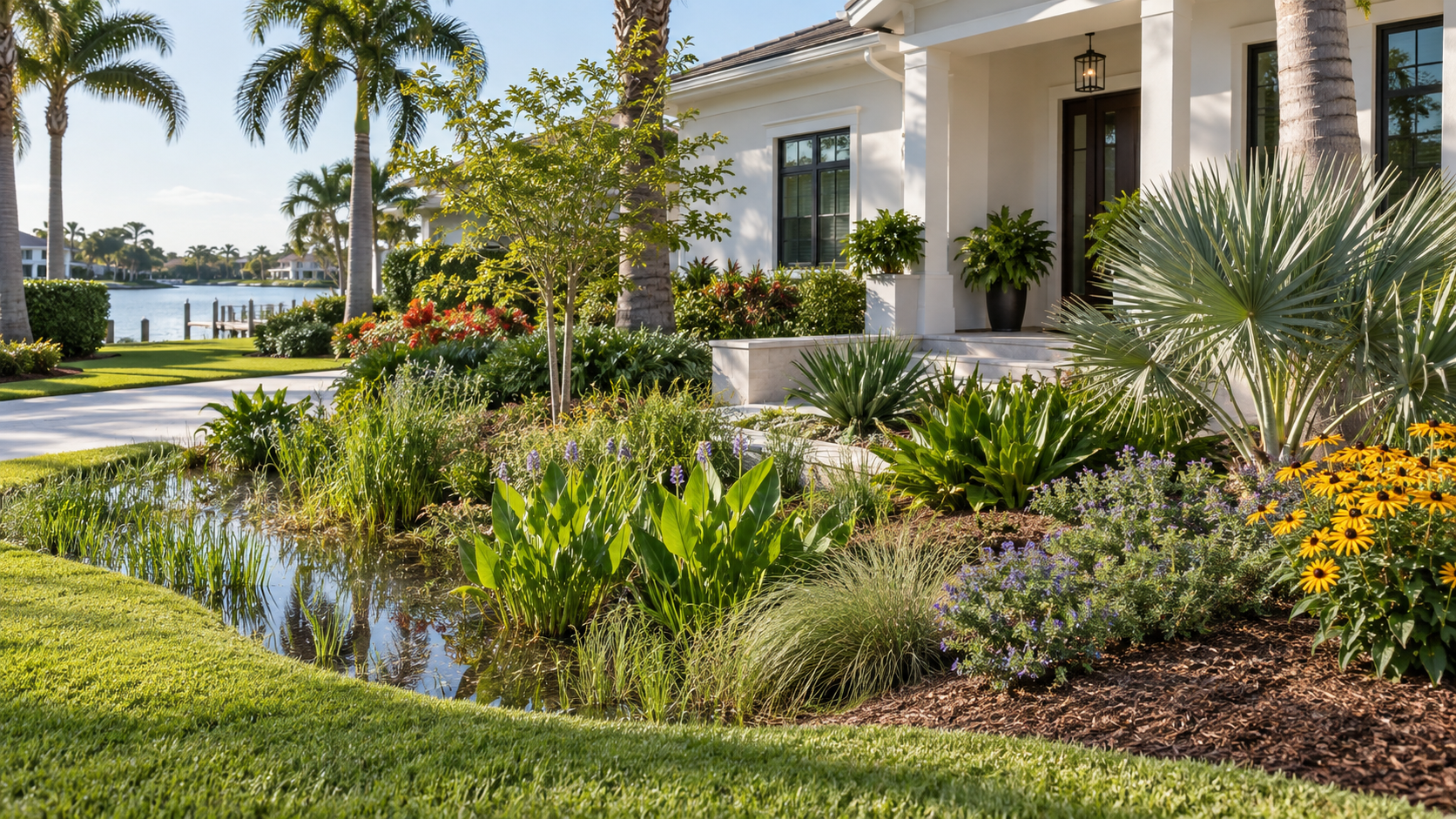
Start With the Site, Not the Plant List
A successful Florida landscape begins with the conditions already present on the property. Record how many hours of direct sun each bed receives, where water collects after rain, how quickly the soil dries, and where reflected heat comes from walls or pavement. South Tampa lots often contain several microclimates within a short distance. Choosing plants from appearance alone leads to repeated trimming, replacement, watering, and pest stress.
Match Sun, Soil, and Drainage
Use full-sun plants where they receive the light needed for strong growth. Place shade-tolerant material beneath tree canopies and on protected sides of the home. Test drainage before installing plants in a low bed. A simple observation after heavy rain often reveals more than dry-season appearance. Sandy soil drains quickly, while compacted construction soil can hold water. Choose species suited to the real root-zone conditions instead of trying to force every bed to behave the same way.
Plan for Mature Size
Read the expected mature height and width, then measure the available space. Leave clearance from windows, walkways, air-conditioning equipment, meters, foundations, and roof edges. A shrub planted too close to the house requires constant shearing and often becomes woody inside. Small nursery plants can fill a bed faster than expected during Florida’s long growing season. Proper spacing looks open at first but produces healthier plants and lower labor over time.
Group Plants by Water Needs
Place plants with similar moisture needs on the same irrigation zone whenever possible. Drought-tolerant shrubs struggle when watered like thirsty annuals. Moisture-loving plants fail on a hot, dry slope. Hydrozoning reduces runoff, root disease, and wasted water while making controller settings easier to manage. Keep turf spray out of mulched shrub beds when separate drip or low-volume irrigation serves the plants more accurately.
Account for Salt, Wind, and Heat
Properties near Tampa Bay face salt spray, coastal wind, and intense reflected heat. Select salt-tolerant material for exposed locations and give newly installed plants extra establishment care. Avoid tender foliage beside hot south- or west-facing walls. Use layered planting where wind protection helps smaller plants, but leave airflow around structures and dense shrubs. Match the plant to the exposure rather than relying on frequent replacement after each stressful season.
Avoid the Common Design Mistakes
Do not buy one of every attractive plant and scatter them through the yard. Repeated groups create a cleaner design and simpler care. Avoid placing aggressive roots in narrow spaces or tall plants beneath eaves. Do not use heavy pruning to keep an oversized species permanently small. Most maintenance problems trace back to poor placement, wrong water conditions, or inadequate space. Correcting the design removes the cause instead of repeating the same labor.
Build a Landscape That Works
Review performance after one wet season and one dry season. Move or replace plants that continually struggle before they affect the entire bed. Ecoscape Outdoor Services designs and installs South Tampa landscapes around sun, drainage, mature size, irrigation, and coastal exposure. Our goal is a polished property that remains practical to maintain. Right plant, right place protects your investment and gives every material a better opportunity to perform.
