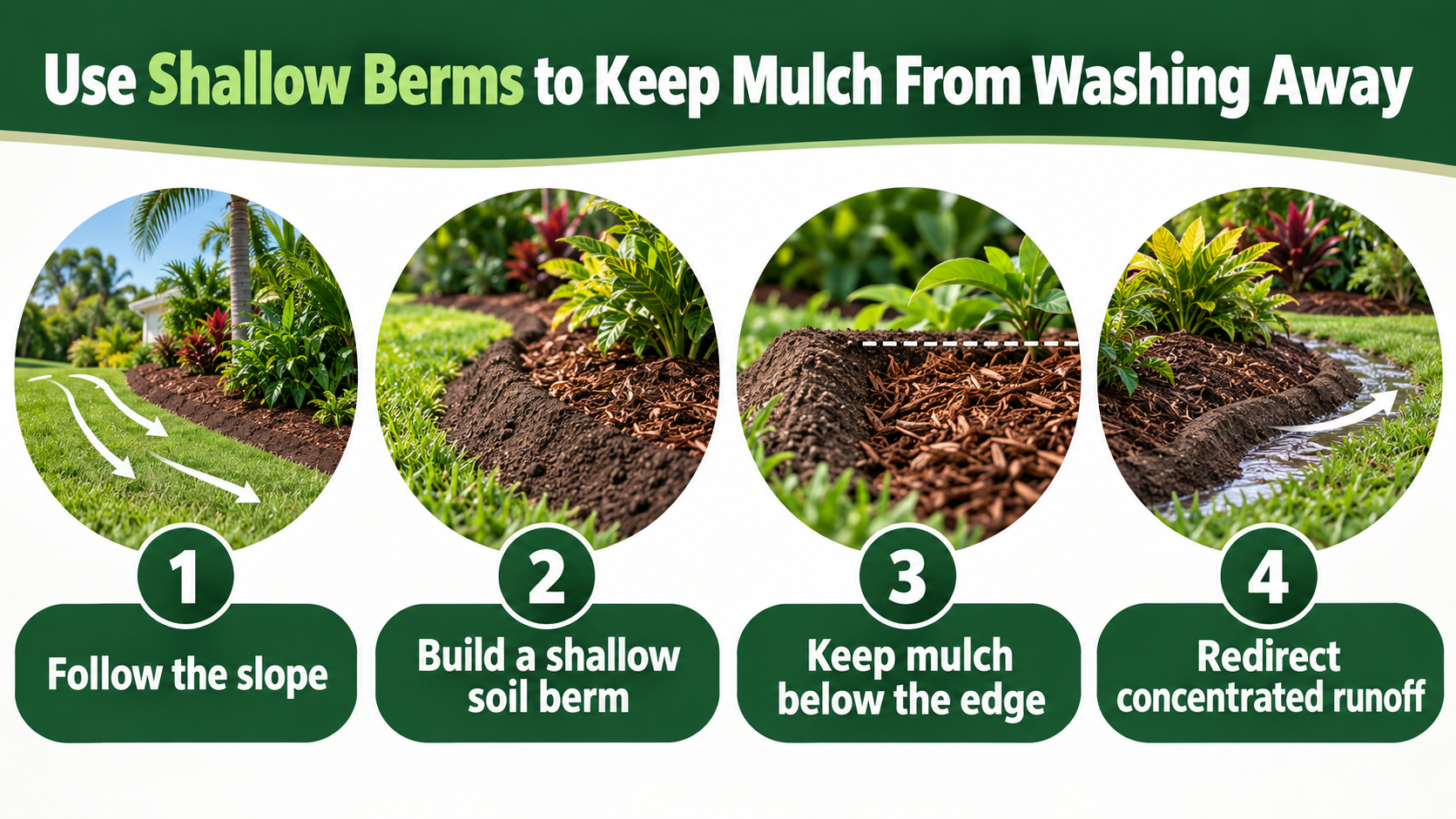
Use Shallow Berms to Keep Mulch From Washing Away
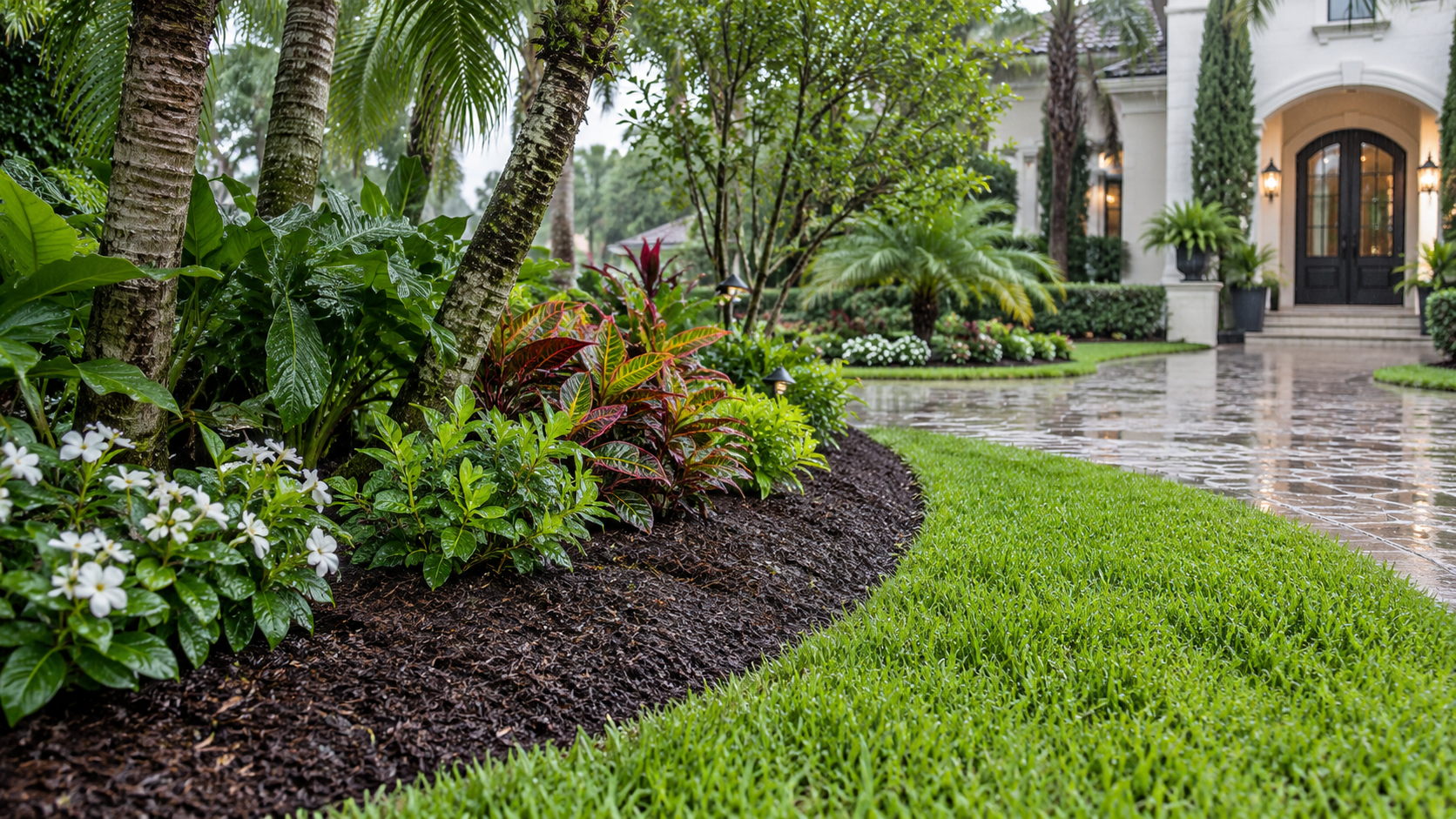
Follow the Water Before Moving Mulch
Mulch rarely leaves a bed without a reason. Concentrated roof water, irrigation overspray, steep grades, smooth compacted soil, and overflowing gutters create channels. Watch the bed during steady rain and mark where water enters, speeds up, and exits. Replacing mulch without correcting the flow produces the same cleanup after the next South Tampa thunderstorm.
Shape a Broad Shallow Berm
A berm is a gently raised area of soil placed across or beside the flow path. Keep it broad and low so it slows water instead of creating a wall. Blend the ends into the existing grade. Avoid piling soil against trunks, stems, stucco, fences, or drainage openings. The berm should guide water toward a safe, stable area where it spreads out.
Preserve Positive Drainage
Never use a berm to trap water beside the house. Finished grade should continue directing water away from the foundation. Check door thresholds, stucco weep screeds, air-conditioning pads, and crawlspace vents before adding soil. Leave inspection space around the structure. If water has no safe outlet, a drainage assessment matters more than adding another layer of mulch.
Set the Mulch Below the Edge
Mulch placed level with or above pavement washes onto the hard surface easily. Lower the soil and mulch slightly below the edge while preserving plant root depth. Maintain a two-to-three-inch layer in most ornamental beds and keep it away from trunks and crowns. Deep mulch absorbs water at first, then becomes heavy and shifts when concentrated runoff crosses the surface.
Break Up Long Flow Paths
Large sloped beds benefit from subtle contouring, plant roots, and small changes in surface texture. Arrange shallow berms to interrupt long downhill runs without creating isolated wet pockets. Groundcovers may help hold soil where light and plant selection fit. Stone placed at concentrated entry points spreads energy, but loose rock should not create a new projectile or maintenance problem.
Inspect After the First Storm
The first heavy rain tests the design. Look for new channels, exposed soil, buried plants, and water moving toward the building. Adjust small areas while the pattern is visible. Remove mulch from storm drains and sidewalks promptly. A successful berm slows and spreads water while leaving the bed drained, the edge clean, and the plants at their correct depth.
Design the Bed Around Real Rainfall
Ecoscape Outdoor Services shapes South Tampa beds with drainage, maintenance, and appearance in mind. Florida rain exposes grading problems quickly. Careful observation and modest soil shaping often solve washout more effectively than adhesives or repeated mulch replacement. The finished bed should remain attractive in dry weather and stable when the summer storms arrive.
Source: UF/IFAS Gardening Solutions