
Wait for Wet Grass to Dry Before Mowing
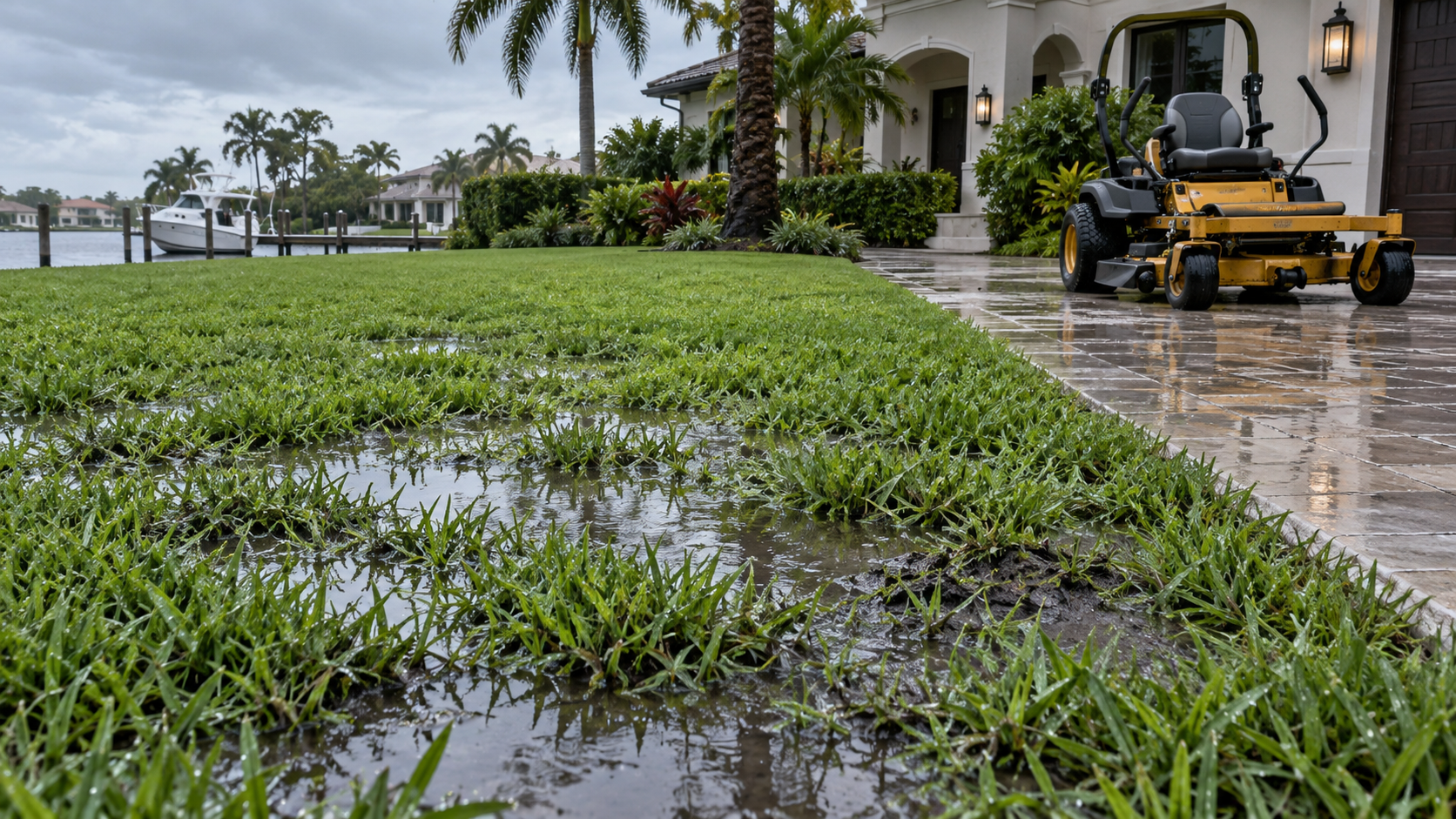
Why Wet Mowing Damages Turf
Cutting during rain or while soil remains saturated places the lawn under unnecessary stress. Heavy mower tires press into soft ground, create ruts, compact the root zone, and tear St. Augustine runners loose. Wet blades bend instead of standing upright, so the mower leaves an uneven finish. Waiting protects turf quality and prevents repairs that cost far more than a short service delay.
Check the Lawn Before Starting
Walk several areas before unloading equipment. Press a shoe into the soil and watch for water rising around the sole. Look for standing water, deep footprints, soft turns, or grass that stays flattened after you step away. Check shaded side yards separately because they dry slower. If the soil moves underfoot or clippings stick heavily to your shoes, postpone mowing.
Understand South Tampa Rain
Florida summer storms often drop intense rain on one neighborhood while nearby properties stay dry. A calendar alone does not determine readiness. Sandy soil drains quickly in some yards, while compacted fill, low areas, shade, and poor drainage hold moisture for hours or days. Inspect each property after the storm. Bright sun after rain does not mean the root zone has dried.
Avoid Common Wet-Weather Mistakes
Do not raise the deck and assume wet mowing becomes safe. Height does not prevent rutting or soil compaction. Avoid sharp zero-turn movements on soft turf because pivoting wheels strip grass rapidly. Never discharge wet clumps across sidewalks, streets, beds, or drains. Do not leave thick piles on the lawn, since they block sunlight, trap moisture, and contribute to disease pressure.
Resume Service the Right Way
Return when the surface feels firm and blades are mostly dry. Use sharp mower blades and make wide, gentle turns. If growth became excessive during the delay, follow the one-third rule and reduce height across more than one service rather than scalping the lawn. Change the mowing direction where practical, disperse clippings, and inspect all wheel paths before leaving.
Watch for Problems Afterward
Check the lawn two or three days after mowing. Brown wheel marks, torn runners, flattened patches, or persistent clumps signal the property was still too wet. Investigate recurring saturated areas for irrigation leaks, blocked drains, roof runoff, compacted soil, or incorrect grading. Record those areas for future rain delays. A consistent decision process protects both the turf and the property.
How Ecoscape Outdoor Services Helps
Ecoscape Outdoor Services evaluates soil moisture and turf conditions before servicing South Tampa properties. Our crews delay work when mowing would damage the lawn, then return when conditions support a clean result. We use careful turning, sharp-blade standards, detailed edging, clipping control, and post-service inspection. This approach protects your property while maintaining a dependable professional schedule.
