
Water Shrubs Where the Roots Actually Grow
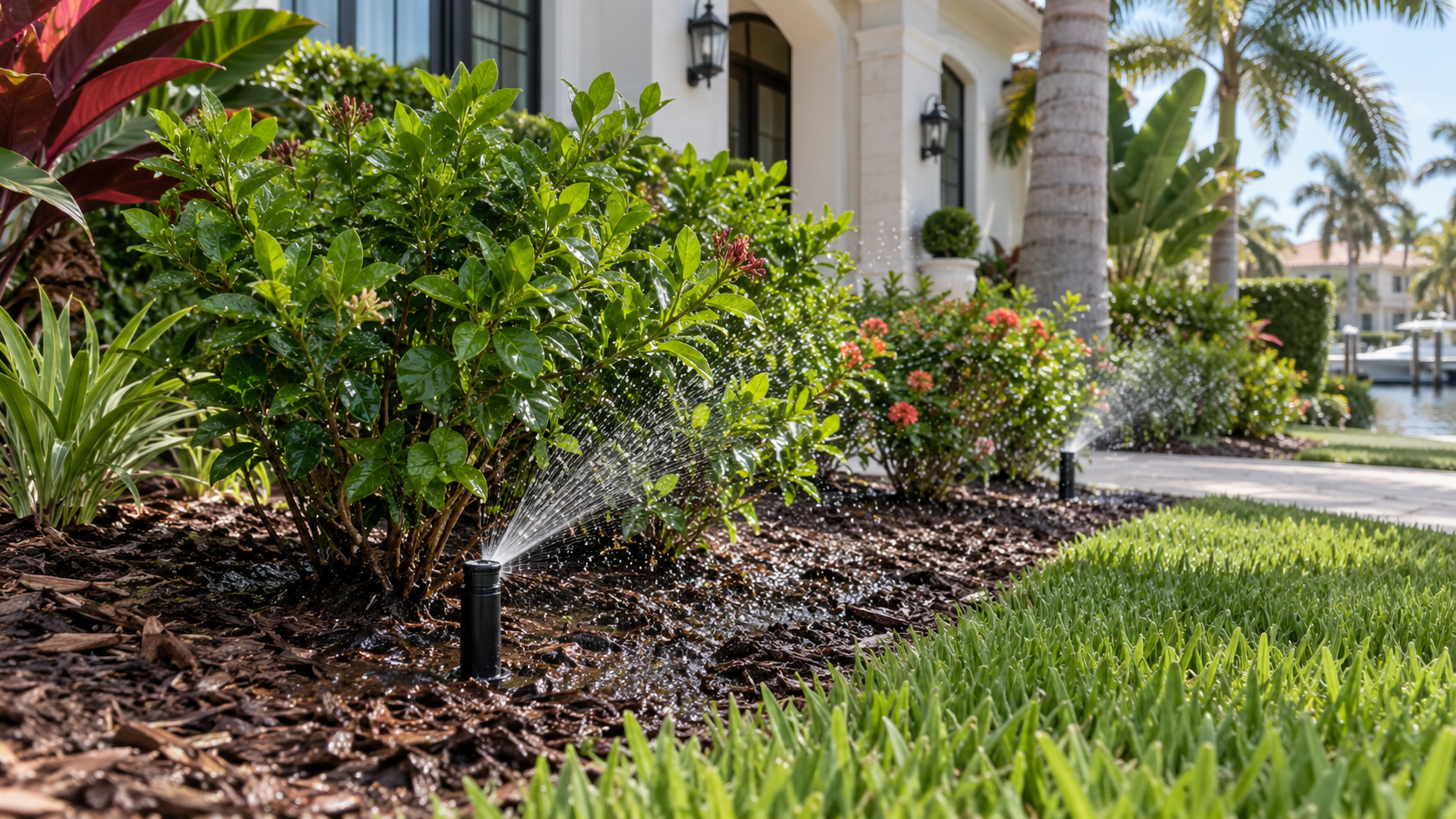
Target the Root Zone
Plants absorb most water through fine roots spread through the surrounding soil, not through the trunk or leaves. Apply irrigation across the active root zone beneath and slightly beyond the canopy. A stream aimed at one small spot near the stem leaves much of the root system dry and encourages shallow, uneven growth.
Check the Soil, Not the Clock
A controller schedule tells you how long a zone ran. It does not confirm the soil received enough water. Push a finger, screwdriver, or soil probe several inches into the bed after irrigation. The soil should feel evenly moist without becoming soupy. Repeat the check at several points because Florida sand dries differently near walls, pavement, and mature roots.
Match Water to Plant Age
New shrubs need frequent attention while roots establish outside the original container ball. Water the root ball and nearby soil so roots move outward. Established plants usually perform better with deeper, less frequent irrigation. Reduce frequency gradually rather than ending supplemental water suddenly. Rainfall, season, sun exposure, plant size, and soil condition should guide each adjustment.
Prevent Runoff and Overspray
Water applied faster than soil absorbs it runs onto walks, streets, walls, or turf. Split a long cycle into shorter soak periods when needed. Repair tilted heads, blocked nozzles, and pressure problems. Keep spray off windows and hardscape. A correct pattern protects the landscape while reducing stains, slippery surfaces, wasted water, and nutrient movement into storm drains.
Separate Plants With Different Needs
Turf, drought-tolerant shrubs, tropical plants, and containers rarely need the same schedule. Group plants with similar water requirements into hydrozones whenever the system layout permits. Mixing them forces one group to receive too much or too little water. Proper zoning also makes seasonal adjustments easier and reduces disease pressure in beds that remain wet for long periods.
Watch for Stress Signals
Wilted leaves, dry leaf edges, slow growth, and a lightweight root ball suggest insufficient moisture. Constantly wet soil, yellow leaves, soft stems, algae, fungus, and root decline suggest excess water or poor drainage. Similar symptoms have different causes. Inspect the soil and irrigation coverage before adding minutes to the controller or replacing plants.
Build an Efficient Irrigation Plan
Ecoscape Outdoor Services inspects irrigation coverage, head placement, leaks, runoff, plant groupings, and drainage throughout South Tampa landscapes. We help place water where roots use it and adjust systems around real site conditions. A well-planned zone supports healthier plants, lowers wasted water, and reduces the repeated replacement costs caused by hidden dry spots or chronic saturation.
