
Why Nutsedge Returns After Hand Pulling
Identify Nutsedge Correctly
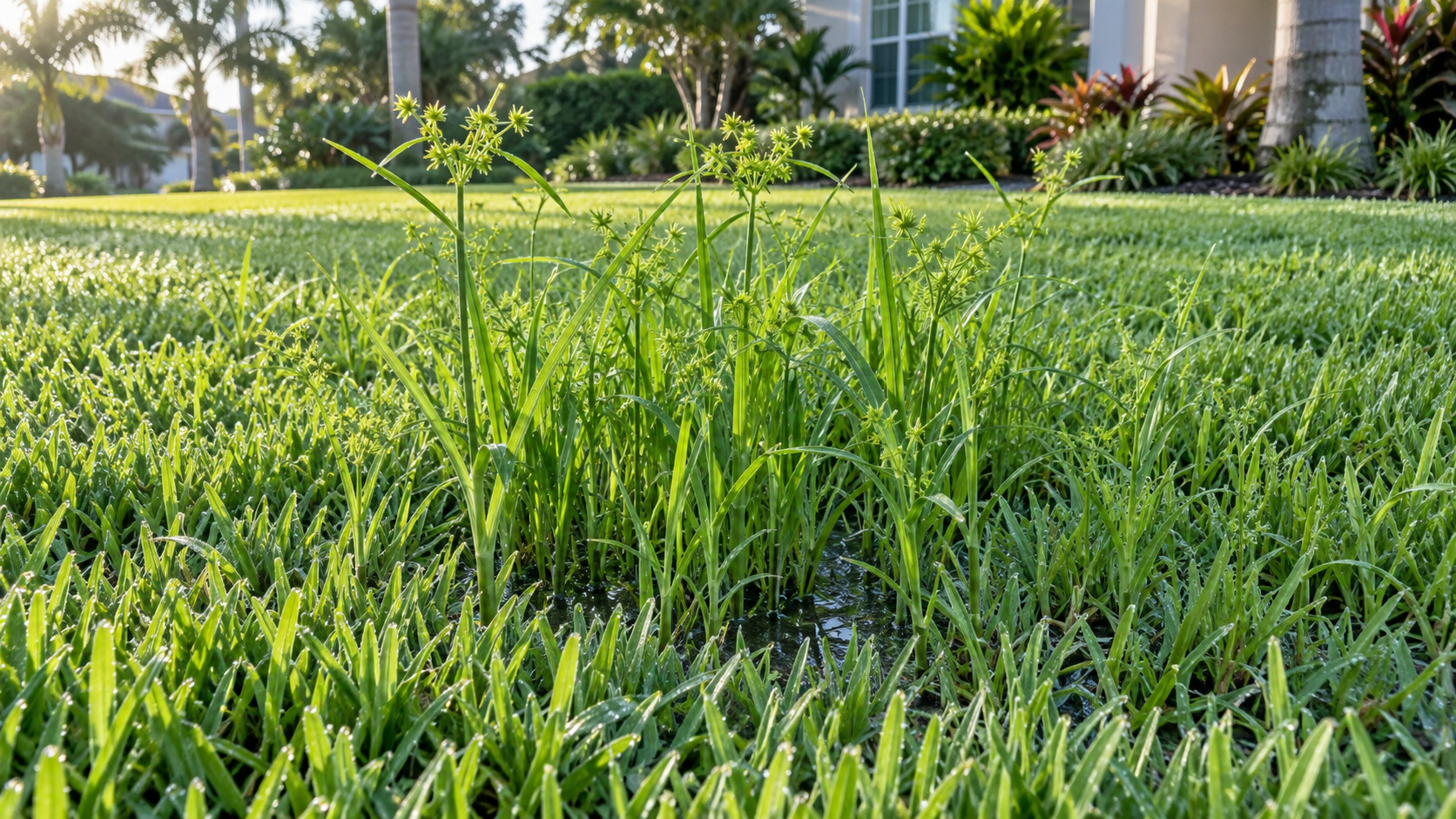
Nutsedge looks grasslike but belongs to the sedge group. It often grows faster and appears lighter green than surrounding turf. Roll the stem between your fingers and it often feels triangular rather than round. Clusters commonly emerge in wet lawn areas, low planting beds, and places with irrigation leaks. Correct identification matters because ordinary grass-weed methods often produce poor results.
Understand the Underground Growth
Many nutsedge plants develop underground tubers and connecting structures which store energy and produce new shoots. Pulling the visible leaves often leaves those parts in the soil. The plant soon sends up replacement growth, sometimes from more than one point. Repeated hand removal works best on very young plants when the entire underground portion comes out before a larger network develops.
Treat Moisture as a Clue
Nutsedge does not always prove a drainage failure, but heavy growth often points toward frequent moisture. Check for leaking valves, low sprinkler heads, broken pipe, excessive run time, roof runoff, compacted soil, and poor grade. Compare the problem area with surrounding ground after irrigation and rain. Correcting unnecessary moisture reduces favorable conditions and protects turf roots from long periods of saturation.
Use Hand Removal Carefully
Pull after light watering when soil releases roots more easily. Grip low, lift slowly, and remove as much of the underground growth as possible. Bag removed plants instead of dropping them back into the bed. Mark the location and inspect it each week. Hand removal fits small new outbreaks. Established patches usually need a broader plan because hidden tubers remain beyond the visible shoots.
Avoid Common Weed-Control Mistakes
Do not mow lower to hide nutsedge. The sedge will regrow quickly while stressed turf loses density. Avoid increasing irrigation after seeing a lighter green patch without first checking soil moisture. Do not use an unidentified weed killer or a product labeled only for broadleaf weeds. Wrong products waste money, injure desirable turf, and leave the underground sedge structures untouched.
Plan Follow-Up and Professional Treatment
Expect repeated monitoring rather than one cleanup. Record where shoots return and whether the area stays wet. Repair irrigation or drainage problems first. For established lawn infestations, use a properly licensed treatment provider who identifies the turf species, selects a labeled sedge product, and follows application timing. Healthy turf density and correct mowing help reduce open space for future weeds.
Let Ecoscape Address the Site Conditions
Ecoscape Outdoor Services helps South Tampa property owners trace wet spots, repair irrigation issues, improve drainage, protect mowing height, and monitor repeat weed growth. Our maintenance team does not guess at chemical treatment. We document the pattern and coordinate with qualified partners when licensed control is appropriate. Fixing the moisture and maintenance conditions gives the property a stronger long-term defense against recurring nutsedge.
