
Alligator Snapping Turtle
Macrochelys temminckii
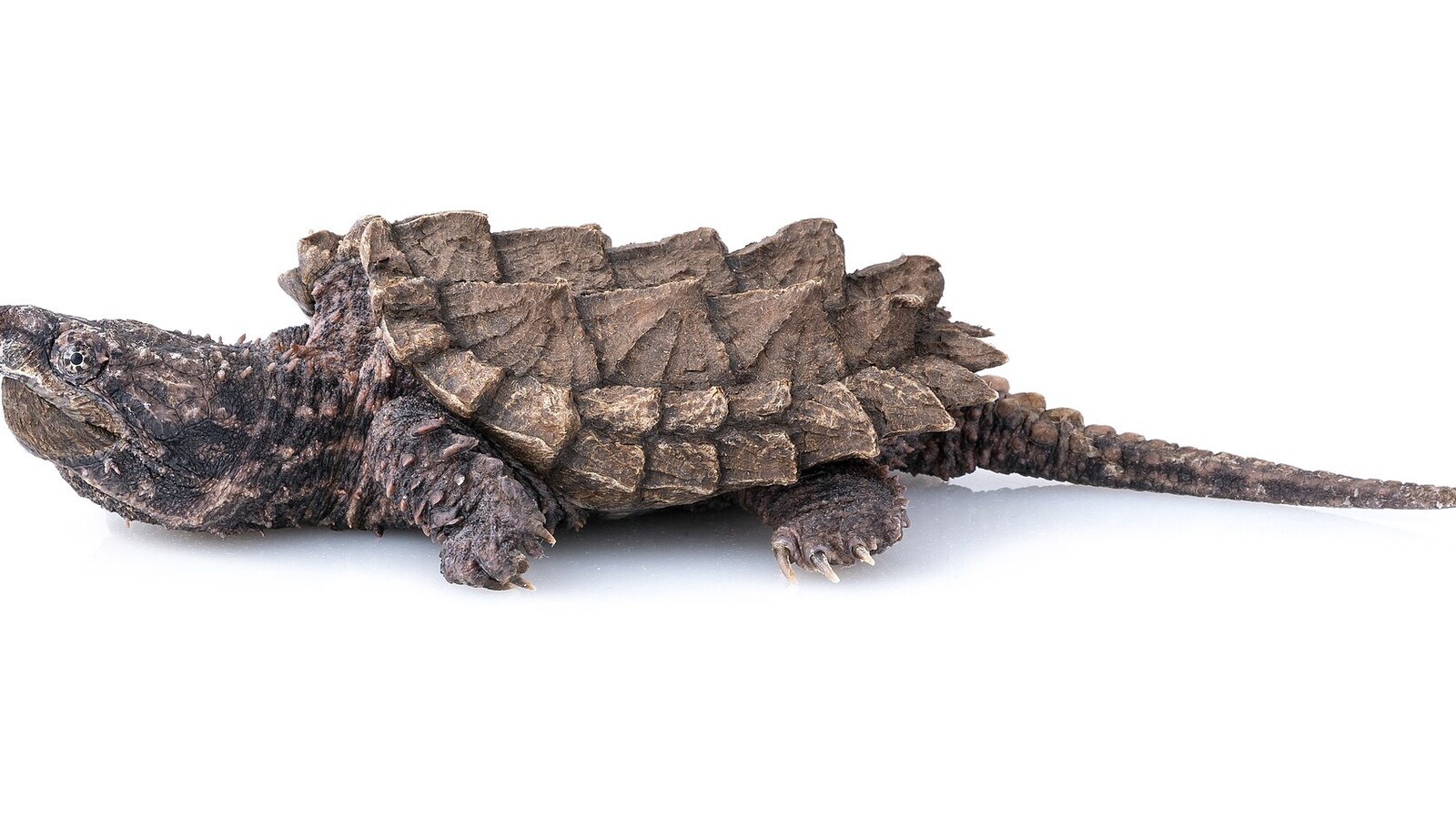
Alligator Snapping Turtles are massive freshwater turtles with ridged shells, hooked jaws, and a worm-like tongue lure.
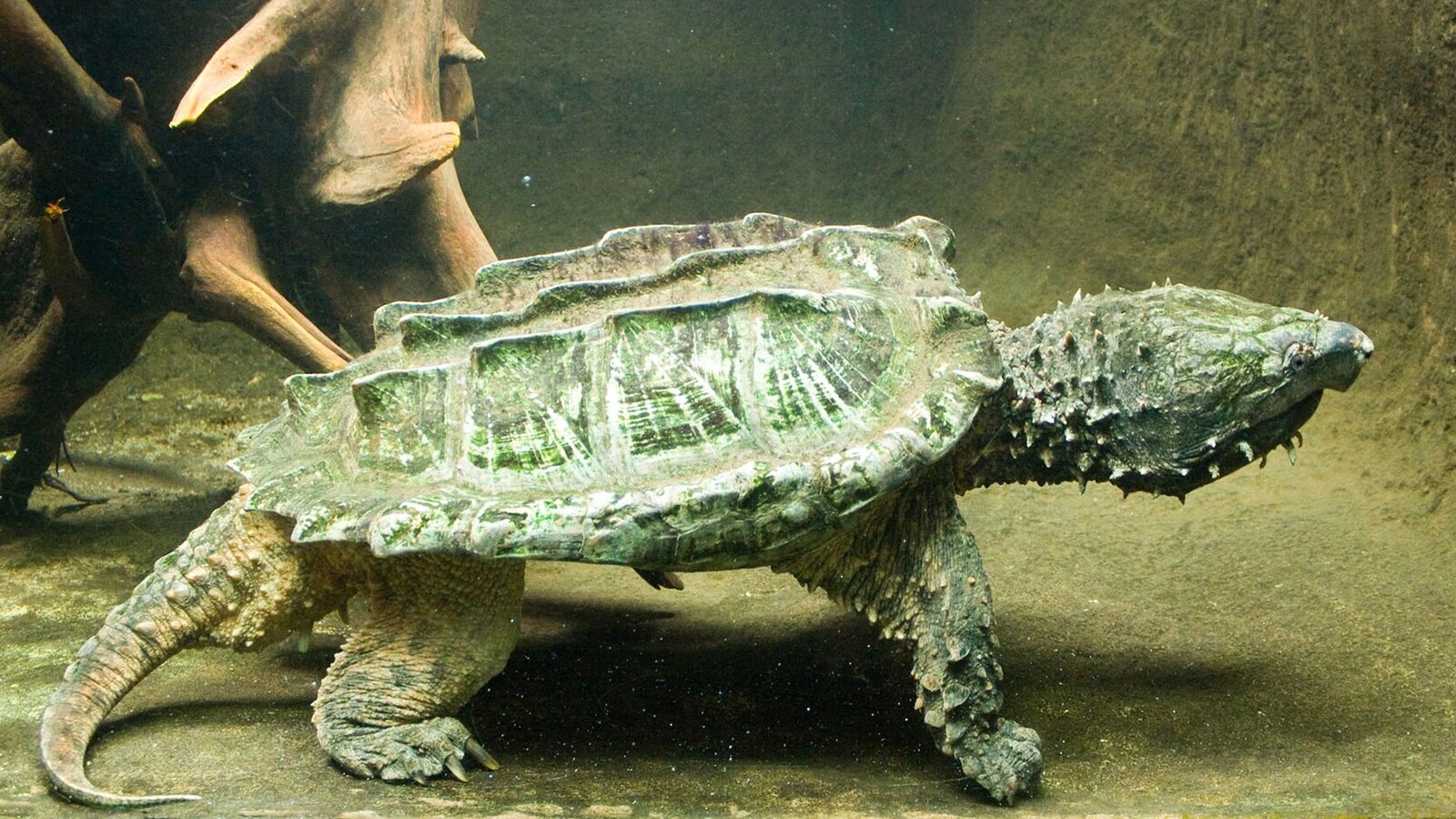
In Florida, Alligator Snapping Turtles occur mainly in Panhandle river systems. They favor deep water, submerged structure, backwaters, and floodplain habitats.
They spend most of their lives underwater. Females are the individuals most likely to appear on land while searching for nest sites.
Habitat:
Rivers and Springs, Freshwater Wetlands, Lakes and Ponds
Area / Range:
Florida Panhandle
Diet:
They eat fish, crayfish, mollusks, snakes, carrion, and other aquatic animals. Large individuals may take birds or small mammals at the water’s edge.
Behavior:
They rest motionless on the bottom with the mouth open and lure moving. On land they defend themselves with an extremely fast, powerful bite.
Day, Night
Active Times:
Best time to see:
Rarely seen. Females may cross land near rivers and floodplain wetlands during nesting season.
Florida Native Status:
Native
Conservation Status:
Protected conservation-priority turtle. Slow maturity and historic harvest make populations vulnerable.
Safety Level:
High Risk
Safety Information:
Stay well away from the head and never lift one by the tail. Keep children and pets back and contact FWC or a qualified responder for guidance.
Benefits to Property:
They are important native predators and scavengers that contribute to healthy river and wetland food webs.
Property Concerns:
They cause little property damage, but a turtle in a pond, driveway, or work zone creates a serious handling hazard.
Fun Fact:
The species uses a fleshy tongue lure that resembles a worm. Large adults may live for many decades.
Wildlife Laws:
Alligator Snapping Turtles are protected in Florida. Do not capture, possess, harass, relocate, or kill one without specific legal authorization.
Identification:
The shell carries three pronounced ridges, the head is enormous, and the upper jaw is strongly hooked. A small pink lure on the tongue helps attract fish.
Credits:
Facts: species reference. Images: primary and secondary, Wikimedia Commons.