
American Flamingo
Phoenicopterus ruber
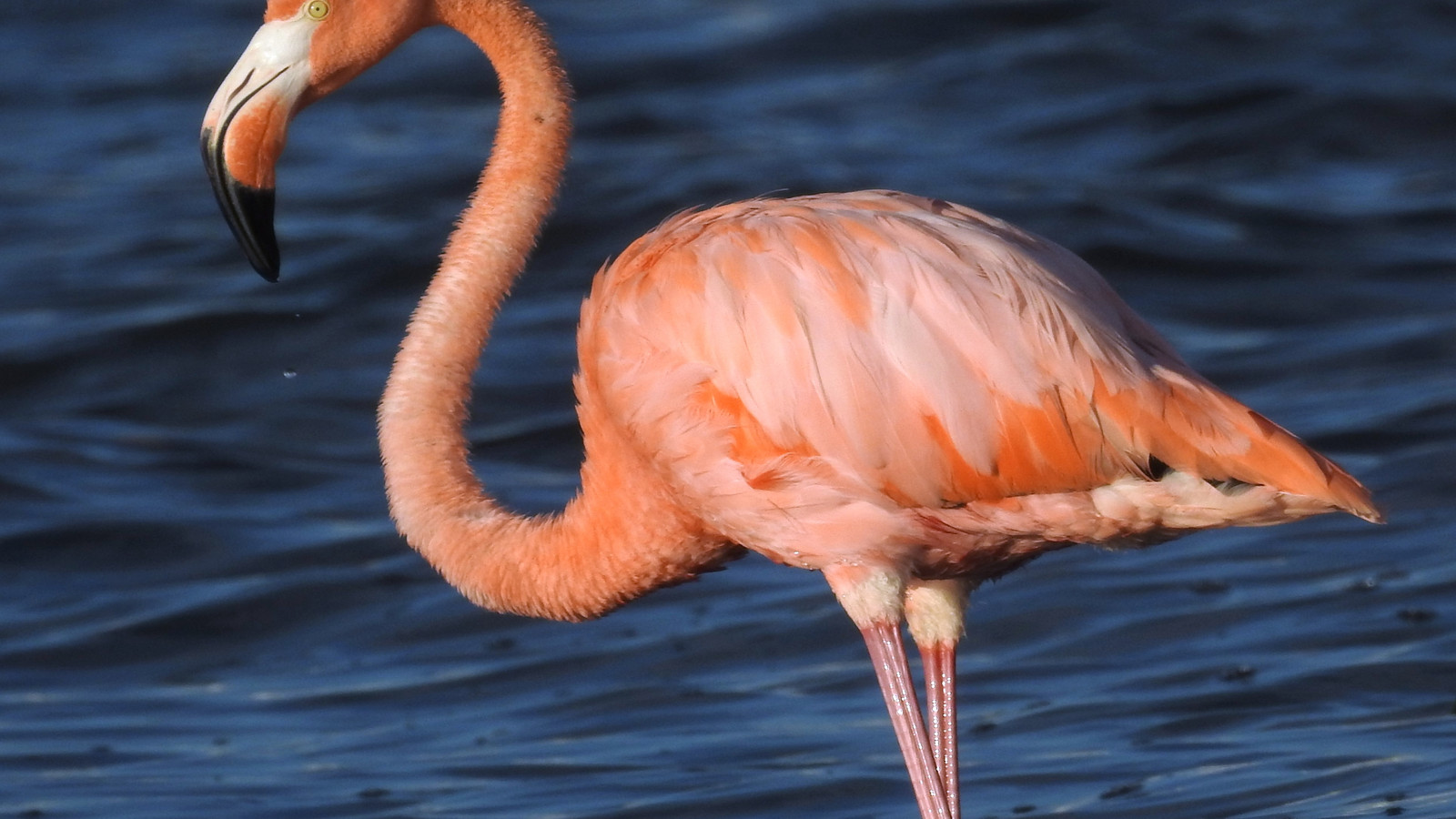
A tall pink wading bird with a downcurved bill, black flight feathers, and an unmistakable silhouette in shallow coastal water.
American Flamingos are native to the Caribbean and historically occurred in southern Florida. Small numbers now appear in Florida Bay, the Keys, and other coastal areas, especially after major tropical weather events.
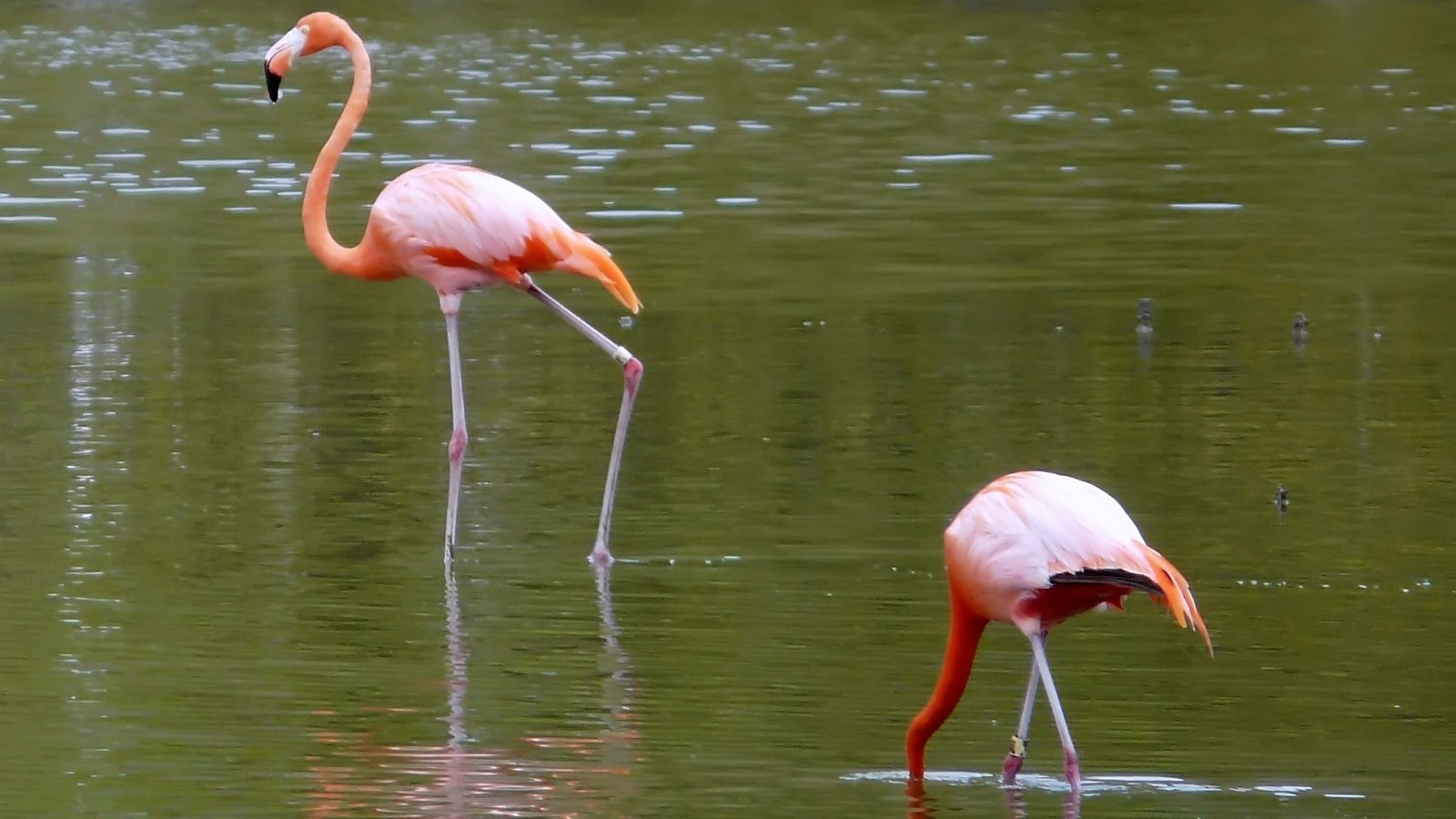
They feed by sweeping their specialized bills through shallow water. Quiet mudflats, lagoons, and mangrove-fringed bays provide the food and space these wary birds need.
Habitat:
Estuaries and Bays, Mangroves and Salt Marshes, Coastal Waters
Area / Range:
South Florida, Florida Keys, Gulf Coast
Diet:
Filters algae, brine shrimp, aquatic insects, mollusks, and other small organisms from shallow water and soft sediment.
Behavior:
Feeds in shallow groups, rests on one leg, and flies with its neck and legs fully extended. Wild birds remain alert and often move away from approaching people.
Daytime, Dawn and Dusk
Active Times:
Best time to see:
Daylight hours in remote South Florida and Florida Keys coastal wetlands, with sightings remaining uncommon and irregular.
Florida Native Status:
Native
Conservation Status:
Globally listed as Least Concern, but naturally occurring Florida birds remain rare and depend on protected coastal habitat.
Safety Level:
Low
Safety Information:
Observe from a long distance with binoculars. Never approach, feed, flush, or use a drone near resting or feeding birds.
Benefits to Property:
Adds exceptional wildlife value to healthy coastal wetlands and helps signal productive shallow-water habitat.
Property Concerns:
No meaningful residential property concern. Human disturbance and repeated close approaches create the greater risk to the bird.
Fun Fact:
- Their pink color comes from carotenoid pigments in their food.
- They feed with the bill held upside down in the water.
- Historic records document flamingos in southern Florida.
Wildlife Laws:
Protected under the federal Migratory Bird Treaty Act. Do not capture, harm, possess, or disturb active nesting birds, eggs, or young.
Identification:
Adults are bright pink to coral with long pink legs, a thick S-shaped neck, and a pale bill tipped in black. Black flight feathers show clearly when the bird spreads its wings.