
American White Pelican
Pelecanus erythrorhynchos
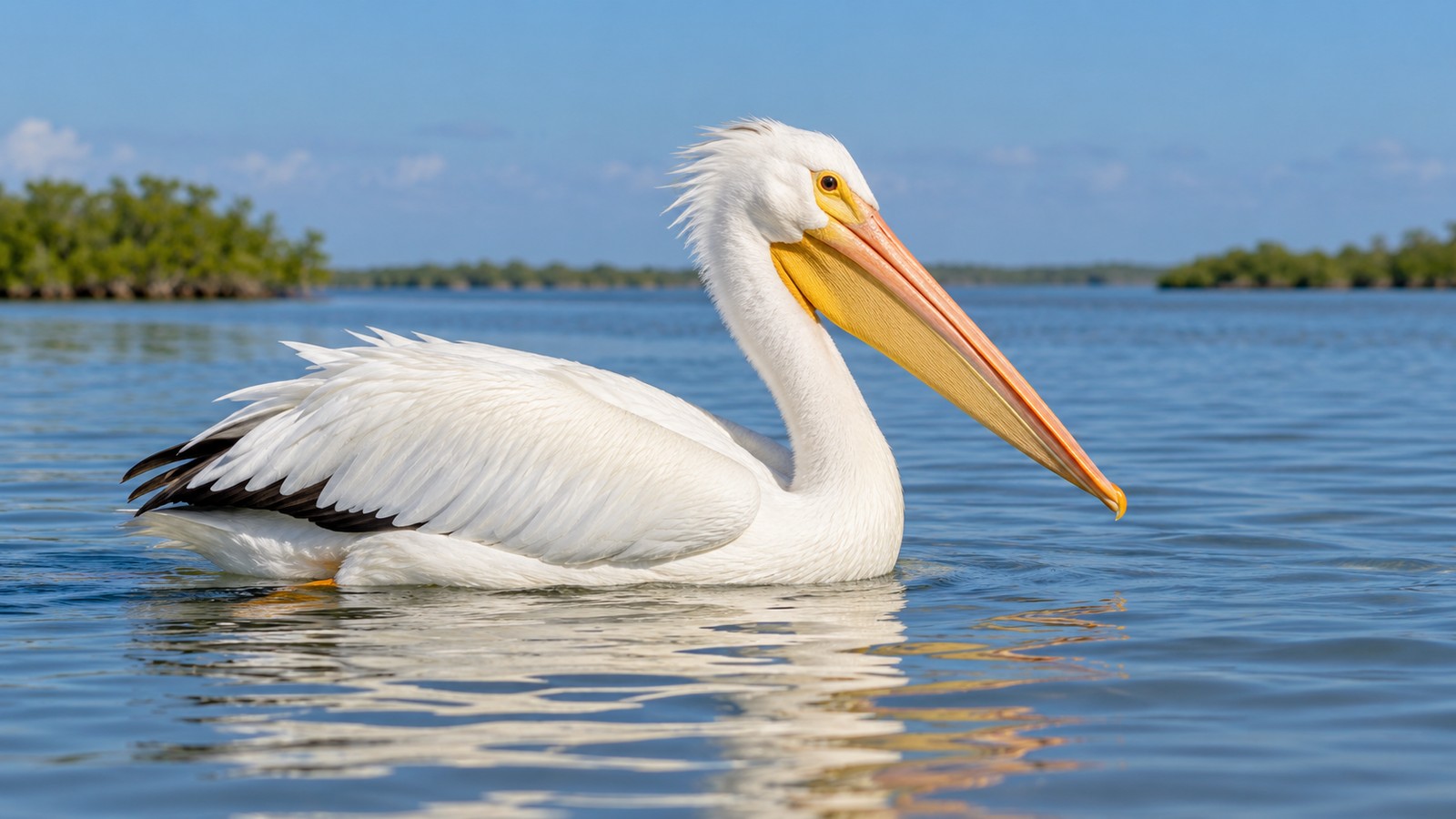
The American White Pelican is a huge winter visitor to Florida, recognized by its white body, black flight feathers, and long orange bill.
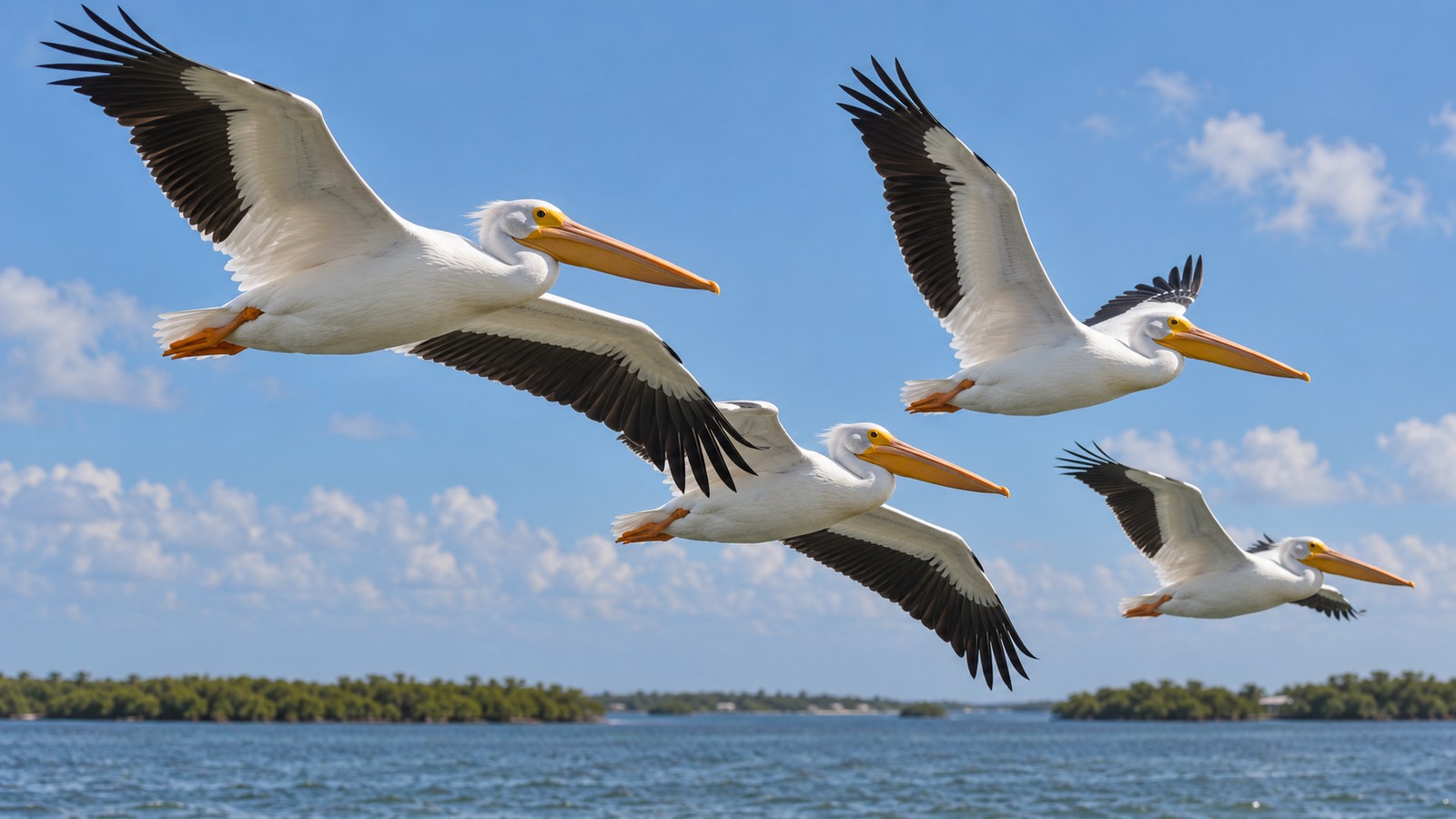
American White Pelicans gather on Florida bays, estuaries, lakes, and quiet coastal waters during the cooler months. Adults breed far to the north and west, then travel to the Gulf Coast and Florida for winter. Their broad white wings and black flight feathers make a flock unmistakable overhead.
These pelicans fish from the water's surface. Several birds may work together to guide fish into shallow water, then dip their bills to scoop prey. They do not use the steep plunge dives associated with Brown Pelicans.
Habitat:
Coastal Waters, Estuaries and Bays, Lakes and Ponds
Area / Range:
Gulf Coast, Atlantic Coast, North Florida, Central Florida, South Florida
Diet:
Fish make up most of the diet. Birds scoop prey from the surface or shallow water, often after a group has herded fish together.
Behavior:
Usually seen in groups resting on open water, feeding cooperatively, or soaring high on broad wings. Winter flocks sometimes fly in a V formation.
Day
Active Times:
Best time to see:
Look from late fall through spring on broad bays, coastal lagoons, and quiet lakes. Scan open water and watch for high, circling flocks.
Florida Native Status:
Native
Conservation Status:
Native winter visitor. Wetland quality, fishing gear, and human disturbance affect local habitat.
Safety Level:
Harmless. Keep Distance
Safety Information:
Observe from a distance. Never feed pelicans, approach resting flocks, or leave fishing line and hooks where birds can become entangled.
Benefits to Property:
Feeds on fish and adds to the ecological diversity of healthy coastal and freshwater wetlands. Its presence often gives property owners an opportunity to observe seasonal migration.
Property Concerns:
The bird does not damage ordinary landscapes. On waterfront property, loose fishing line and hooks create an entanglement hazard; remove them promptly.
Fun Fact:
The black wing tips are easy to see in flight but can disappear from view when the bird folds its wings. Groups sometimes herd fish together before feeding.
Wildlife Laws:
American White Pelicans are protected under the Migratory Bird Treaty Act. Do not capture, injure, or disturb birds or active nests. Follow posted rules at wildlife areas.
Identification:
Look for an exceptionally large, mostly white pelican with a very long orange to pinkish-orange bill and expandable throat pouch. Black flight feathers show strongly when the wings are open, but are less obvious on a bird resting on the water.
The Brown Pelican is darker, smaller, and commonly plunge dives. American White Pelicans usually float and feed cooperatively.