
Anhinga
Anhinga anhinga
Its dense bones reduce buoyancy and help it swim underwater.
Its dense bones reduce buoyancy and help it swim underwater. Protected under the Migratory Bird Treaty Act. Do not disturb nests or roosting colonies.
Habitat:
Freshwater Wetlands, Lakes and Ponds, Rivers and Springs
Area / Range:
Statewide
Diet:
Fish and other small aquatic animals.
Behavior:
Swims with only its neck above water, spears fish, and spreads its wings to dry.
Day
Active Times:
Best time to see:
Look during day in suitable Florida habitat.
Florida Native Status:
Native
Conservation Status:
Protected migratory bird
Safety Level:
Harmless. Keep Distance
Safety Information:
Protected under the Migratory Bird Treaty Act. Do not disturb nests or roosting colonies.
Benefits to Property:
Helps regulate small fish populations.
Property Concerns:
Droppings accumulate where groups repeatedly roost.
Fun Fact:
Its dense bones reduce buoyancy and help it swim underwater.
Wildlife Laws:
Protected under the Migratory Bird Treaty Act. Do not disturb nests or roosting colonies.
Identification:
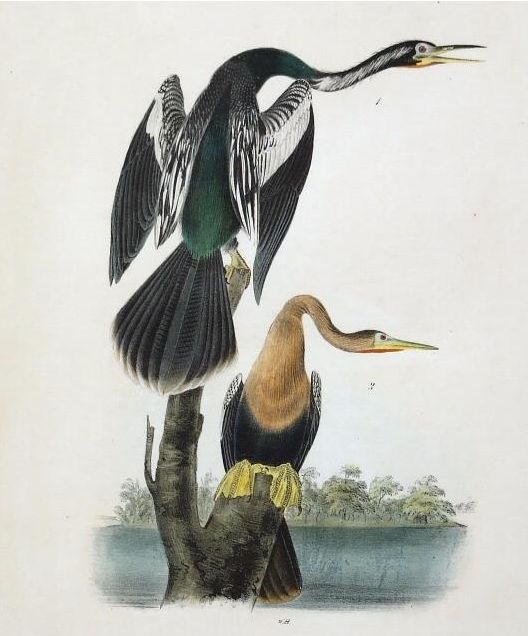
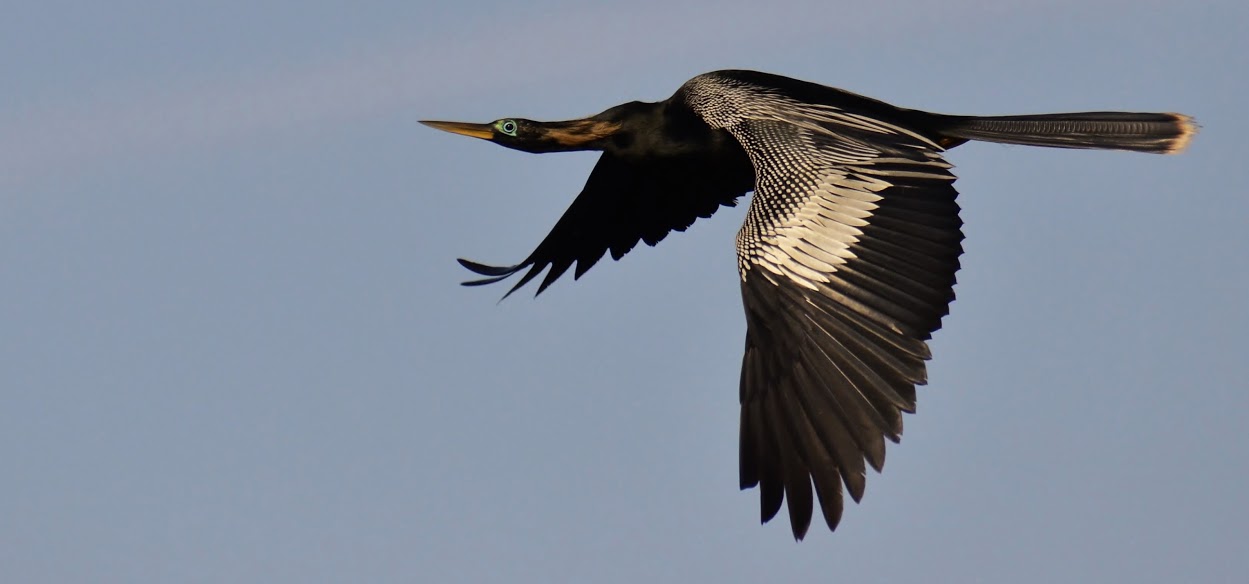
Long snake-like neck, sharp bill, long tail, and dark body. Males are darker than females.
Credits:
Facts: wildlife reference. Images: primary image and secondary image, Wikimedia Commons.