top of page

Atlantic Needlefish
Strongylura marina
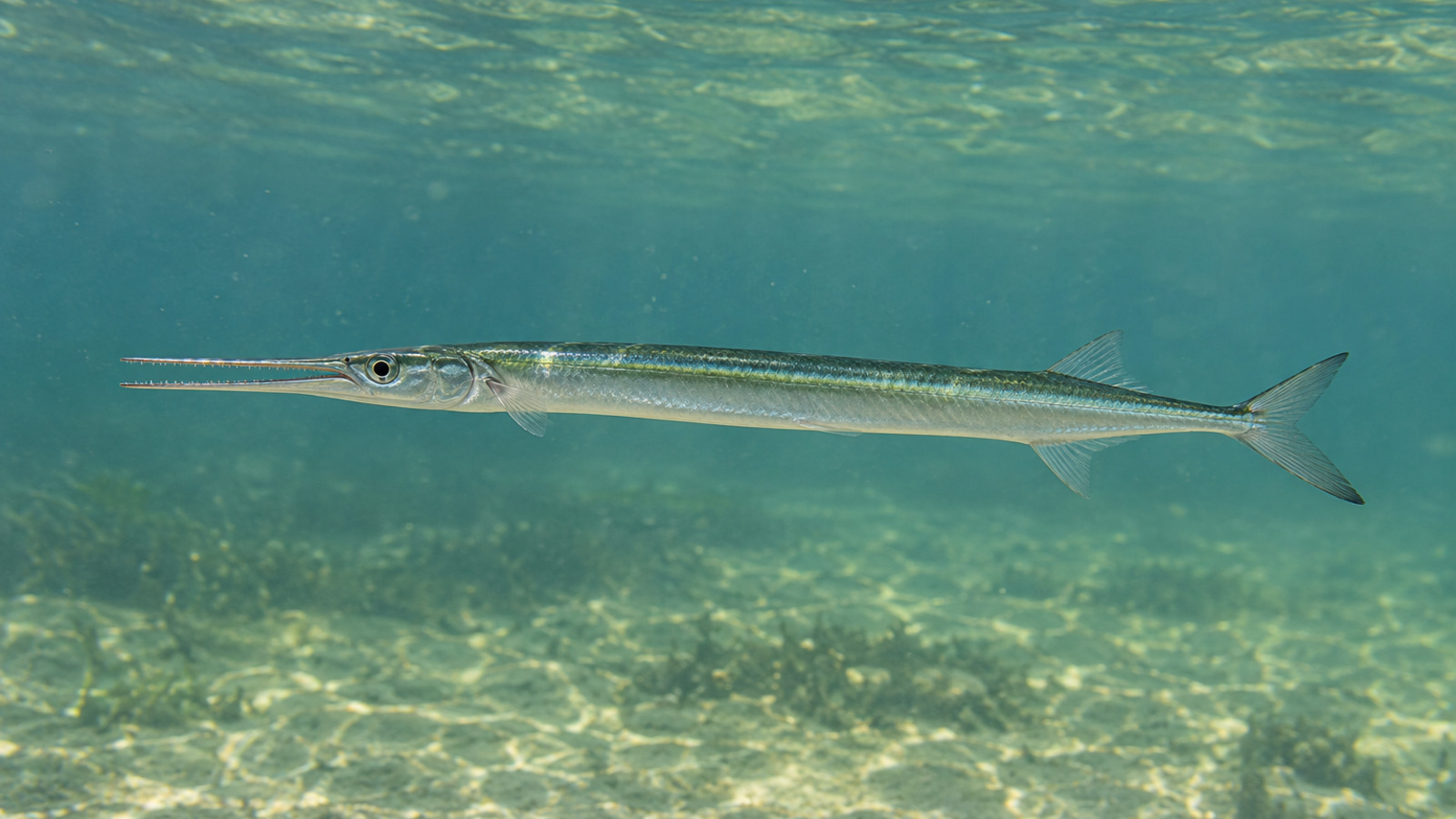
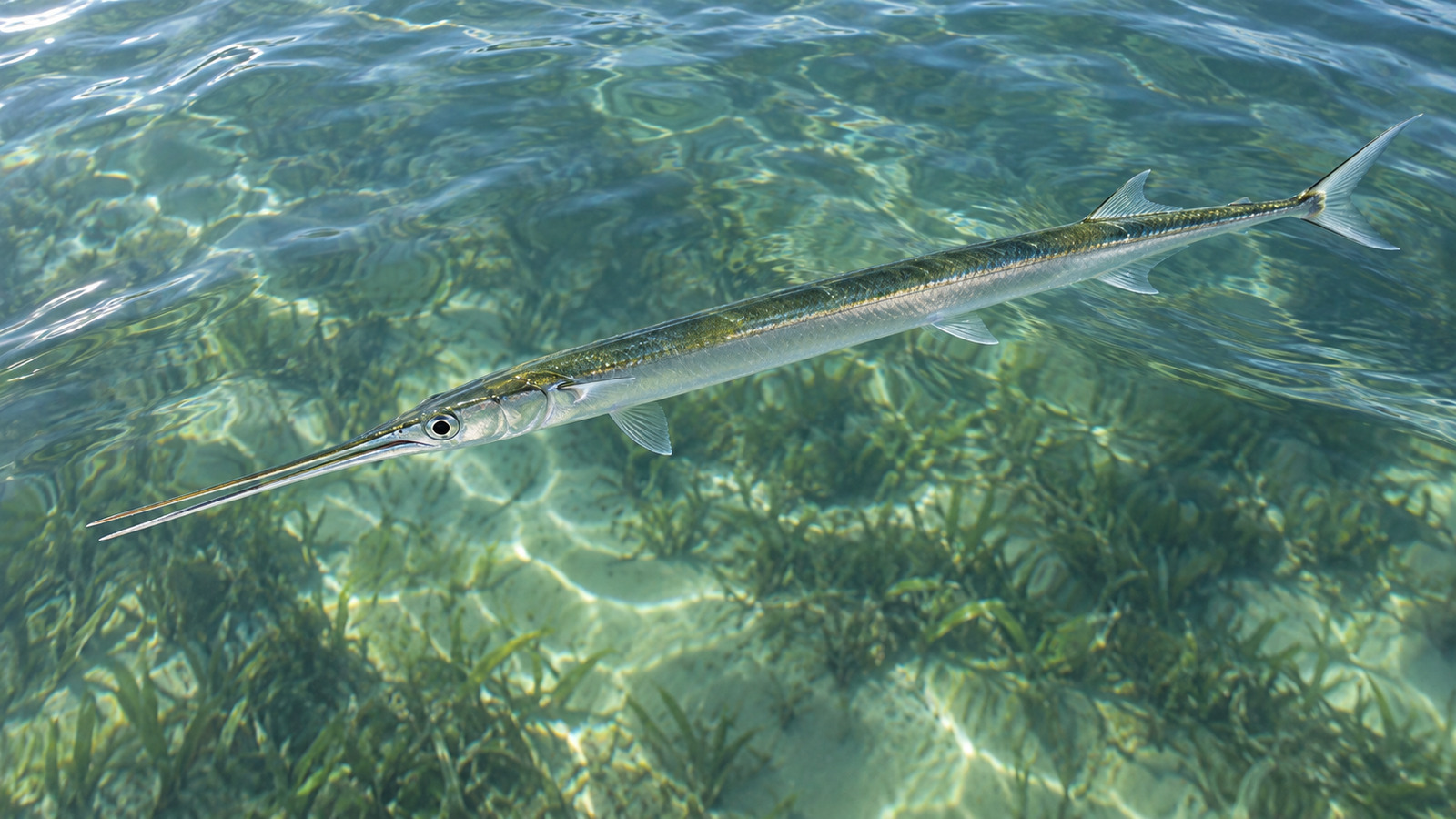
The Atlantic Needlefish is a long, silver surface predator found in Florida coastal waters and connected rivers and canals.
Atlantic Needlefish have extremely slender bodies and elongated upper and lower jaws lined with small teeth. Their streamlined shape and rear-set fins suit fast strikes near the water surface.
Although primarily coastal, this native fish regularly enters estuaries, tidal rivers, canals, and other connected fresh or brackish waters around Florida.
Habitat:
Coastal Waters, Estuaries and Bays, Rivers and Springs, Canals and Ditches
Area / Range:
Gulf Coast, Atlantic Coast, North Florida, South Florida
Diet:
Small fish, shrimp, mysids, copepods, aquatic insects, and other small animals taken near the surface.
Behavior:
Cruises close to the surface alone or in loose groups, using quick bursts to seize prey. It moves freely between salt, brackish, and connected fresh water.
Day, Dawn and Dusk
Active Times:
Best time to see:
Look during calm daylight near the surface of estuaries, tidal rivers, mangrove shorelines, bridges, and coastal canals.
Florida Native Status:
Native
Conservation Status:
Common and not federally or state listed in Florida.
Safety Level:
Use Caution When Handling
Safety Information:
The long jaws contain sharp teeth. Use pliers for hook removal, support the fish carefully, and keep hands away from the mouth.
Benefits to Property:
A native predator that helps balance small-fish populations in connected coastal and freshwater food webs.
Property Concerns:
It does not damage property. Bright waterfront lights can attract surface-feeding fish, so avoid unnecessary nighttime lighting near the water.
Fun Fact:
Atlantic Needlefish sometimes travel far into fresh water. Their dorsal and anal fins are positioned close to the tail, helping them accelerate rapidly at the surface.
Wildlife Laws:
Follow current Florida saltwater or freshwater fishing rules for the water being fished, including licensing and applicable gear or harvest regulations.
Identification:
Look for a long, round, silver body with a greenish or bluish back and a sharply pointed beak formed by both jaws. The dorsal and anal fins sit far back near the tail.
Unlike halfbeaks, both jaws are extended. Atlantic Needlefish lack fin spines and often show a dark patch behind the eye.
Credits:
https://www.floridamuseum.ufl.edu/discover-fish/florida-fishes-gallery/atlantic-needlefish/
https://www.itis.gov/servlet/SingleRpt/SingleRpt?search_topic=TSN&search_value=165551
https://nas.er.usgs.gov/queries/factsheet.aspx?SpeciesID=324
https://biogeodb.stri.si.edu/caribbean/en/thefishes/species/3314
bottom of page