
Barred Owl
Strix varia
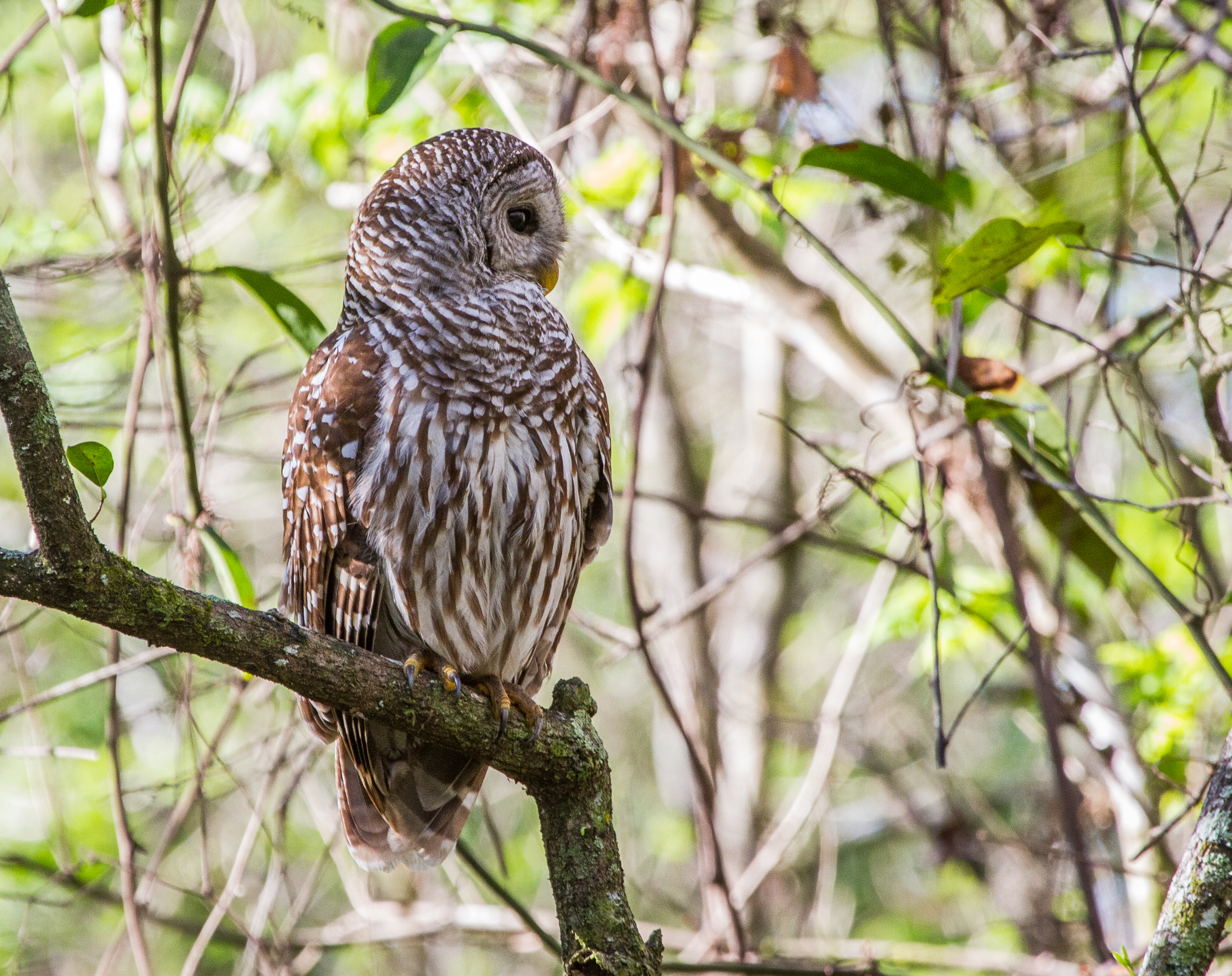
Its familiar series of hoots sounds like the phrase, who cooks for you.
Its familiar series of hoots sounds like the phrase, who cooks for you. Observe quietly, keep pets away from fledglings, and avoid disturbing cavity nests. Protected under the Migratory Bird Treaty Act. Adults, eggs, young, and active nests must not be harmed.
Habitat:
Freshwater Wetlands, Rivers and Springs, Forests and Woodlands, Urban and Residential Areas
Area / Range:
Statewide
Diet:
Rodents, rabbits, frogs, snakes, birds, and crayfish.
Behavior:
Calls loudly at night and often uses mature tree cavities. It sometimes hunts during daylight.
Day, Dawn, Dusk
Active Times:
Best time to see:
Observe from a respectful distance in suitable Florida habitat.
Florida Native Status:
Native
Conservation Status:
Protected migratory bird
Safety Level:
Harmless. Respect Active Nests
Safety Information:
Observe quietly, keep pets away from fledglings, and avoid disturbing cavity nests.
Benefits to Property:
Controls rodents and other small animals around wooded properties.
Property Concerns:
Tree removal and bright nighttime lighting reduce nesting and hunting habitat.
Fun Fact:
Its familiar series of hoots sounds like the phrase, who cooks for you.
Wildlife Laws:
Protected under the Migratory Bird Treaty Act. Adults, eggs, young, and active nests must not be harmed.
Identification:
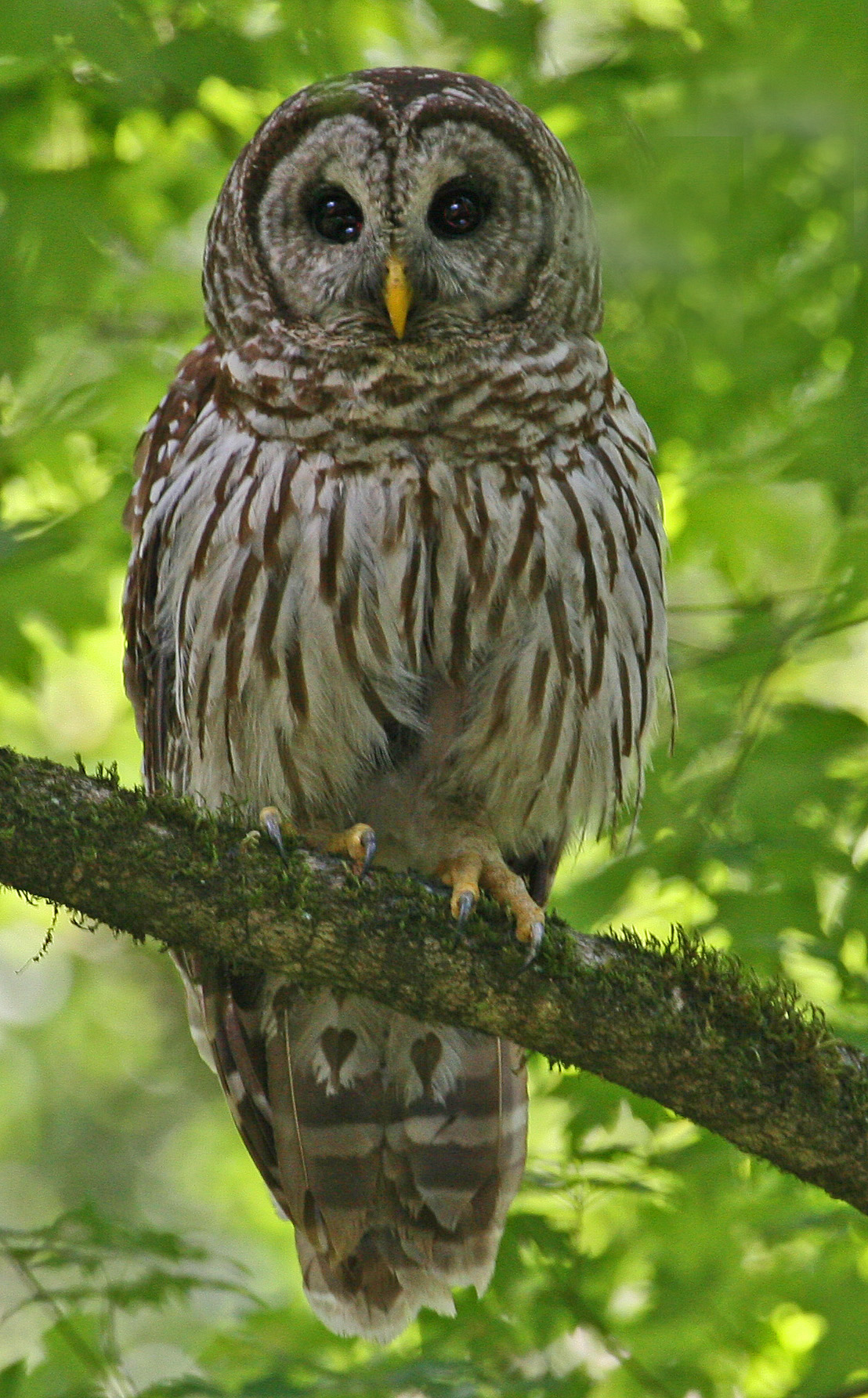
Large brown-and-white owl with dark eyes, a rounded head, barred chest, and streaked belly.
Credits:
Facts: wildlife reference. Images: Wikimedia Commons.