
Black-Bellied Whistling-Duck
Dendrocygna autumnalis
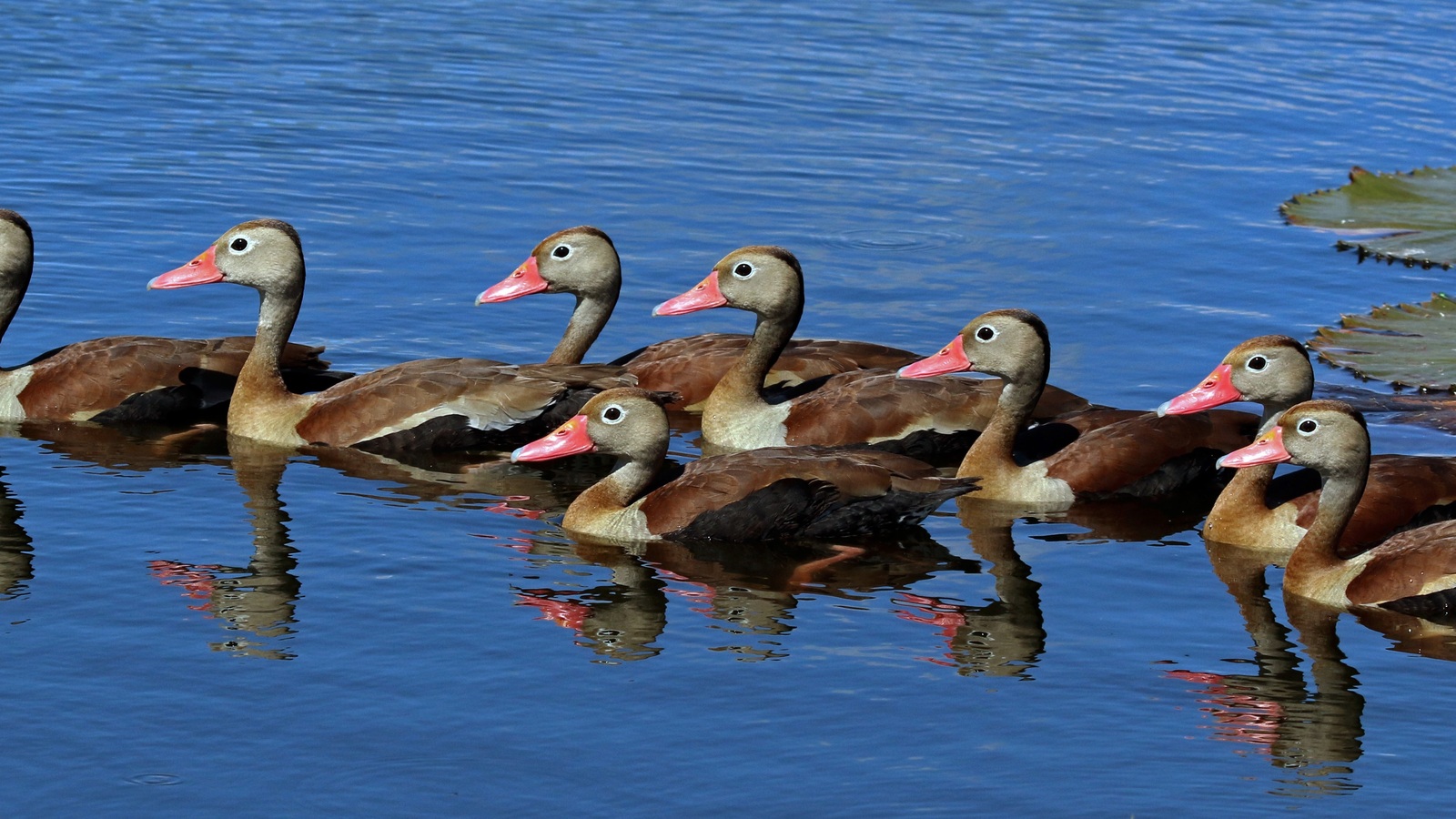
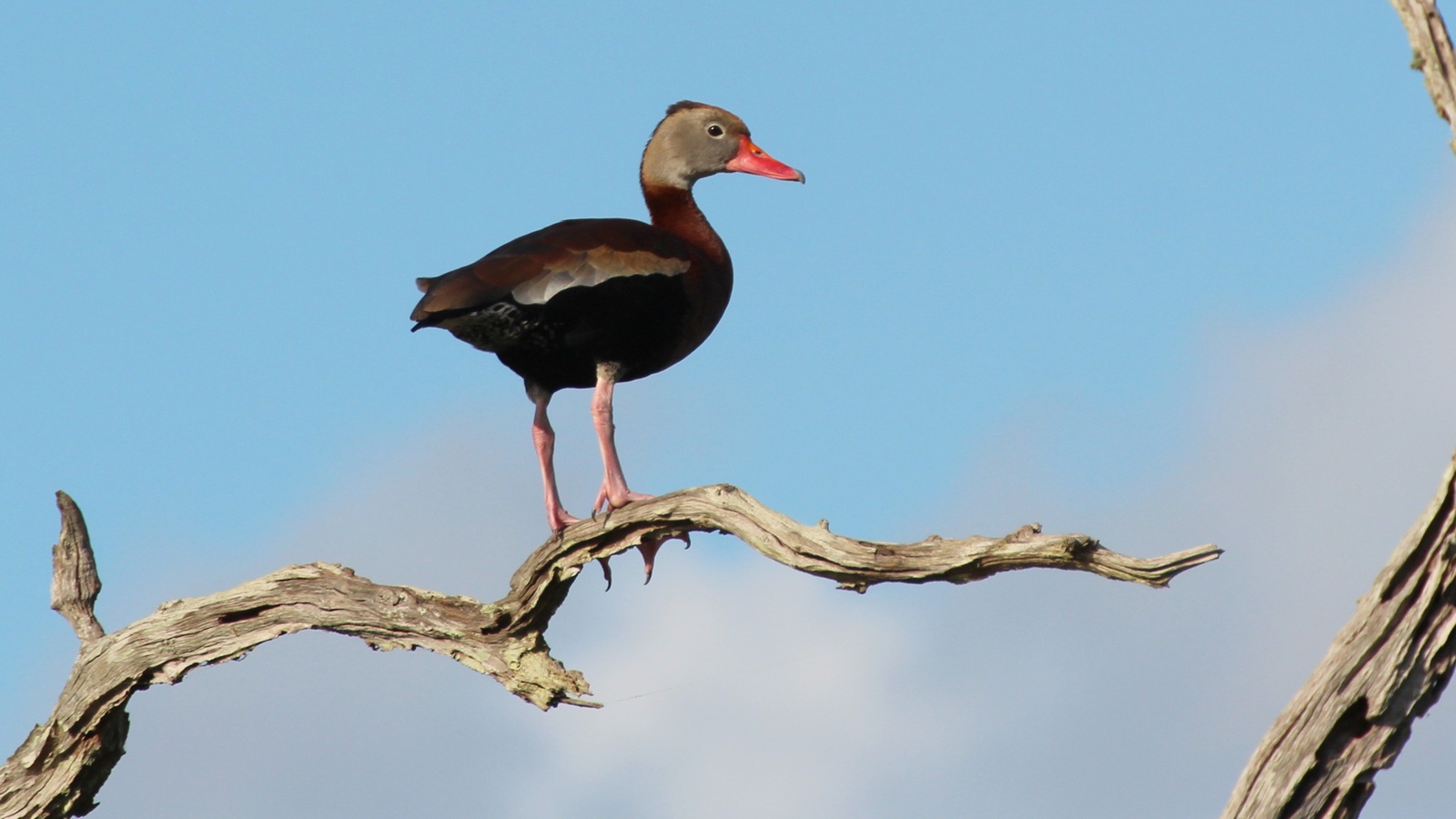
A long-legged Florida waterbird with a bright pink bill, chestnut body, black belly, and a clear whistled call.
Black-Bellied Whistling-Ducks have become familiar residents around Florida ponds, wetlands, golf courses, and stormwater basins. They often perch in trees and nest in cavities.
Pairs and family groups feed in shallow water and grassy edges. Retaining native shoreline plants and keeping feeding areas clean supports healthier birds.
Habitat:
Freshwater Wetlands, Lakes and Ponds, Urban and Residential Areas
Area / Range:
Statewide
Diet:
Feeds mainly on seeds, grasses, aquatic plants, grain, insects, snails, and other small aquatic animals.
Behavior:
Social and often active in noisy flocks. It walks and grazes more than many ducks, perches readily, and may nest in tree cavities or nest boxes.
Daytime, Dawn and Dusk, Nighttime
Active Times:
Best time to see:
Year-round around open ponds and wet lawns, especially early morning and evening.
Florida Native Status:
Native
Conservation Status:
Not listed; Florida populations have expanded northward in recent decades.
Safety Level:
Low
Safety Information:
Do not feed or corner adults with young. Keep pets away from nesting sites and shoreline resting areas.
Benefits to Property:
Adds wildlife value to ponds and consumes plant material and invertebrates in wet areas.
Property Concerns:
Large flocks may leave droppings on lawns, docks, and pool decks. Feeding concentrates birds and increases mess and disease risk.
Fun Fact:
- It is named for its black belly and high whistled call.
- Adults often perch on branches and utility structures.
- Ducklings may leap from elevated nest cavities.
Wildlife Laws:
Protected under the Migratory Bird Treaty Act and managed as a migratory game bird. Do not disturb nests or take birds outside lawful seasons and rules.
Identification:
Adults show a gray face, red-pink bill, chestnut neck and breast, black belly, long pink legs, and a bold white wing patch visible in flight.