
Bluefin Killifish
Lucania goodei
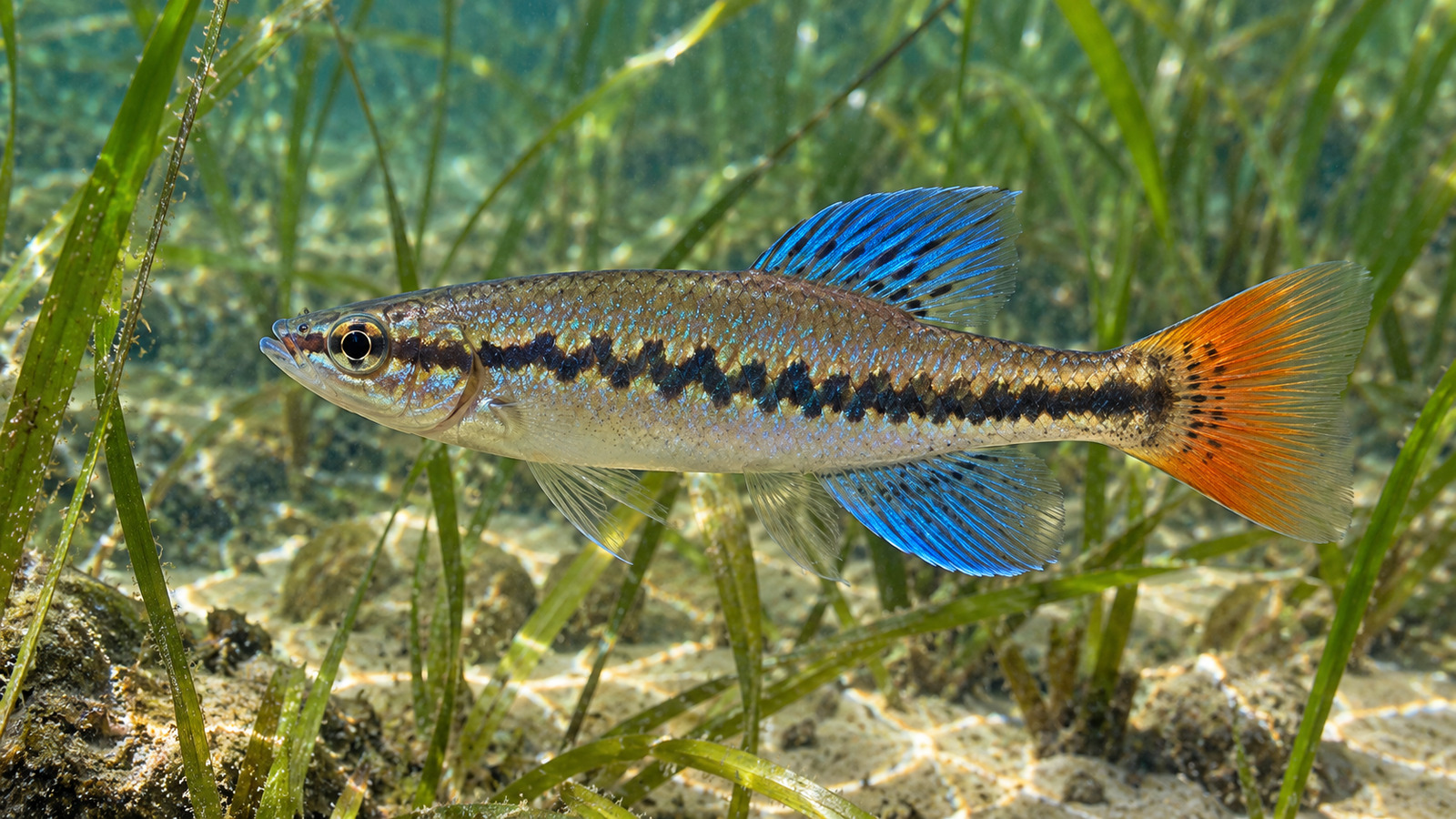
The Bluefin Killifish is a tiny native Florida fish whose breeding males display brilliant blue fins, an orange-red tail, and a bold zigzag side stripe.
The Bluefin Killifish is a small native topminnow found through much of Florida. It lives in plant-rich ponds, sloughs, ditches, springs, lakes, and quiet stream margins.
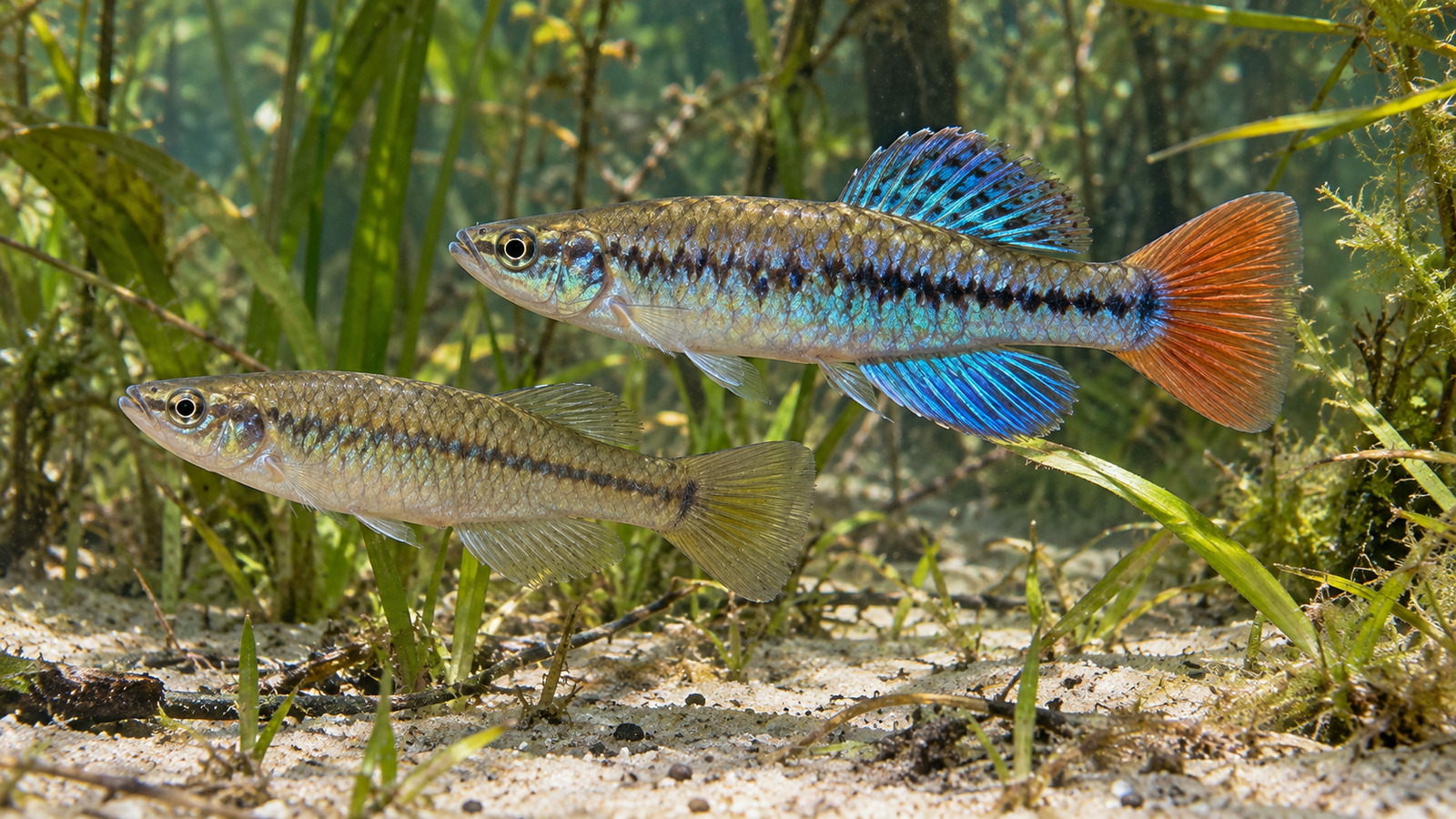
Breeding males develop bright blue dorsal and anal fins and warm orange or red color in the tail. Females are more subdued, but both sexes have a slender compressed body, a small upturned mouth, and a dark stripe along the side.
Habitat:
Lakes and Ponds, Canals and Ditches, Rivers and Springs, Freshwater Wetlands
Area / Range:
North Florida, Central Florida, South Florida
Diet:
Zooplankton, tiny crustaceans, aquatic insect larvae, worms, and other small invertebrates taken from open water and plant surfaces.
Behavior:
Moves through dense aquatic vegetation in loose groups and uses plant cover to avoid predators. Males display their bright fins during courtship and defend small areas near spawning sites.
Day
Active Times:
Best time to see:
Look during daylight in clear spring runs, shallow vegetated pond margins, quiet creek pools, and drainage ditches with abundant aquatic plants.
Florida Native Status:
Native
Conservation Status:
Native and not federally or state listed. Local abundance depends on clean water and dense aquatic vegetation.
Safety Level:
Harmless. Avoid Handling
Safety Information:
This tiny fish is harmless to people and pets. Avoid netting or handling it unless current collection rules allow the activity.
Benefits to Property:
Consumes small aquatic invertebrates and serves as prey for larger fish, wading birds, turtles, and other wetland wildlife.
Property Concerns:
It causes no property damage. Draining shallow water, removing all aquatic vegetation, and allowing fertilizer or pesticide runoff can eliminate suitable habitat.
Fun Fact:
Bluefin Killifish are not seasonal pool fish. They live in permanent water, and Florida populations can reproduce for much of the year when temperature and habitat remain favorable.
Wildlife Laws:
Follow current Florida freshwater fishing, baitfish, aquarium collection, and protected-area rules before capturing or possessing native fish.
Identification:
Look for a tiny slender fish with a small upturned mouth and a bold dark zigzag stripe running from the snout toward the tail base. Adult males show vivid blue in the dorsal and anal fins and orange-red color in the tail.
Females and young fish are olive to silvery with clearer fins. The combination of the zigzag side stripe and the male's blue fins separates this species from Florida's other small topminnows.