
Bluegill
Lepomis macrochirus
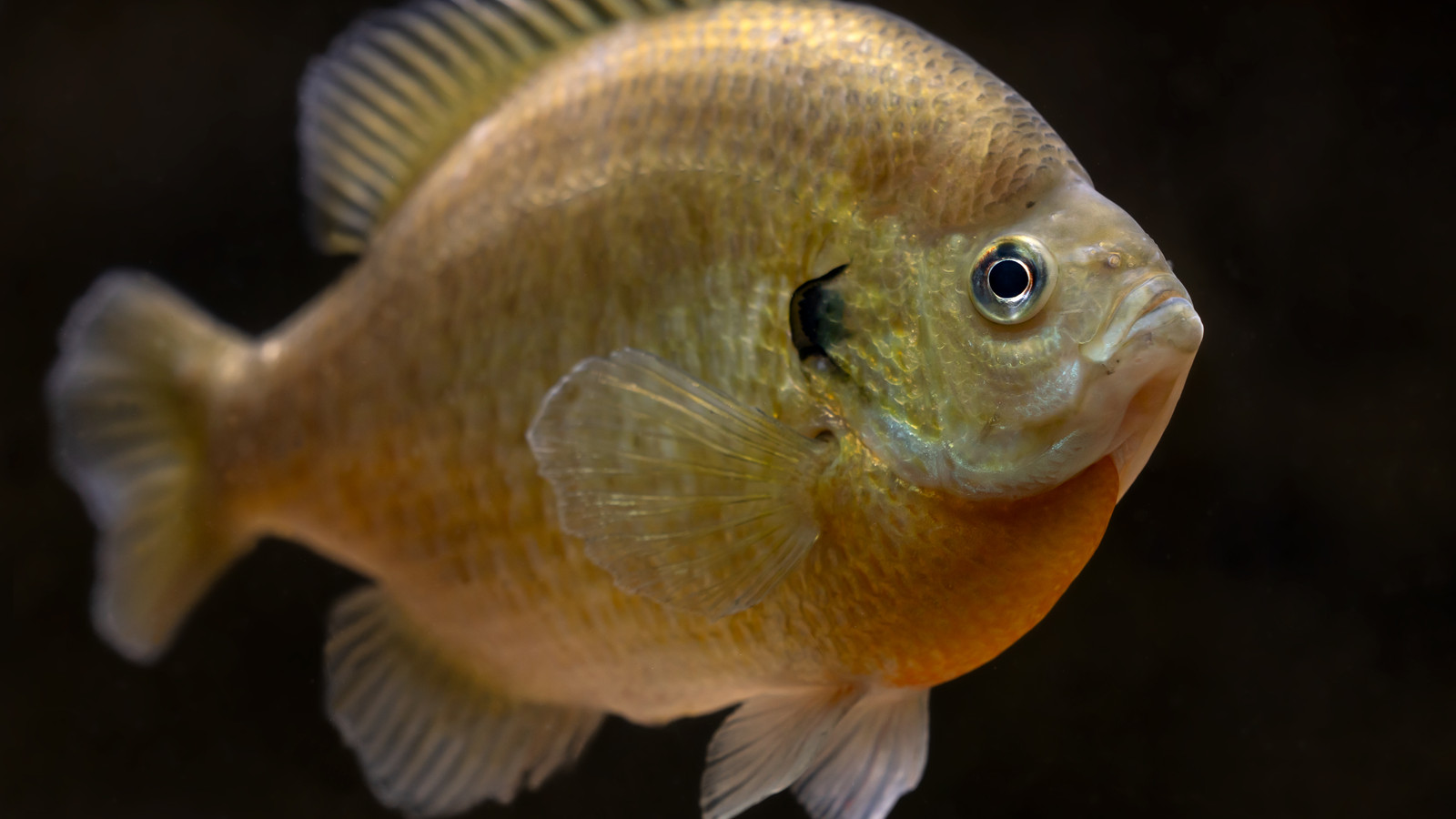
A common Florida sunfish with a deep body, dark ear flap, and blue-green cheek, valued by anglers and pond owners.
Bluegill inhabit ponds, lakes, canals, rivers, and slow spring runs throughout Florida. They use beds of aquatic vegetation, docks, roots, and other cover for feeding and shelter.
These sunfish reproduce readily and form an important prey base for bass, wading birds, otters, and larger fish. Balanced ponds require appropriate habitat and harvest management.
Habitat:
Lakes and Ponds, Rivers and Springs, Canals and Ditches
Area / Range:
Statewide
Diet:
Eats aquatic insects, zooplankton, small crustaceans, snails, fish eggs, and very small fish.
Behavior:
Forms loose schools near cover. Males fan circular nests in shallow water during warm months and guard eggs and newly hatched fry.
Daytime, Dawn and Dusk
Active Times:
Best time to see:
Year-round in clear shallow water, with peak shoreline nesting activity during warm spring and summer periods.
Florida Native Status:
Native
Conservation Status:
Not federally or state listed; widespread and abundant across Florida freshwater systems.
Safety Level:
Low
Safety Information:
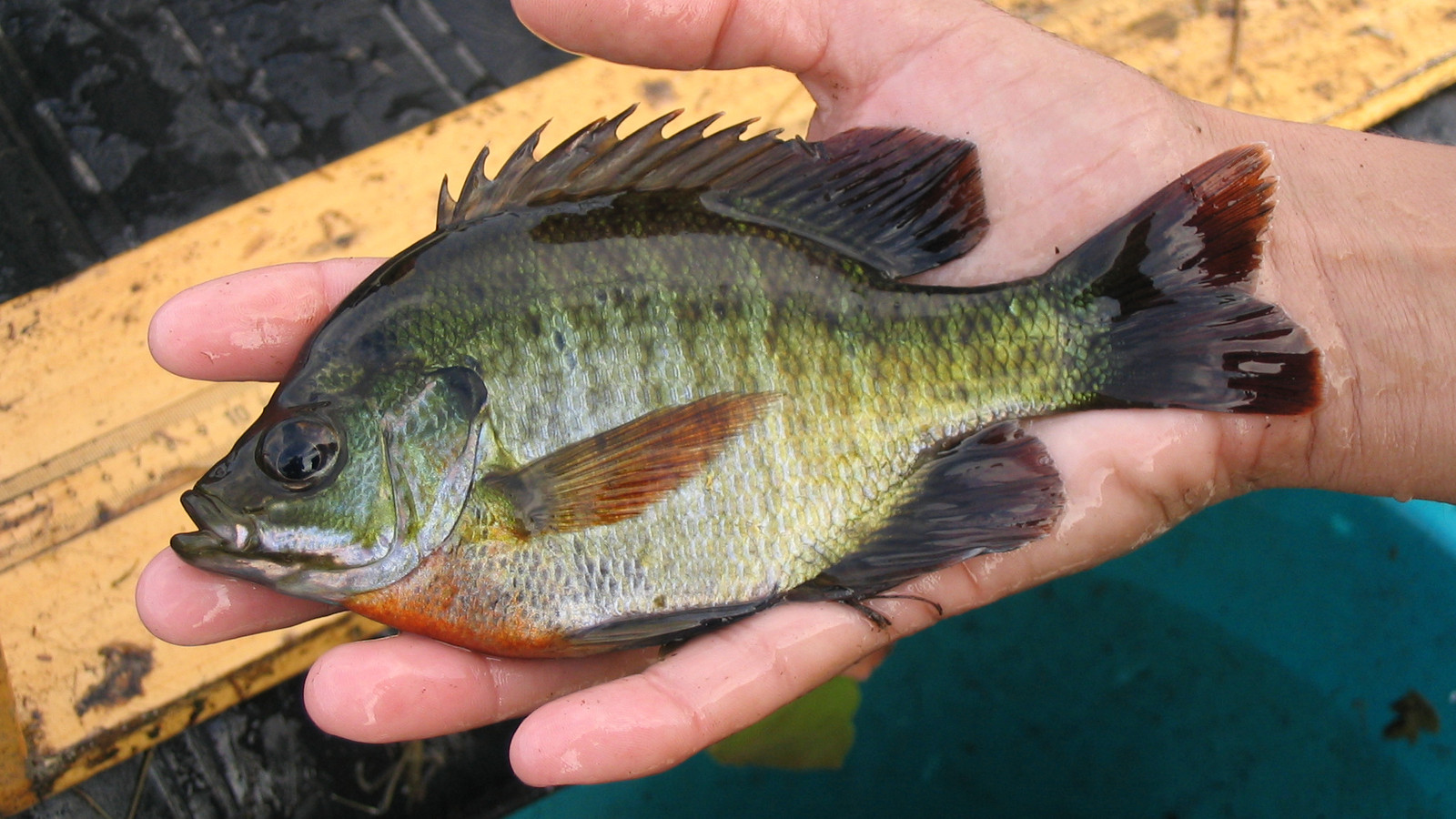
Dorsal spines are sharp. Handle wet-handed, support the body, and use care around hooks before releasing fish.
Benefits to Property:
Supports pond food webs, provides recreational fishing, and consumes aquatic insects and small invertebrates.
Property Concerns:
Overcrowded ponds produce many small fish. Poor oxygen, excess feeding, and chemical runoff can trigger fish kills.
Fun Fact:
- Males guard shallow nesting beds.
- The dark gill-cover flap helps separate bluegill from similar sunfish.
- Bluegill are a major food source for largemouth bass.
Wildlife Laws:
Florida freshwater fishing licenses, bag limits, size rules, and site-specific regulations apply. Check current FWC rules before harvest or stocking.
Identification:
Deep, laterally compressed sunfish with a small mouth, blue-green cheek, dark vertical bars, and a solid dark flap at the rear of the gill cover.