
Bluespotted Sunfish
Enneacanthus gloriosus
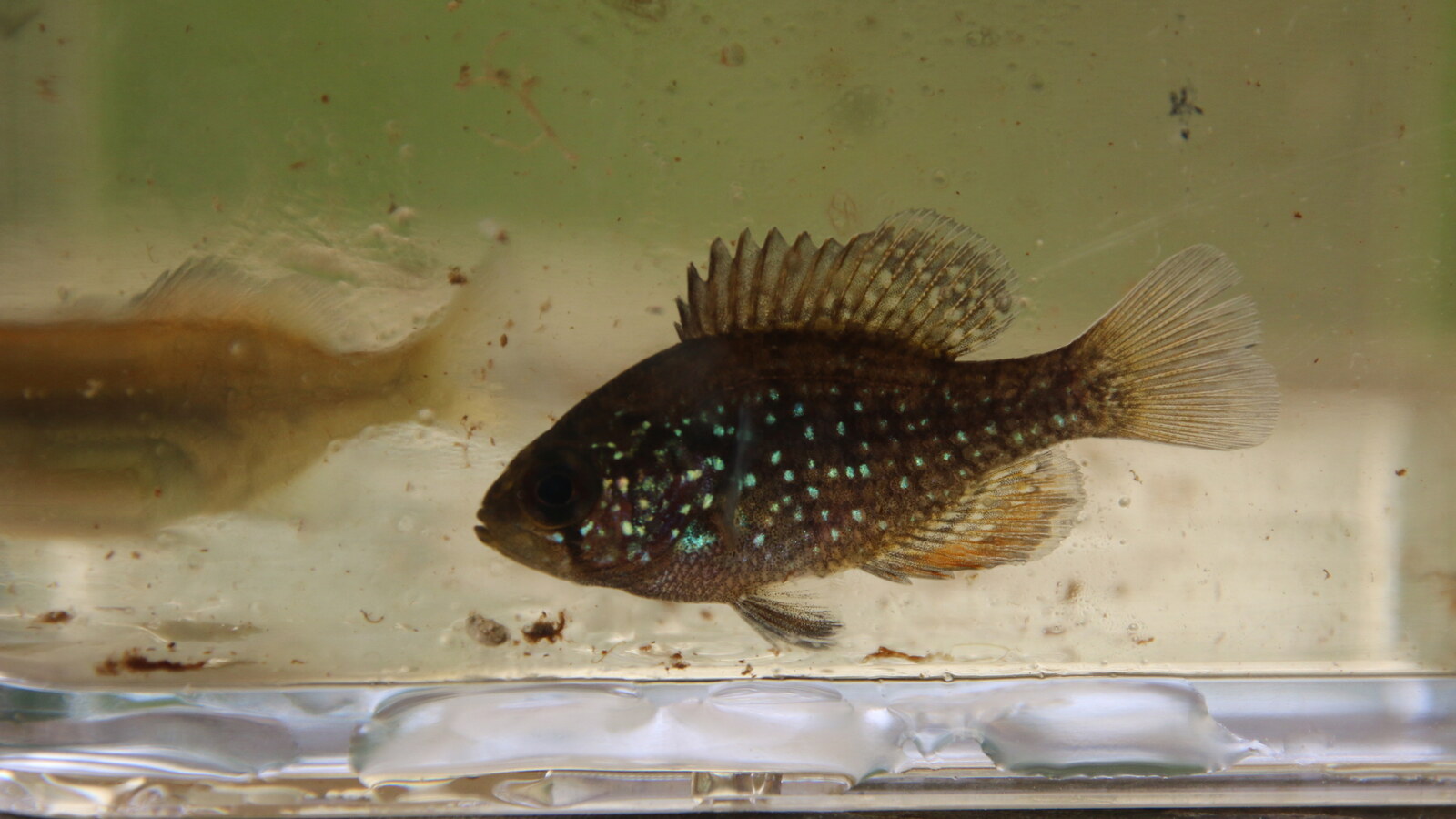
The Bluespotted Sunfish is a tiny jewel-like native fish of quiet, heavily vegetated Florida waters.
Bluespotted Sunfish favor acidic swamps, backwaters, shallow ponds, and slow streams with dense submerged plants.
Their small size and need for quiet cover make them vulnerable to drainage, channelization, and aggressive nonnative fish.
Habitat:
Freshwater Wetlands, Lakes and Ponds, Rivers and Springs
Area / Range:
Florida Panhandle, North Florida, Central Florida
Diet:
Small aquatic insects, insect larvae, crustaceans, worms, and other tiny invertebrates.
Behavior:
They remain close to vegetation and move slowly through quiet water. Males defend small nest sites during breeding.
Day, Dawn, Dusk
Active Times:
Best time to see:
Daylight in clear shallow backwaters where sunlight reaches dense aquatic plants.
Florida Native Status:
Native
Conservation Status:
Generally secure in suitable habitat but locally sensitive to wetland loss and altered water quality.
Safety Level:
Low Risk
Safety Information:
Harmless. Do not move fish between waters or release aquarium animals into natural habitat.
Benefits to Property:
They consume small aquatic insects and add native diversity to healthy planted ponds and wetlands.
Property Concerns:
No property damage. Excess fertilizer, vegetation clearing, and predatory nonnative fish reduce suitable cover.
Fun Fact:
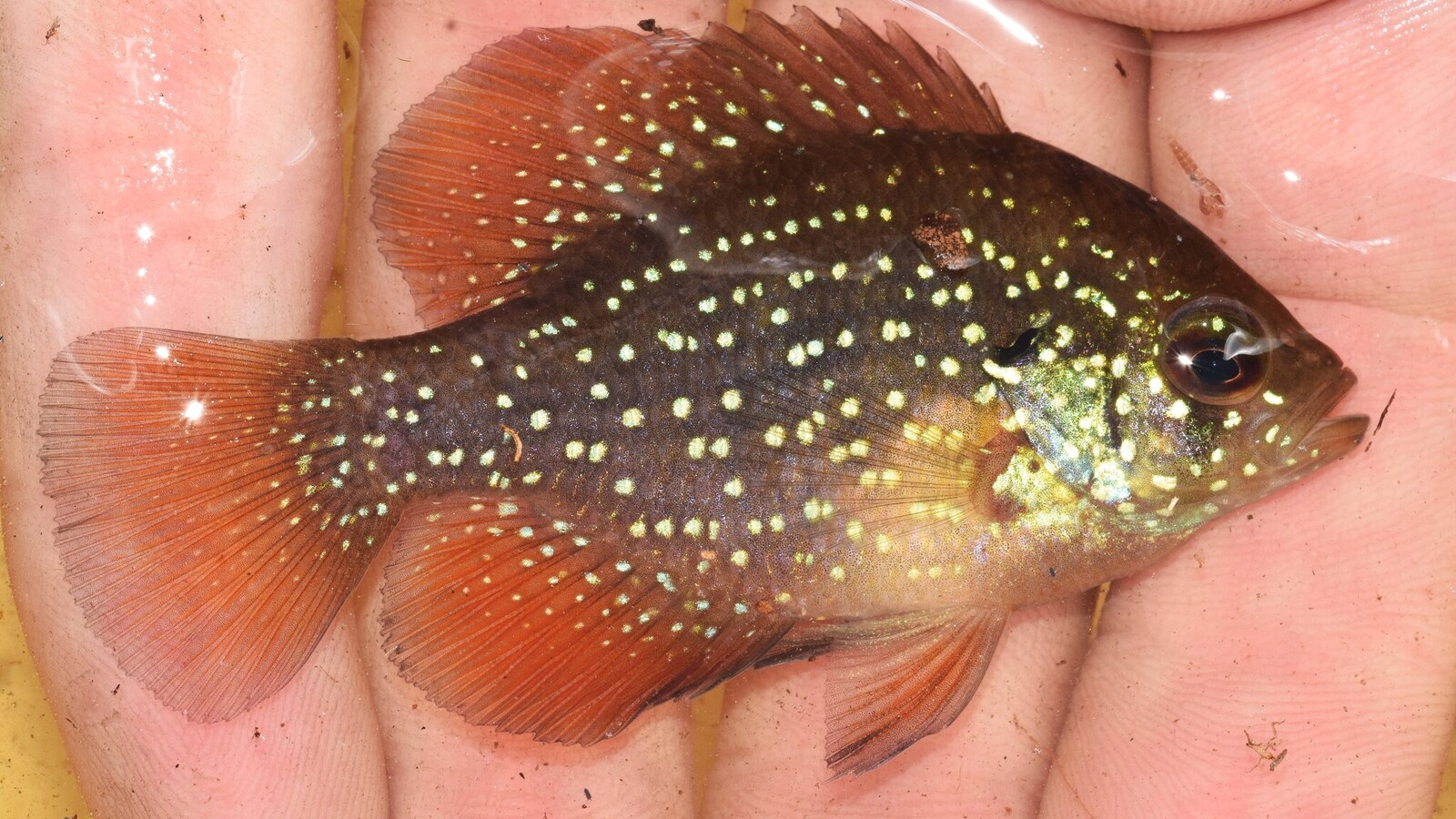
Bright spots appear to glow against the fish's dark body when light reaches it underwater.
Wildlife Laws:
Collection, possession, transport, and release must follow current Florida freshwater fishing and wildlife rules.
Identification:
A small deep-bodied sunfish with a dark brown to black body marked by many iridescent blue or green spots. Fins are rounded, and males become darker during breeding.
Credits:
Facts and photos: iNaturalist Bluespotted Sunfish. Fishing rules: Florida FWC.