
Brown Anole
Anolis sagrei
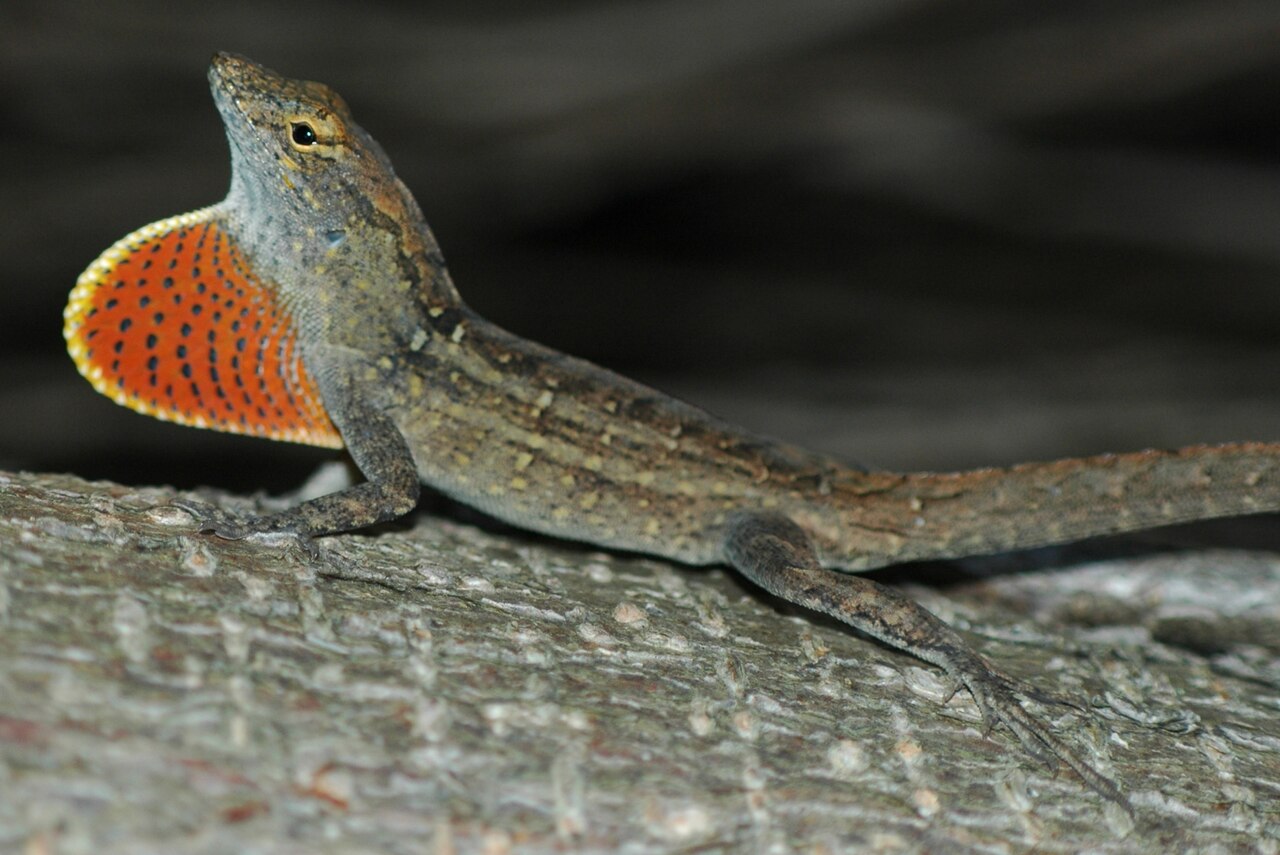
It arrived through cargo and spread across Florida through repeated introductions.
It arrived through cargo and spread across Florida through repeated introductions. Avoid moving plants or materials containing eggs to new areas. Broad pesticide use also harms beneficial predators.
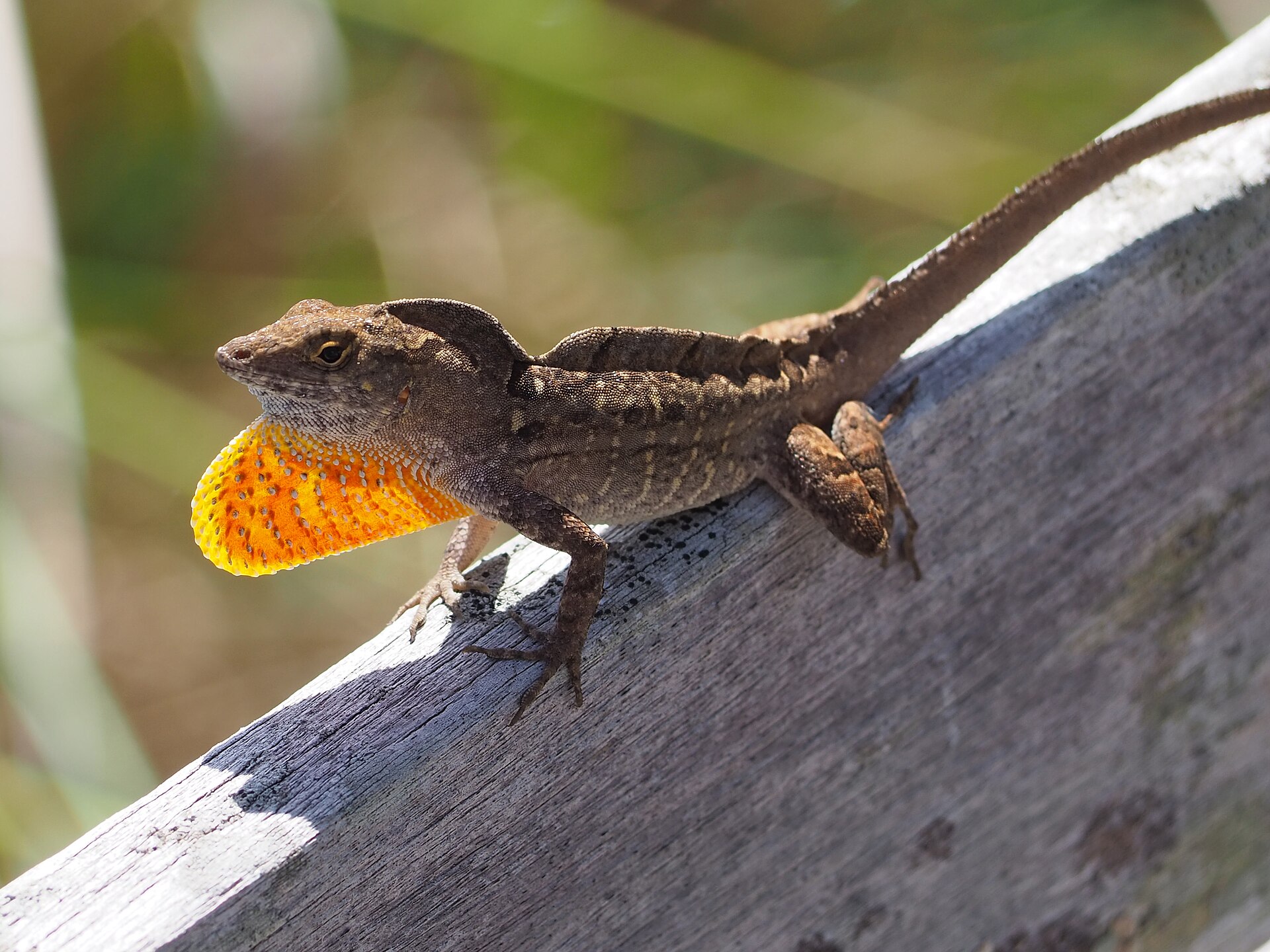
Habitat:
Urban and Residential Areas
Area / Range:
Statewide
Diet:
Small insects, spiders, and other invertebrates.
Behavior:
Active by day. Males defend low perches with head bobs and orange-red dewlap displays.
Day
Active Times:
Best time to see:
Look during day in suitable Florida habitat.
Florida Native Status:
Introduced
Conservation Status:
Widespread nonnative species
Safety Level:
Harmless
Safety Information:
Avoid moving plants or materials containing eggs to new areas. Broad pesticide use also harms beneficial predators.
Benefits to Property:
Consumes many insects and spiders.
Property Concerns:
Competes with Florida’s native green anole and sometimes eats small native lizards.
Fun Fact:
It arrived through cargo and spread across Florida through repeated introductions.
Wildlife Laws:
Avoid moving plants or materials containing eggs to new areas. Broad pesticide use also harms beneficial predators.
Identification:
Brown or gray lizard with patterned back, short snout, and an orange-red male dewlap with a pale border.
Credits:
Facts: wildlife reference. Images: primary image and secondary image, Wikimedia Commons.