
Brown Watersnake
Nerodia taxispilota
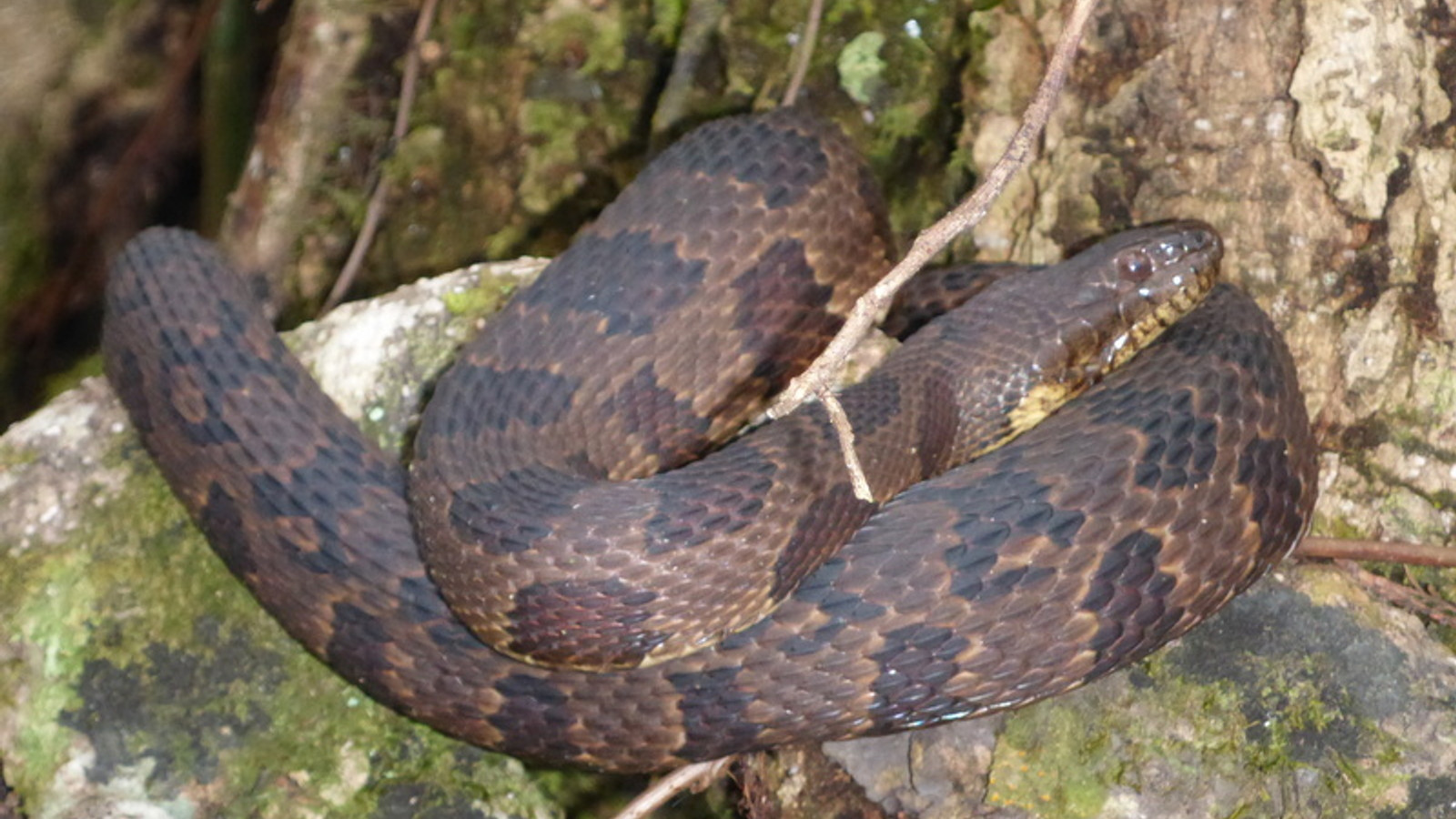
A large nonvenomous watersnake of Florida rivers, lakes, swamps, and tree-lined shorelines.
Brown Watersnakes occur in northern and central Florida near slow rivers, lakes, swamps, and reservoirs. They often bask on branches over water and drop quickly when disturbed.
Their heavy body and blocky markings lead to confusion with cottonmouths. Observation from a distance protects people and this native fish predator.
Habitat:
Rivers and Springs, Lakes and Ponds, Freshwater Wetlands, Canals and Ditches
Area / Range:
North Florida, Central Florida
Diet:
Feeds mainly on fish, especially catfish and other slow-moving freshwater species, and occasionally frogs.
Behavior:
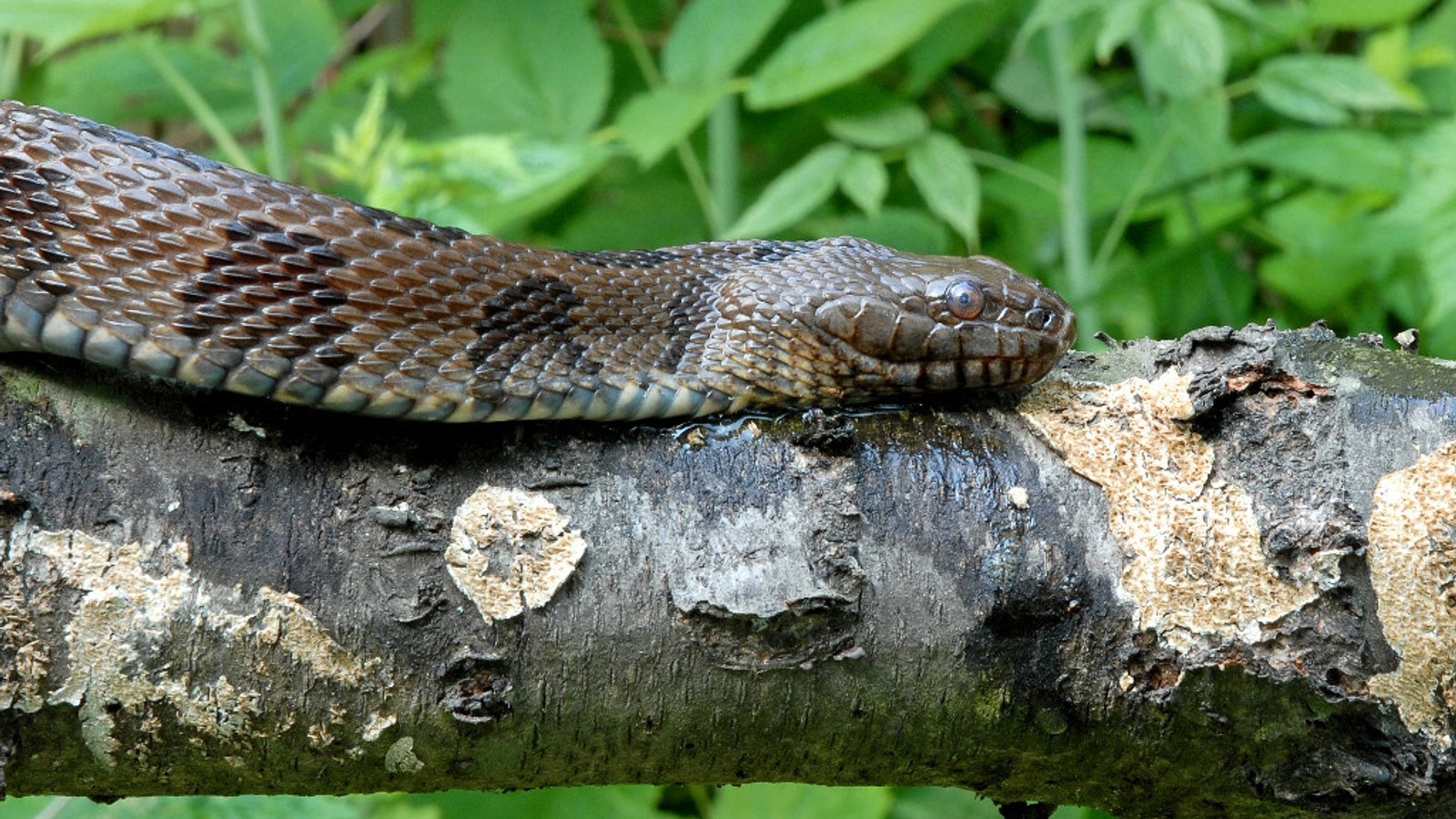
Excellent swimmer and climber. It basks on limbs above water, hunts along shorelines, and drops into water when alarmed.
Daytime, Dawn and Dusk, Nighttime
Active Times:
Best time to see:
Warm months on branches, logs, docks, and shoreline vegetation near freshwater.
Florida Native Status:
Native
Conservation Status:
Not federally or state listed; locally common where suitable waterways and shoreline cover remain.
Safety Level:
Moderate
Safety Information:
Nonvenomous but may bite if handled. Never pick up an unidentified snake. Give it an escape route.
Benefits to Property:
Helps balance freshwater food webs and consumes fish in ponds, canals, and natural waterways.
Property Concerns:
May rest on docks or branches. Encounters increase where vegetation overhangs water, but the snake does not seek people.
Fun Fact:
- It may drop from a branch when startled.
- Females give birth to live young.
- It is often mistaken for a cottonmouth.
Wildlife Laws:
Native snakes must be handled according to Florida wildlife rules and landowner permissions. Use humane conflict management.
Identification:
Heavy-bodied brown snake with dark square blotches down the back, smaller side blotches, keeled scales, and a head wider than the neck.