
Carpenter Frog
Lithobates virgatipes
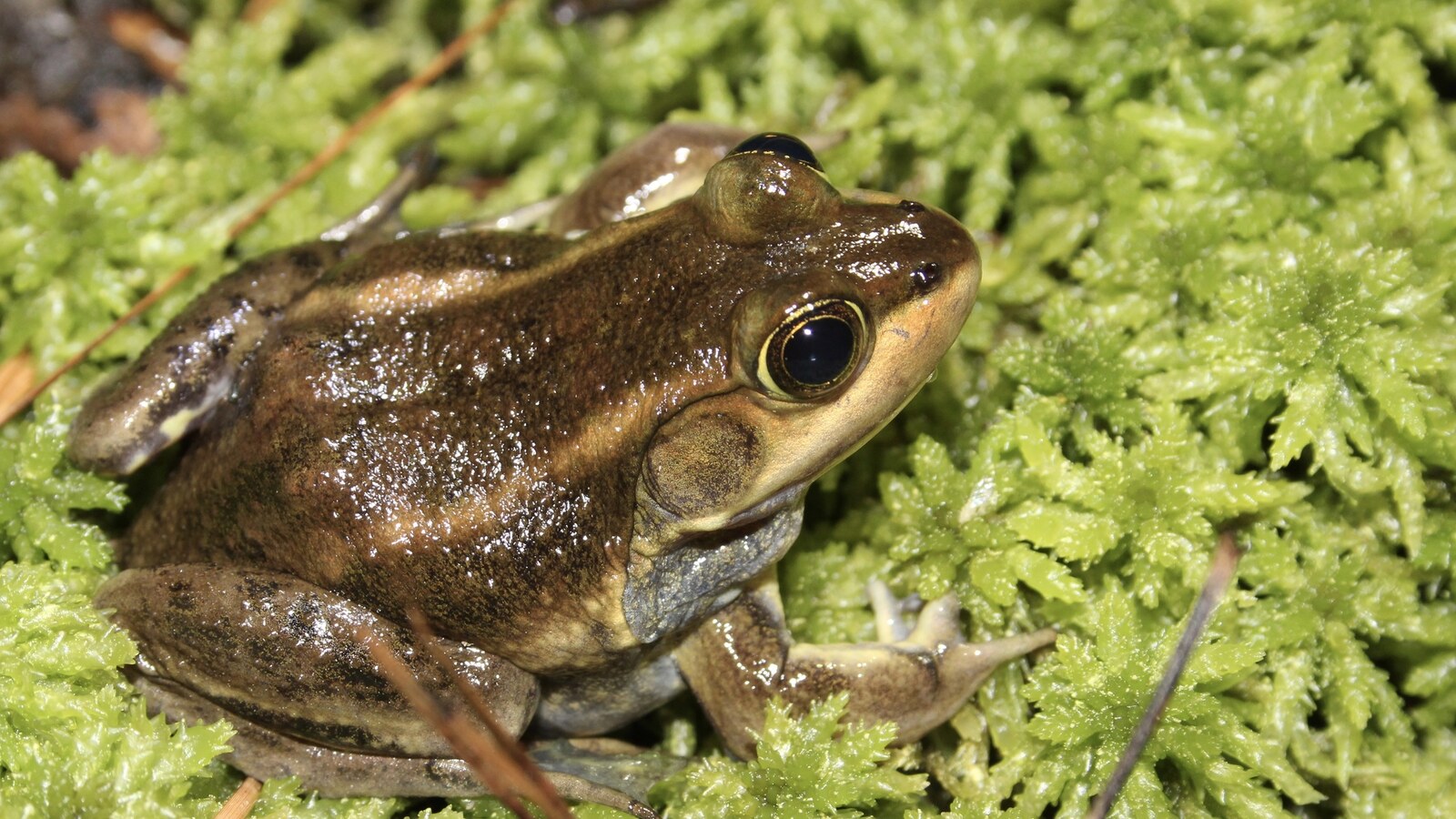
The Carpenter Frog is a striped wetland frog whose sharp calls resemble workers hammering on wood.
In Florida, Carpenter Frogs occur mainly in acidic wetlands of the western Panhandle, including cypress ponds, bogs, and slow blackwater edges.
They remain close to permanent water with dense vegetation and soft organic shorelines.
Habitat:
Freshwater Wetlands, Lakes and Ponds, Rivers and Springs
Area / Range:
Florida Panhandle
Diet:
Insects, spiders, aquatic invertebrates, and other small prey found near wetland margins.
Behavior:
Adults sit at the water's edge and leap into deep cover when approached. Males deliver a repeated hammering call from spring through summer.
Night, Dusk, Dawn
Active Times:
Best time to see:
Warm wet nights in spring and summer along quiet acidic ponds and bogs.
Florida Native Status:
Native
Conservation Status:
Secure in strongholds but limited in Florida and sensitive to wetland drainage, pollution, and shoreline clearing.
Safety Level:
Low Risk
Safety Information:
Harmless. Observe without handling and keep chemicals, soaps, and repellents away from its skin and water.
Benefits to Property:
Carpenter Frogs consume insects and support snakes, herons, and other wetland predators.
Property Concerns:
No property damage. Clearing vegetation, adding fish, or changing acidic wetland water levels reduces habitat quality.
Fun Fact:
The common name comes from the call, which sounds like several people striking hammers at different speeds.
Wildlife Laws:
Native amphibians must not be collected, sold, transported, or kept contrary to Florida rules. Leave breeding sites undisturbed.
Identification:
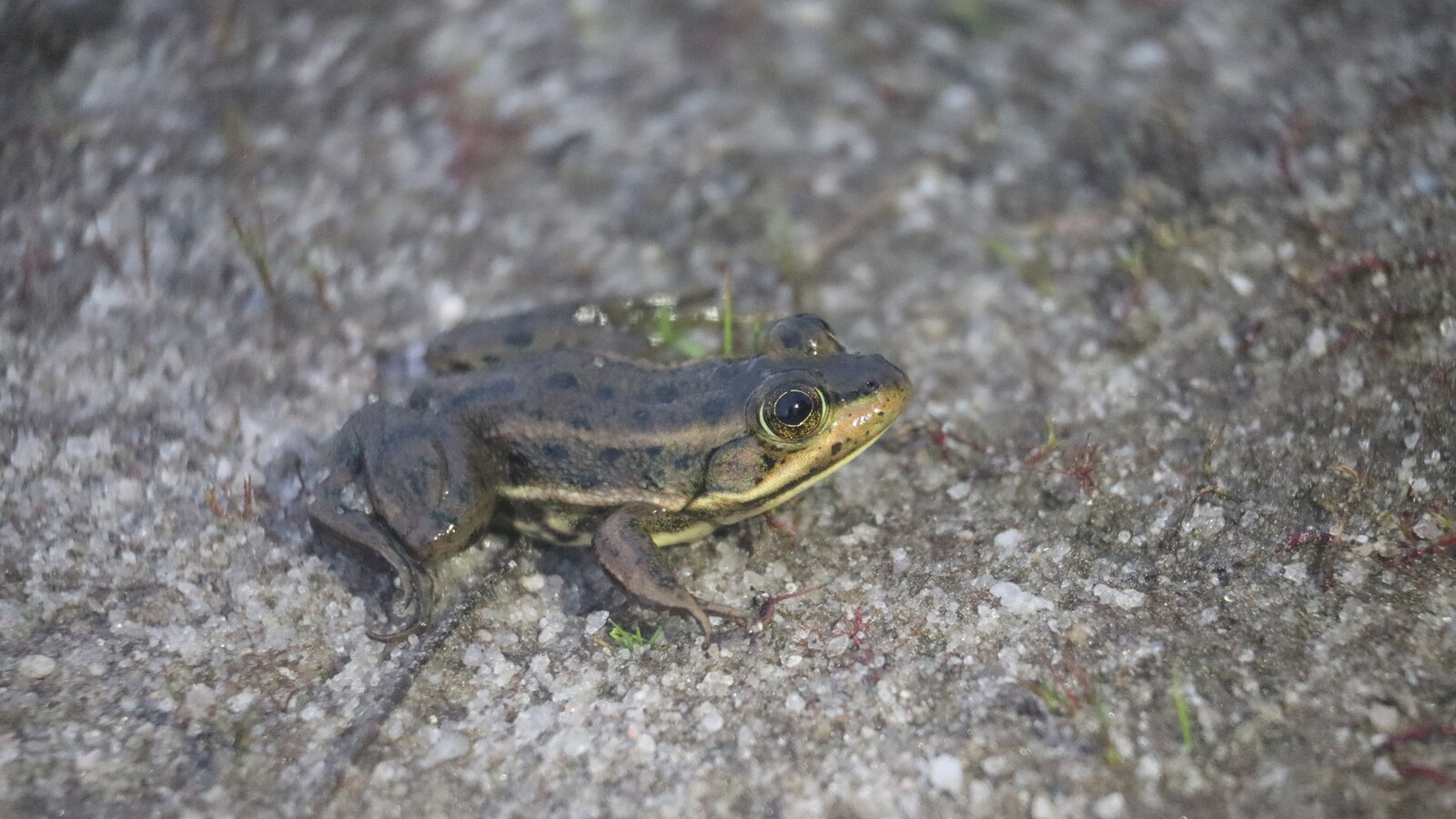
A medium brown frog with four yellow or bronze stripes running down the back, a pale line along the upper lip, and dark webbing on the hind feet.
Credits:
Facts and photos: iNaturalist Carpenter Frog. Amphibian guidance: Florida FWC.