
Cloudless Sulphur
Phoebis sennae
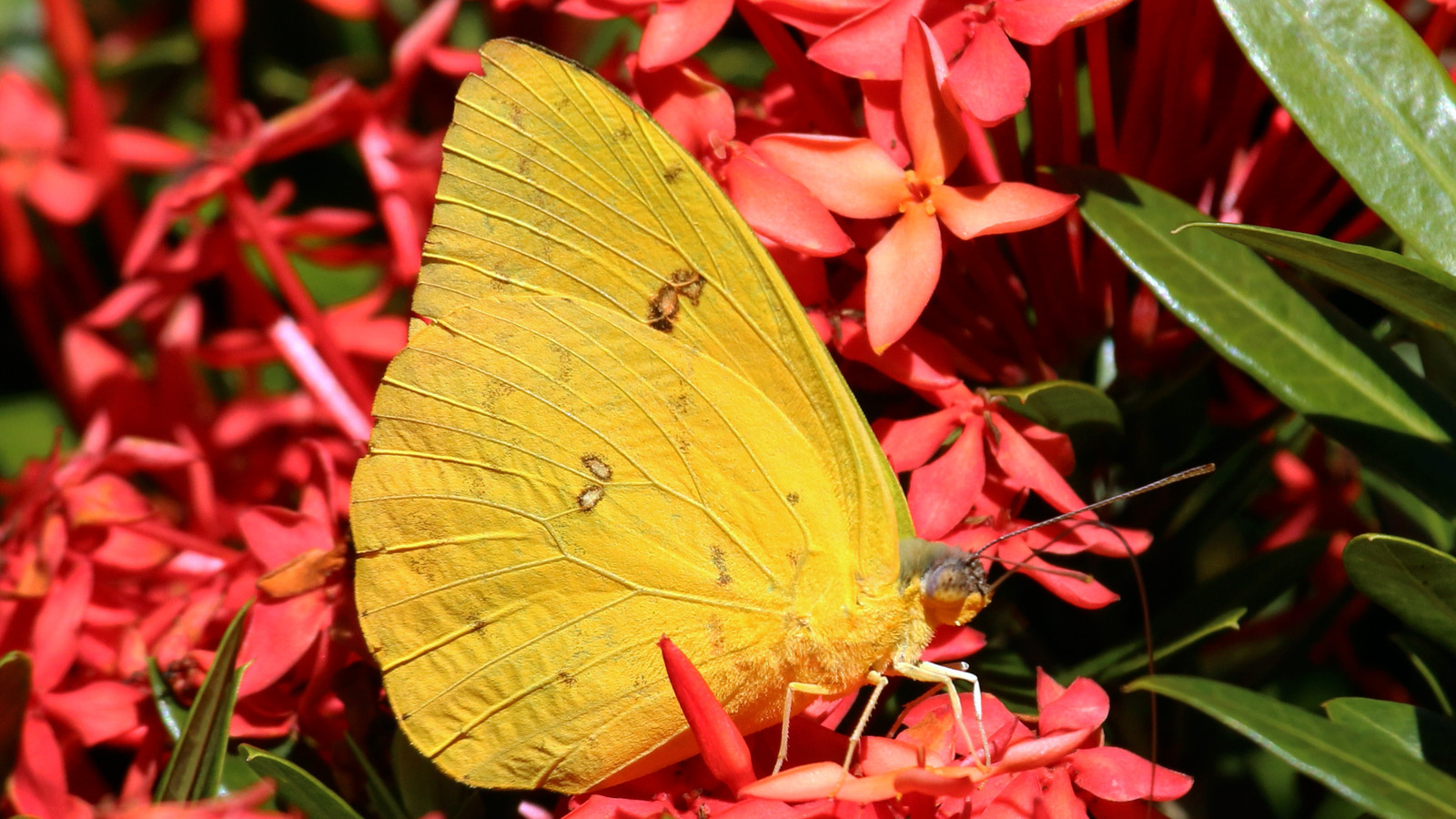
A large yellow Florida butterfly that flies quickly through gardens and lays eggs on native and cultivated senna plants.
Cloudless Sulphurs are familiar year-round butterflies in much of Florida. Their rapid, direct flight carries them between flowering plants, open woods, roadsides, and residential gardens.
Senna species serve as caterpillar hosts, while adults visit many tubular flowers. A pesticide-free landscape with both host plants and nectar blooms supports the complete life cycle.
Habitat:
Forests and Woodlands, Grasslands and Agricultural Areas, Urban and Residential Areas
Area / Range:
Statewide
Diet:
Adults drink nectar from red, pink, orange, and yellow flowers. Caterpillars feed on senna and closely related host plants.
Behavior:
Strong, fast daytime flier that rarely glides for long. Adults migrate seasonally and males patrol open areas while searching for females.
Daytime
Active Times:
Best time to see:
Warm sunny days, especially from spring through fall around senna, firebush, salvia, pentas, and other nectar plants.
Florida Native Status:
Native
Conservation Status:
Not federally or state listed; widespread where host plants and pesticide-free nectar sources remain available.
Safety Level:
Low
Safety Information:
Harmless to people and pets. Avoid spraying caterpillars or host plants with broad-spectrum insecticides.
Benefits to Property:
Pollinates garden flowers and adds dependable butterfly activity to landscapes planted with senna and nectar plants.
Property Concerns:
Caterpillars chew senna leaves, but established plants usually recover. Leaf feeding is part of the butterfly’s normal life cycle.
Fun Fact:
- It often migrates in large seasonal movements.
- Females use senna plants for egg laying.
- Its common name refers to wings with few dark clouds or borders.
Wildlife Laws:
No special state or federal listing applies. Collection and pesticide use remain subject to property, park, label, and protected-area rules.
Identification:
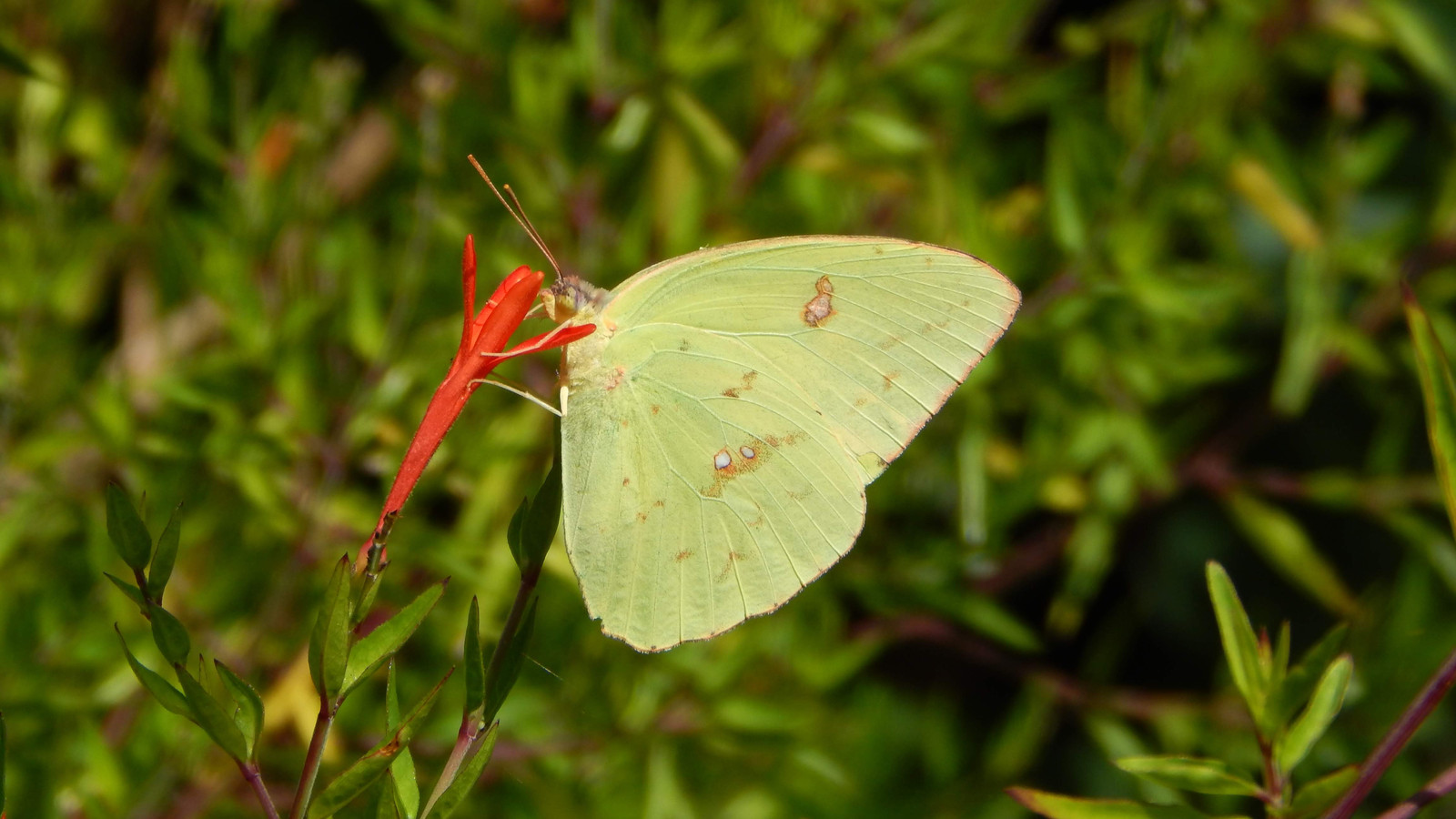
Large yellow sulphur butterfly with pointed forewings. Males are bright clear yellow, while females often show dark wing-edge spots and broader markings.