
Common Bottlenose Dolphin
Tursiops truncatus
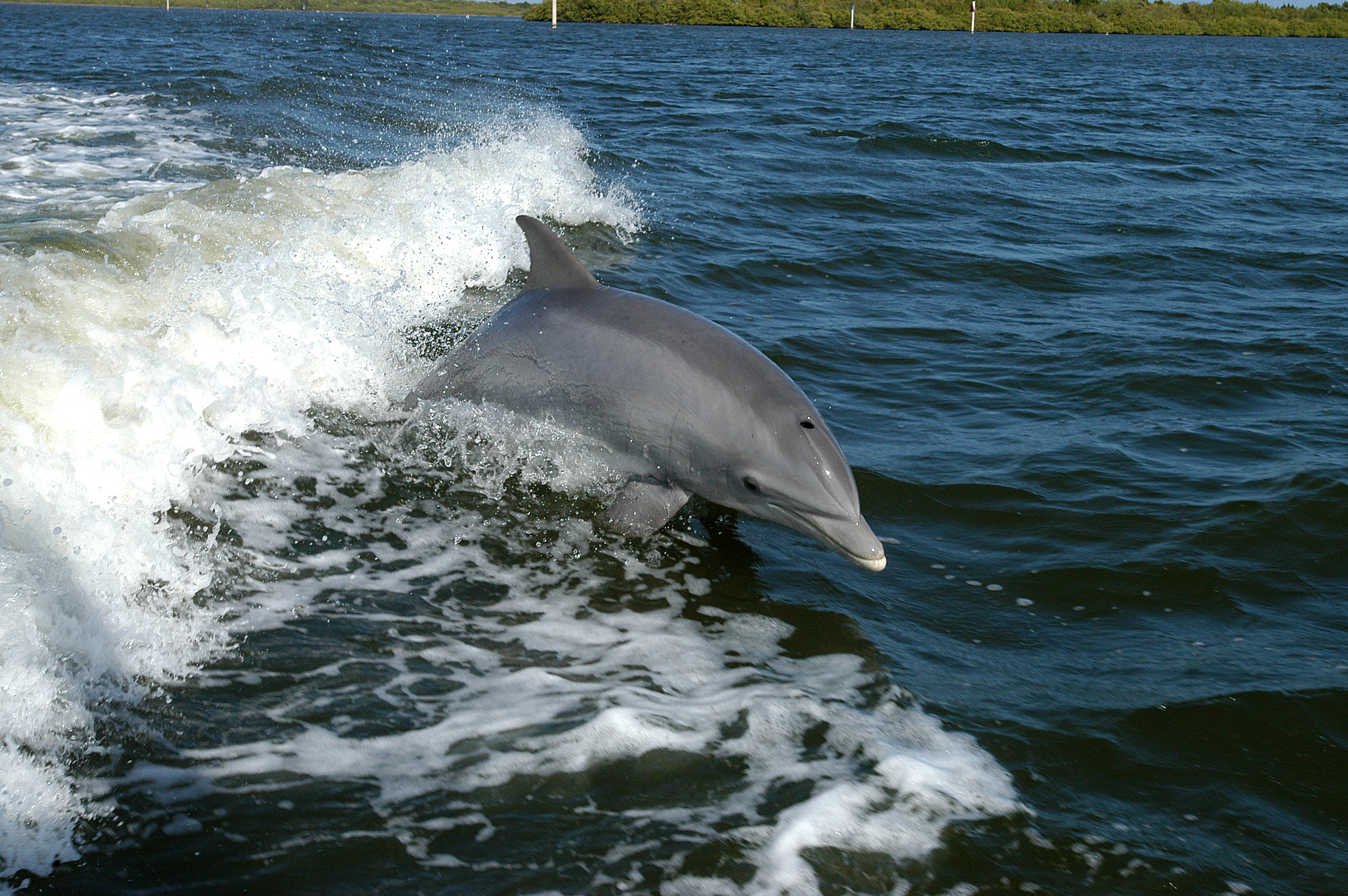
Bottlenose dolphins use individual signature whistles that function much like names.
Bottlenose dolphins use individual signature whistles that function much like names. Never feed, touch, chase, swim with, or crowd wild dolphins. Slow vessels near animals. Protected by the Marine Mammal Protection Act. Feeding and harassment are illegal.
Habitat:
Estuaries and Bays, Coastal Waters
Area / Range:
Atlantic Coast, Gulf Coast
Diet:
Fish, squid, and crustaceans.
Behavior:
Social and intelligent. Uses whistles, clicks, coordinated hunting, and echolocation.
Day, Dawn, Dusk
Active Times:
Best time to see:
Observe from a respectful distance in suitable Florida habitat.
Florida Native Status:
Native
Conservation Status:
Protected marine mammal
Safety Level:
Observe From a Distance
Safety Information:
Never feed, touch, chase, swim with, or crowd wild dolphins. Slow vessels near animals.
Benefits to Property:
Serves as an important indicator of coastal ecosystem health.
Property Concerns:
Fishing line, hooks, vessel strikes, polluted runoff, and feeding cause harm.
Fun Fact:
Bottlenose dolphins use individual signature whistles that function much like names.
Wildlife Laws:
Protected by the Marine Mammal Protection Act. Feeding and harassment are illegal.
Identification:
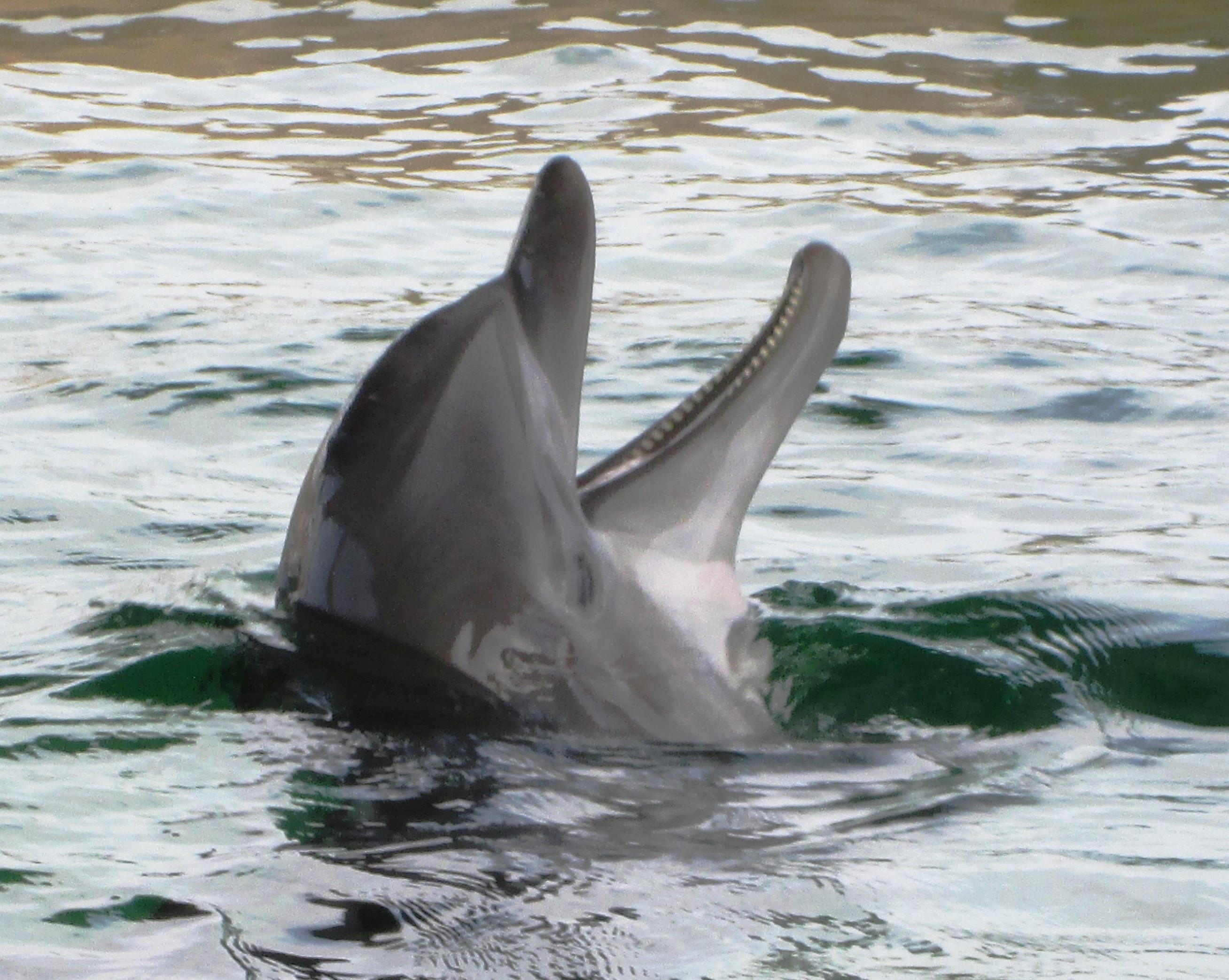
Gray streamlined dolphin with a curved dorsal fin and a short bottle-shaped snout.
Credits:
Facts: wildlife reference. Images: Wikimedia Commons.