
Common Buckeye
Junonia coenia
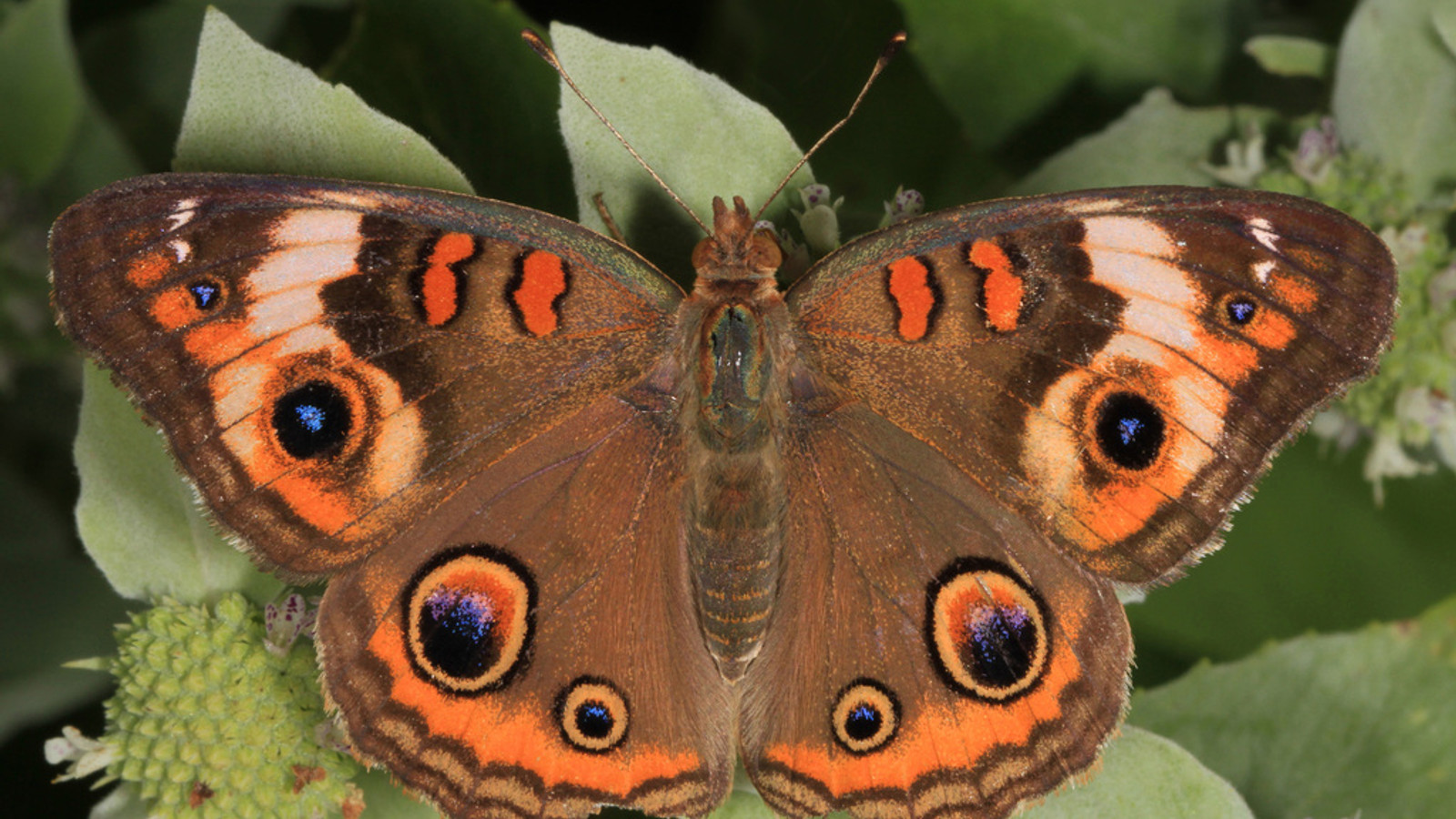
A sun-loving brown butterfly marked by bold orange bands and large colorful eyespots.
Common Buckeyes favor open sunny ground, roadsides, dunes, gardens, and disturbed fields. They often bask with wings spread and fly low in a fast, erratic path when approached.
Adults visit many nectar flowers. Caterpillars use plantain, false foxglove, snapdragon relatives, and native wild petunias as host plants.
Habitat:
Beaches and Dunes, Grasslands and Agricultural Areas, Urban and Residential Areas
Area / Range:
Statewide
Diet:
Adults drink nectar from asters, tickseed, lantana, and other flowers. Caterpillars eat leaves of several low-growing host plants.
Behavior:
Basks on bare soil, paths, and low foliage with wings open. It flies close to the ground and returns quickly to sunny perches.
Daytime
Active Times:
Best time to see:
Sunny warm days in open gardens, roadsides, dunes, fields, and patches of low wildflowers.
Florida Native Status:
Native
Conservation Status:
Not federally or state listed; common where host plants and open sunny habitat remain.
Safety Level:
Low
Safety Information:
Harmless. Avoid touching wings or spraying occupied flowers and host plants.
Benefits to Property:
Pollinates flowers and adds visible biodiversity to sunny native plantings.
Property Concerns:
Caterpillars chew host-plant leaves, which is a normal part of a butterfly garden and rarely harms established plants.
Fun Fact:
- Large eyespots can startle predators.
- Wing color changes with season and climate.
- Adults often land on bare ground to warm themselves.
Wildlife Laws:
No special listed-species protection applies. Collecting in parks or preserves and pesticide applications remain subject to applicable rules and label directions.
Identification:
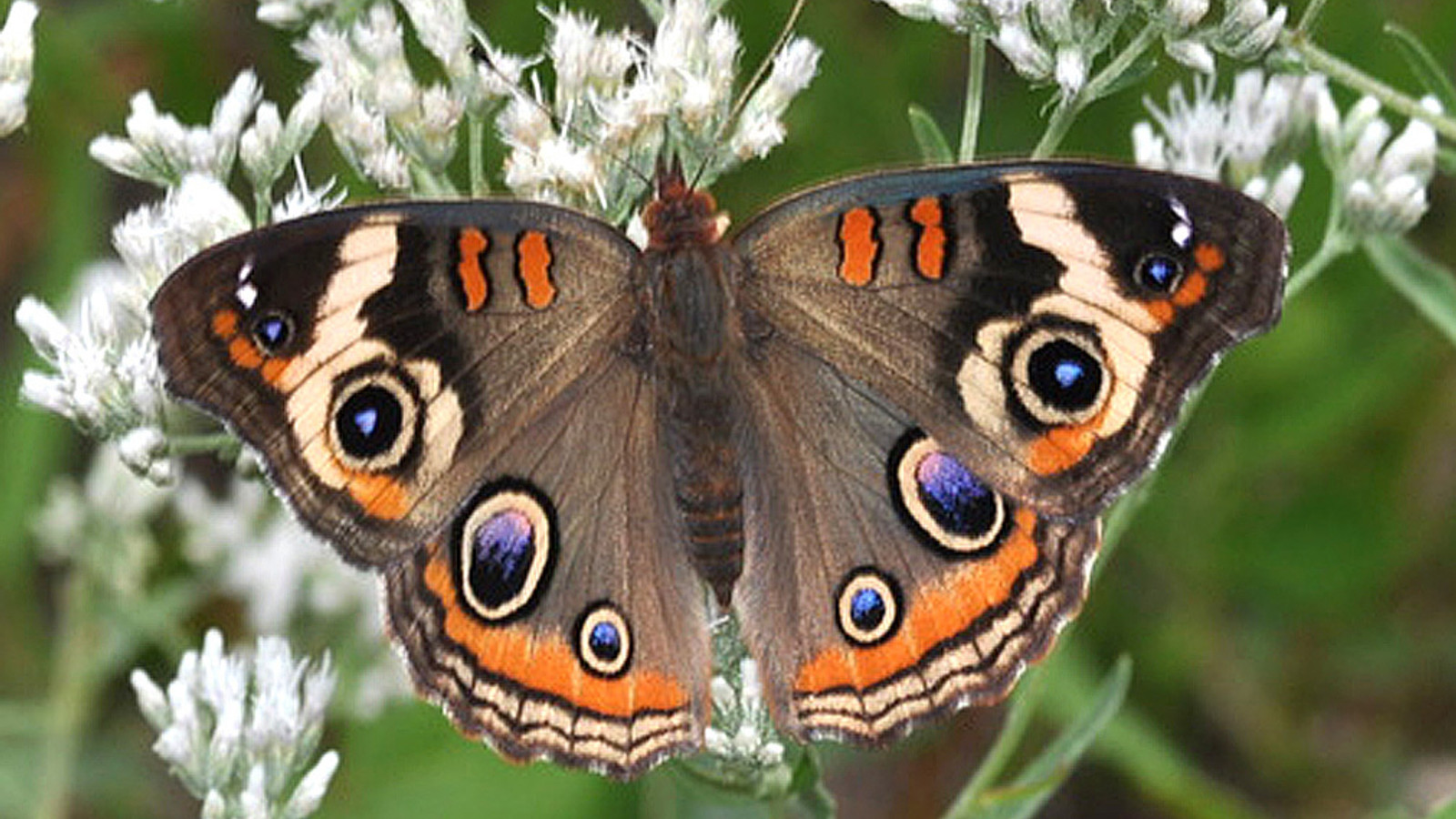
Brown butterfly with two large eyespots on each hindwing, smaller forewing eyespots, bright orange bars, and pale bands near the forewing tips. Seasonal forms vary in color.