
Common Musk Turtle
Sternotherus odoratus
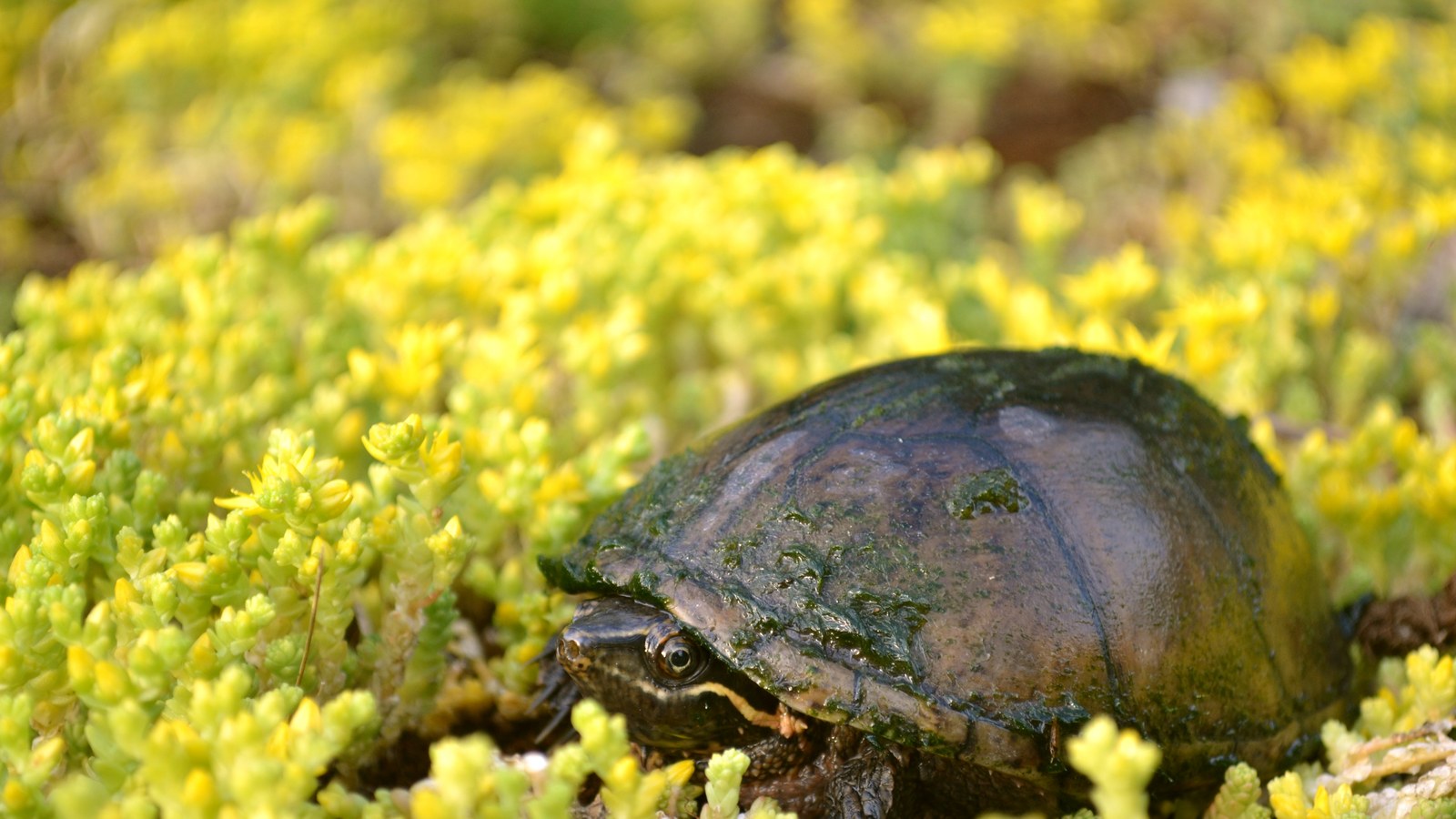
The common musk turtle is a small, mostly aquatic turtle of northern and central Florida that releases a strong odor when threatened.
Common musk turtles live in slow rivers, ponds, lakes, marshes, and vegetated ditches. They spend most of their time walking along the bottom or hiding beneath submerged wood and plants.
They sometimes leave the water during rain or when females search for nest sites. Their nickname, stinkpot, refers to musk released from glands when the turtle feels threatened.
Habitat:
Lakes and Ponds, Rivers and Springs, Freshwater Wetlands, Canals and Ditches
Area / Range:
Florida Panhandle, North Florida, Central Florida
Diet:
They eat snails, small clams, insects, worms, crayfish, tadpoles, small fish, carrion, and some aquatic plants.
Behavior:
Musk turtles forage along the bottom and climb submerged branches to rest near the surface. They often retreat into their shell or release musk when picked up.
Dawn and Dusk, Night
Active Times:
Best time to see:
Warm evenings, rainy periods, or in shallow, vegetated freshwater with logs and submerged cover.
Florida Native Status:
Native
Conservation Status:
Least Concern globally. Road mortality, wetland loss, and illegal collection create local pressure.
Safety Level:
Use Caution
Safety Information:
Avoid handling. Musk turtles can bite and release a strong-smelling secretion. If one must be moved from immediate danger, keep hands away from the head and move it only a short distance in the direction it was traveling.
Benefits to Property:
They consume snails, insects, carrion, and other organic material, helping freshwater food webs and nutrient cycling.
Property Concerns:
They cause little property damage. A turtle in a pool, drain, or roadway may need careful guidance toward nearby suitable freshwater.
Fun Fact:
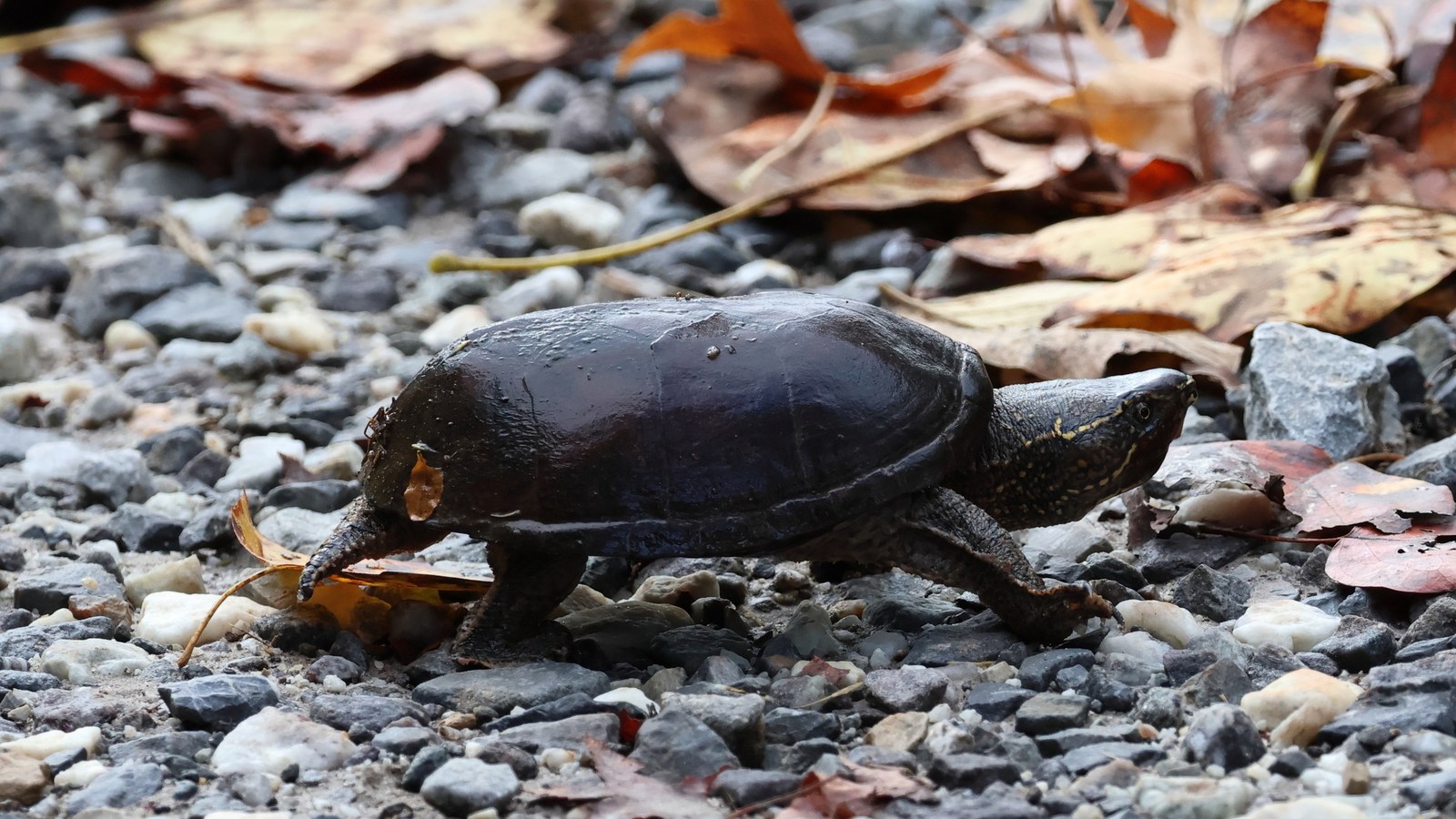
Common musk turtles are better walkers than swimmers. They often travel across the bottom instead of gliding through open water.
Wildlife Laws:
Common musk turtles are native wildlife. Collection, possession, sale, and transport are subject to current FWC rules. Never release a captive turtle or move a wild turtle to a distant water body.
Identification:
This small turtle has a high-domed dark shell, a large head, barbels beneath the chin, and two pale stripes running along the sides of the head. Older adults may have faint or broken stripes.
Credits:
Facts: Common musk turtle species account. Images: primary and secondary, Wikimedia Commons.