top of page

Delta Flower Beetle
Trigonopeltastes delta
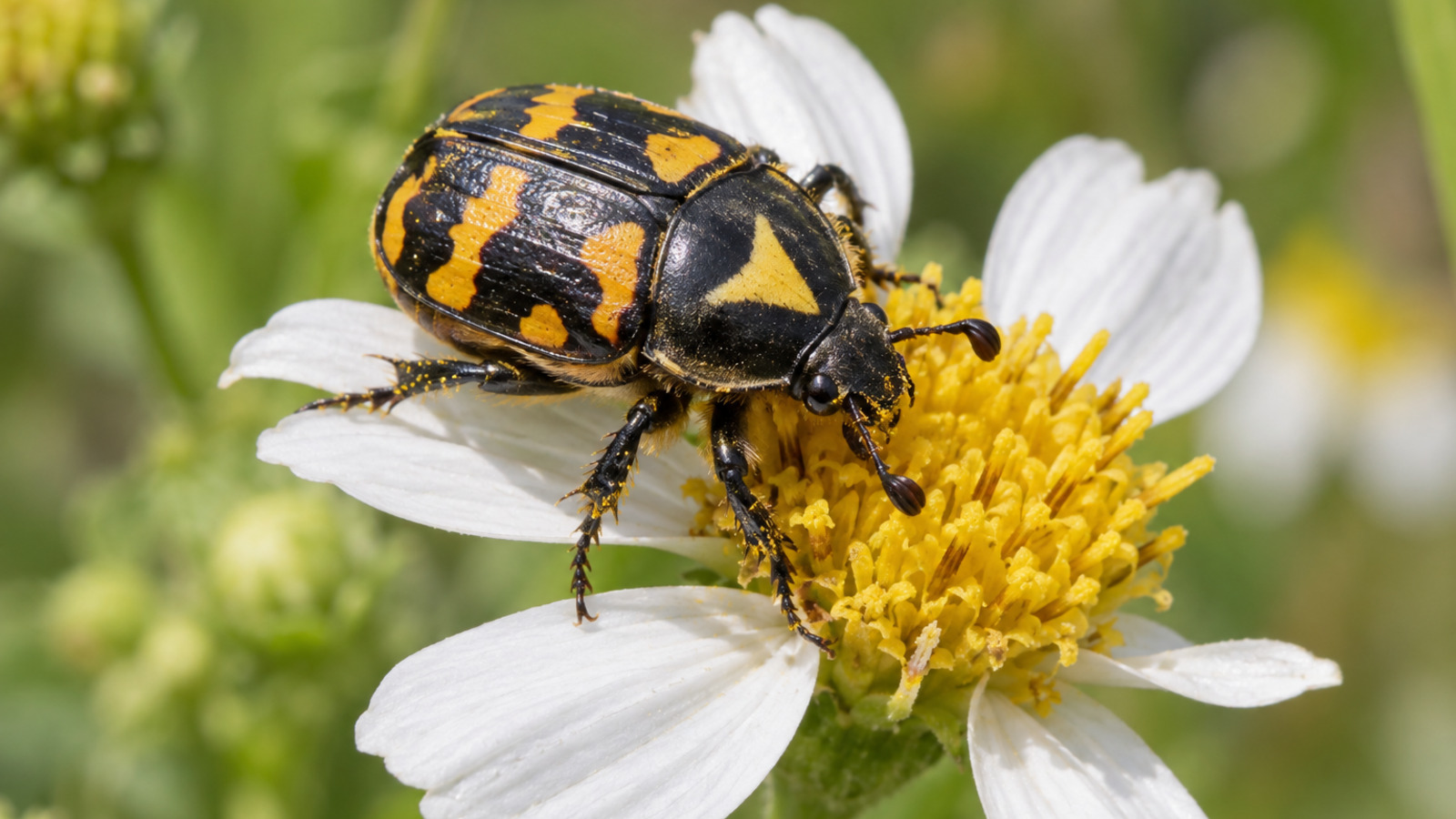
The Delta Flower Beetle is a small native scarab recognized by the bright triangular mark on its pronotum.
The Delta Flower Beetle is a colorful native flower scarab with a glossy black body, orange-yellow markings, and a bold triangular mark on the pronotum. Adults are conspicuous visitors to many Florida flowers.
Adults feed mainly on pollen and other plant exudates. The larvae develop in decaying wood or organic material, where they help break down plant matter without causing significant landscape damage.
Habitat:
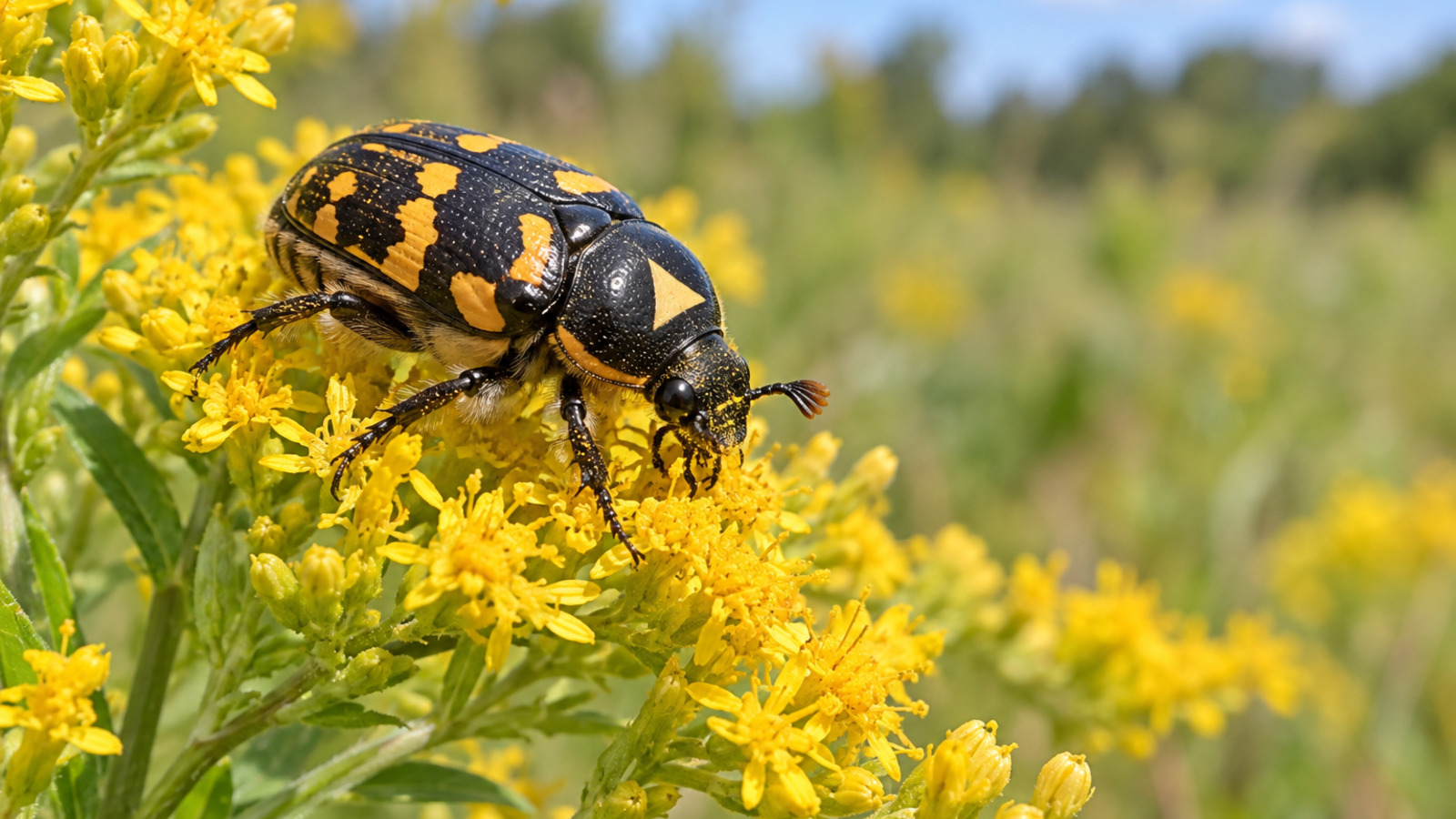
Grasslands and Agricultural Areas, Forests and Woodlands, Urban and Residential Areas
Area / Range:
Statewide
Diet:
Adults feed mostly on pollen, with some sap or decomposing fruit. Larvae consume decaying wood and other organic matter.
Behavior:
Active during daylight and commonly found feeding, flying, and mating on flowers in sunny meadows, woodland openings, gardens, and natural areas.
Day
Active Times:
Best time to see:
Look from May through August on warm sunny days, especially on open flowers in meadows, gardens, and woodland edges.
Florida Native Status:
Native
Conservation Status:
Common where suitable flowers occur and not federally or state listed in Florida.
Safety Level:
Harmless
Safety Information:
This small beetle does not sting and is not known to bite people. Observe it on flowers without using pesticides.
Benefits to Property:
Visits and pollinates many flowers. Its larvae help recycle decaying wood and organic matter.
Property Concerns:
The larvae are not known to cause major plant or property damage. Broad-spectrum insecticides can harm this beneficial native pollinator.
Fun Fact:
Its name refers to the Greek letter delta, which is shaped like the beetle's triangular pronotum mark. Its bold pattern may mimic a wasp.
Wildlife Laws:
This species has no special Florida protection, but collection rules apply on parks, preserves, and other managed lands. Avoid removing wildlife without permission.
Identification:
The most important field mark is a single pale yellow triangle centered on the dark pronotum. Orange-yellow bands and spots decorate the black wing covers.
Adults are only about 8 to 11 millimeters long and have clubbed, leaflike antennae. The triangular pronotum mark separates this species from the much rarer Trigonopeltastes floridana, which has a U- or V-shaped mark.
Credits:
https://ask.ifas.ufl.edu/publication/IN1214
https://www.bugguide.net/node/view/2832
https://zookeys.pensoft.net/article/9178/
bottom of page