
Eastern Coachwhip
Masticophis flagellum flagellum
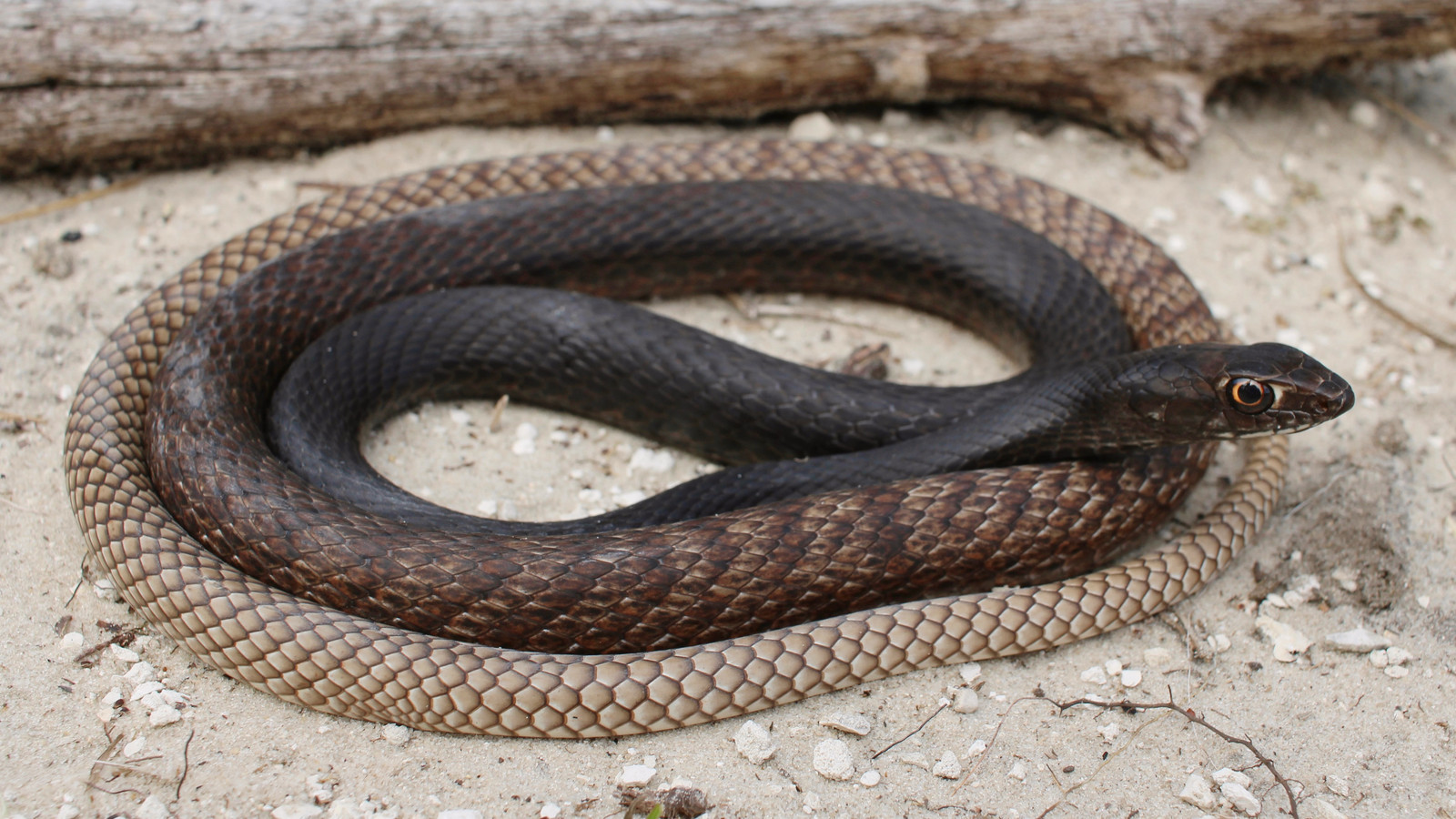
A long, fast, nonvenomous Florida snake with a dark head that fades into a tan, reddish, or pale whip-like tail.
Eastern Coachwhips occupy dry, open Florida habitats with loose soil, scattered shrubs, and abundant sun. They are powerful visual hunters and among the state’s fastest-moving snakes.
When approached, a coachwhip usually races for cover. It may defend itself if cornered, but it is nonvenomous and plays a valuable role as a predator of rodents, lizards, insects, and other small animals.
Habitat:
Pine Flatwoods and Sandhills, Scrub and Dry Prairie, Grasslands and Agricultural Areas
Area / Range:
Florida Panhandle, North Florida, Central Florida, South Florida
Diet:
Eats rodents, lizards, birds, eggs, insects, and other snakes captured through active daytime hunting.
Behavior:
Fast, alert, and strongly diurnal. It hunts with its head raised, uses burrows and dense cover for refuge, and may strike repeatedly if restrained.
Daytime
Active Times:
Best time to see:
Warm sunny mornings and afternoons along scrub edges, sandy trails, flatwoods, fields, and open roadsides.
Florida Native Status:
Native
Conservation Status:
Not federally listed; local populations decline when dry uplands are fragmented or repeatedly converted and cleared.
Safety Level:
Low
Safety Information:
Nonvenomous, but a cornered snake may bite. Give it an open escape route and never attempt to catch or restrain it.
Benefits to Property:
Controls rodents, large insects, lizards, and other small animals in open landscapes.
Property Concerns:
No structural damage. Its speed and defensive display can alarm people who mistake it for a venomous snake.
Fun Fact:
- The tail scales resemble the braided lash of an old coach whip.
- It hunts mainly by sight during the day.
- The myth that it whips people is false.
Wildlife Laws:
Native nongame wildlife is subject to Florida and local rules. Do not harm or collect snakes in protected areas or where permits are required.
Identification:
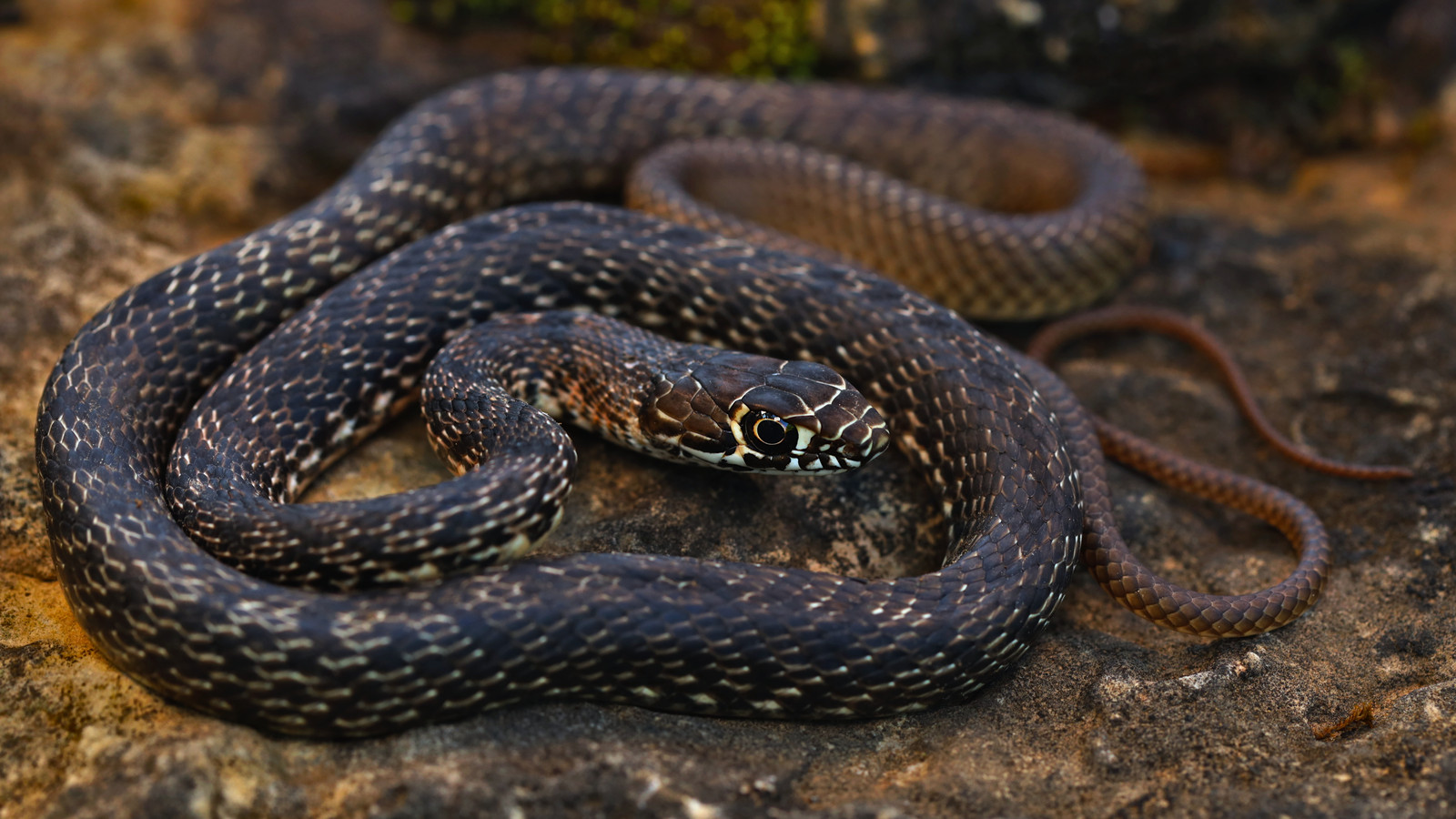
Very long, slender snake with large eyes and smooth scales. Adults often have a black or dark brown head and front body that gradually fades toward a tan or reddish braided-whip tail.