
Eastern Cottontail
Sylvilagus floridanus
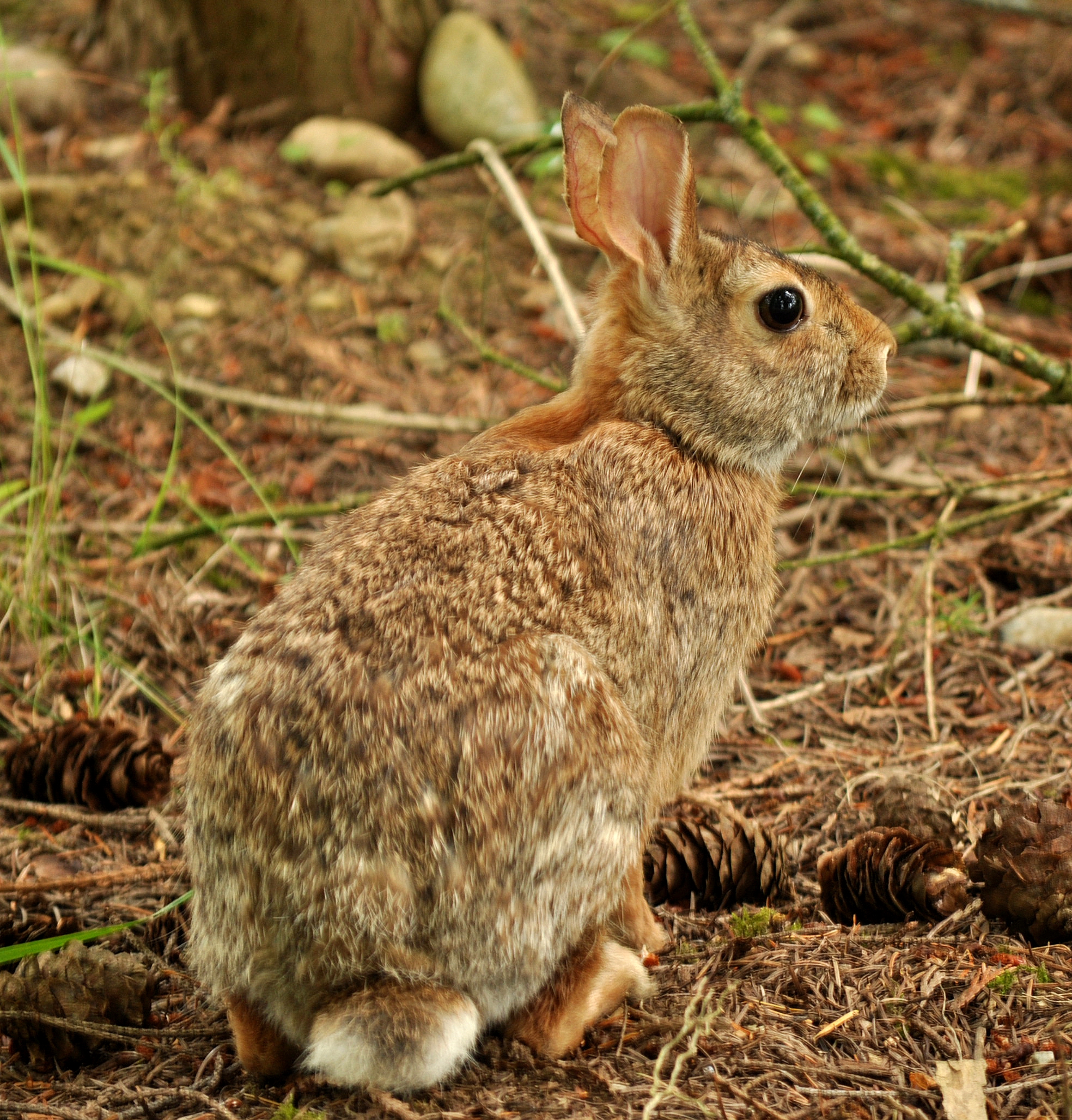
Young cottontails leave shallow grass nests within a few weeks of birth.
Young cottontails leave shallow grass nests within a few weeks of birth. Use fencing around valued plants. Keep pets away from nests and leave healthy young rabbits alone. Hunting and possession follow current FWC seasons, licenses, and rules. Local wildlife regulations also apply.
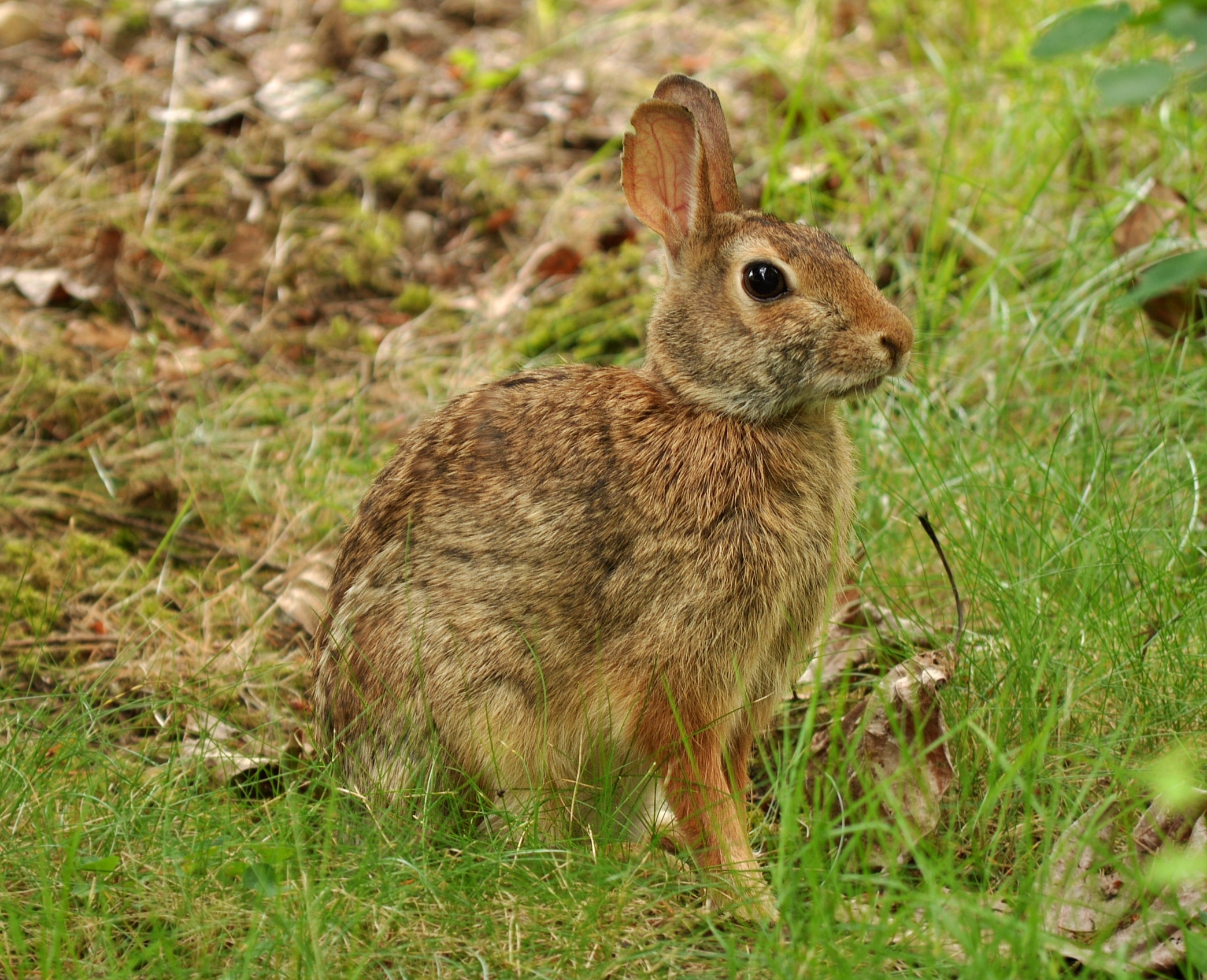
Habitat:
Forests and Woodlands, Grasslands and Agricultural Areas, Urban and Residential Areas
Area / Range:
North Florida, Central Florida
Diet:
Grasses, clover, herbs, garden plants, bark, and twigs.
Behavior:
Hides in dense cover during the day and runs in a zigzag pattern when escaping danger.
Dawn, Dusk, Night
Active Times:
Best time to see:
Observe from a respectful distance in suitable Florida habitat.
Florida Native Status:
Native
Conservation Status:
Common native wildlife
Safety Level:
Harmless. Do Not Handle
Safety Information:
Use fencing around valued plants. Keep pets away from nests and leave healthy young rabbits alone.
Benefits to Property:
Provides prey for hawks, owls, bobcats, foxes, and other native predators.
Property Concerns:
Browses vegetables, flowers, young shrubs, and tender landscape plants.
Fun Fact:
Young cottontails leave shallow grass nests within a few weeks of birth.
Wildlife Laws:
Hunting and possession follow current FWC seasons, licenses, and rules. Local wildlife regulations also apply.
Identification:
Brown-gray rabbit with long ears, large eyes, rusty neck fur, and a bright white cotton-like tail.
Credits:
Facts: wildlife reference. Images: Wikimedia Commons.