
Eastern Hercules Beetle
Dynastes tityus

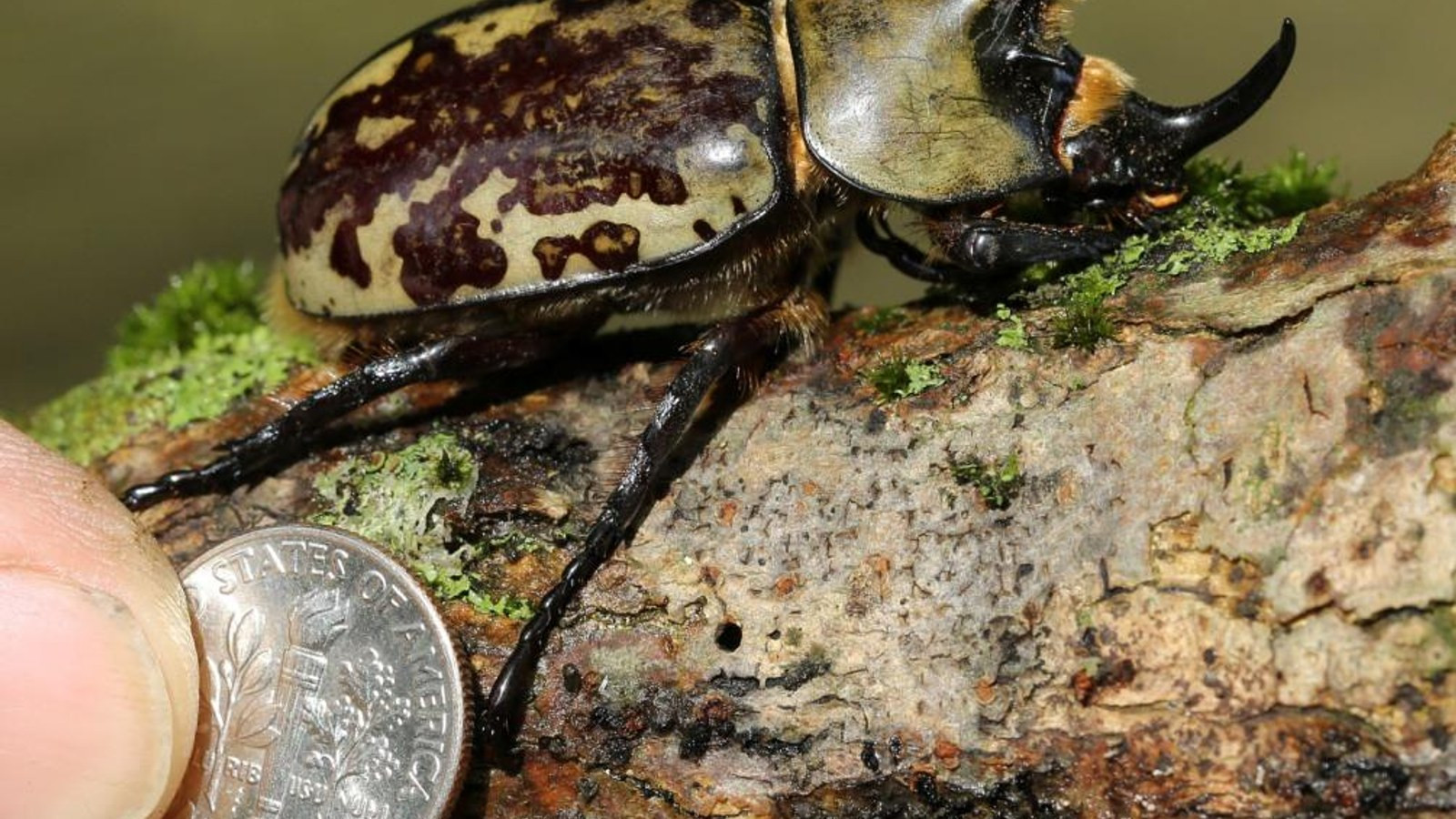
The Eastern Hercules Beetle is one of North America's largest beetles. Males carry long horns, and the larvae develop inside decaying hardwood.
Eastern Hercules Beetles spend most of their lives as larvae in rotting logs, stumps, and buried hardwood. Adults emerge in warm weather and sometimes arrive at porch lights after dark.
The larvae feed on decomposing wood rather than healthy trees. Leaving safe sections of dead wood in woodland gardens supports beetles, fungi, and other decomposers.
Habitat:
Forests and Woodlands, Urban and Residential Areas
Area / Range:
Statewide
Diet:
Larvae eat decaying hardwood. Adults feed on tree sap, soft fruit, and plant juices and often eat very little.
Behavior:
Adults fly at night, come to lights, and use strong legs to grip bark. Males use their horns to push rival males away from mates.
Night
Active Times:
Best time to see:
Warm humid nights in summer near wooded properties, porch lights, decaying logs, and mature hardwoods.
Florida Native Status:
Native
Conservation Status:
Not listed as threatened. Loss of decaying hardwood and unnecessary pesticide use reduce local habitat.
Safety Level:
Low Risk
Safety Information:
The beetle is harmless and not venomous. Strong legs may feel scratchy, so guide it into a container instead of gripping it.
Benefits to Property:
Larvae break down dead wood and return nutrients to the soil. Adults and larvae also support birds, mammals, and other wildlife.
Property Concerns:
Larvae do not attack sound lumber, living trees, or houses. Adults drawn to lights can be moved outdoors without pesticide.
Fun Fact:
The beetle's yellow-green wing covers become darker when humidity rises, changing its appearance from one day to the next.
Wildlife Laws:
No special Florida listing applies. General park and preserve rules often prohibit collecting wildlife or removing decaying wood.
Identification:
Males have two long opposing horns and yellow-green wing covers marked with dark spots. Females lack the long horns and have a heavier dark head and thorax. Color changes with moisture.
Credits:
Facts: UF/IFAS Entomology. Images: primary and secondary.