
Eastern Lubber Grasshopper
Romalea microptera
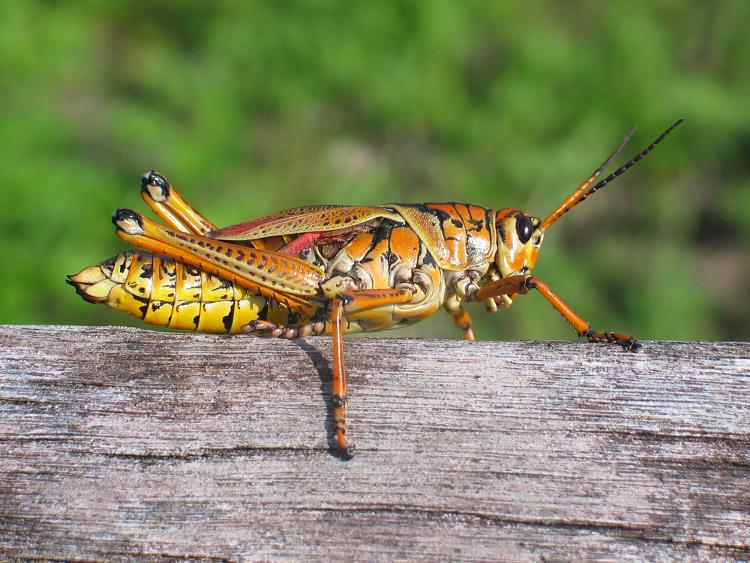
Bright colors warn predators about toxic and foul-tasting defensive chemicals.
Bright colors warn predators about toxic and foul-tasting defensive chemicals. Hand removal of young nymphs is effective. Wear gloves and follow UF/IFAS guidance for plant protection.
Habitat:
Gardens, Roadsides, Wet Areas, Landscapes
Area / Range:
Florida Peninsula, Florida Panhandle
Diet:
Broadleaf plants, lilies, vegetables, and ornamental foliage.
Behavior:
Slow-moving and poor at flight. Young nymphs gather in groups before dispersing.
Day
Active Times:
Best time to see:
Look during day in suitable Florida habitat.
Florida Native Status:
Native
Conservation Status:
Common native insect
Safety Level:
Do Not Eat. Irritating Defensive Secretion
Safety Information:
Hand removal of young nymphs is effective. Wear gloves and follow UF/IFAS guidance for plant protection.
Benefits to Property:
Provides food for a limited group of predators tolerant of its defenses.
Property Concerns:
Large groups severely defoliate lilies, vegetables, and ornamentals.
Fun Fact:
Bright colors warn predators about toxic and foul-tasting defensive chemicals.
Wildlife Laws:
Hand removal of young nymphs is effective. Wear gloves and follow UF/IFAS guidance for plant protection.
Identification:
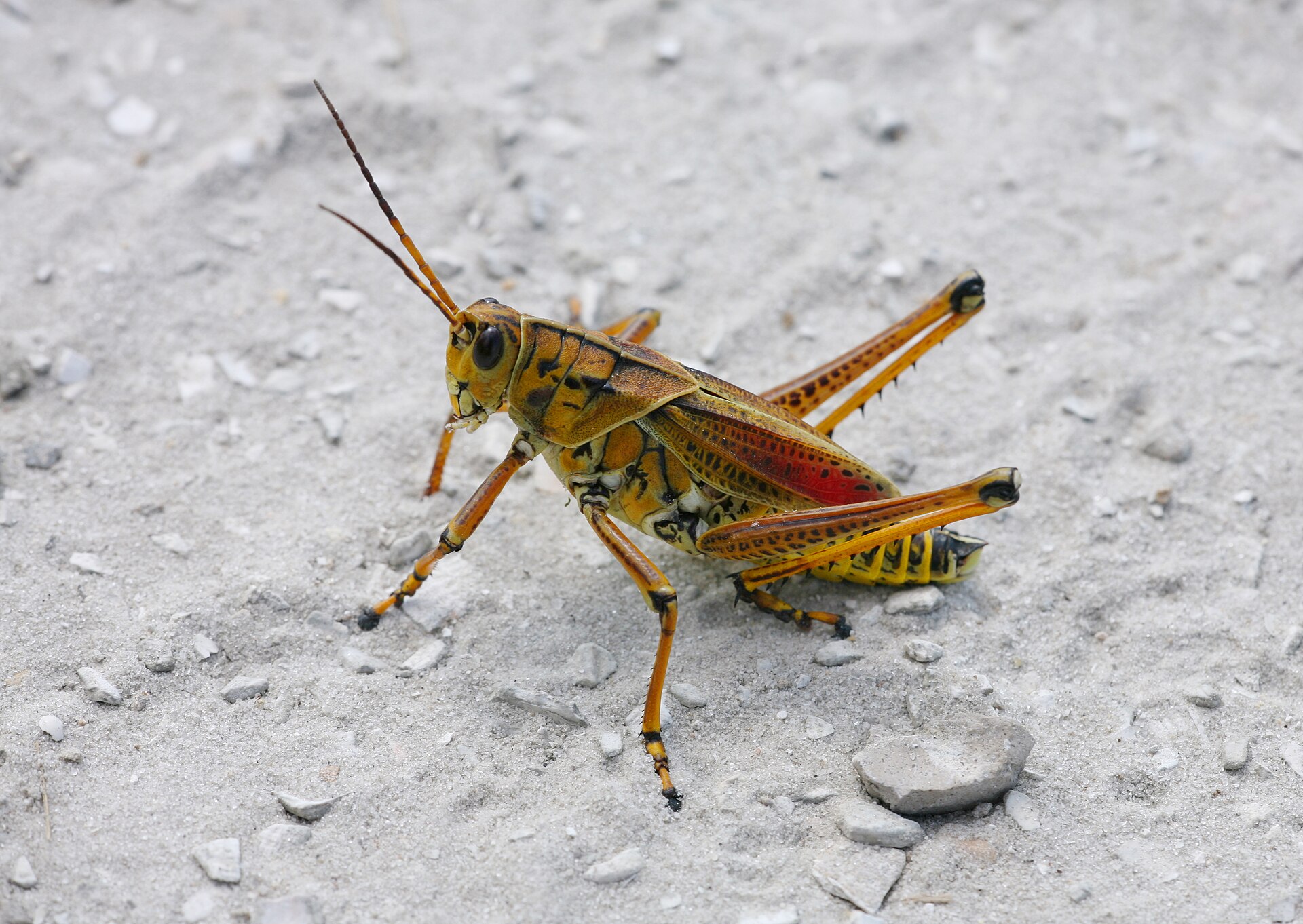
Large grasshopper with yellow-orange, black, or reddish coloration and short wings.
Credits:
Facts: wildlife reference. Images: primary image and secondary image, Wikimedia Commons.