
Eastern Meadowlark
Sturnella magna
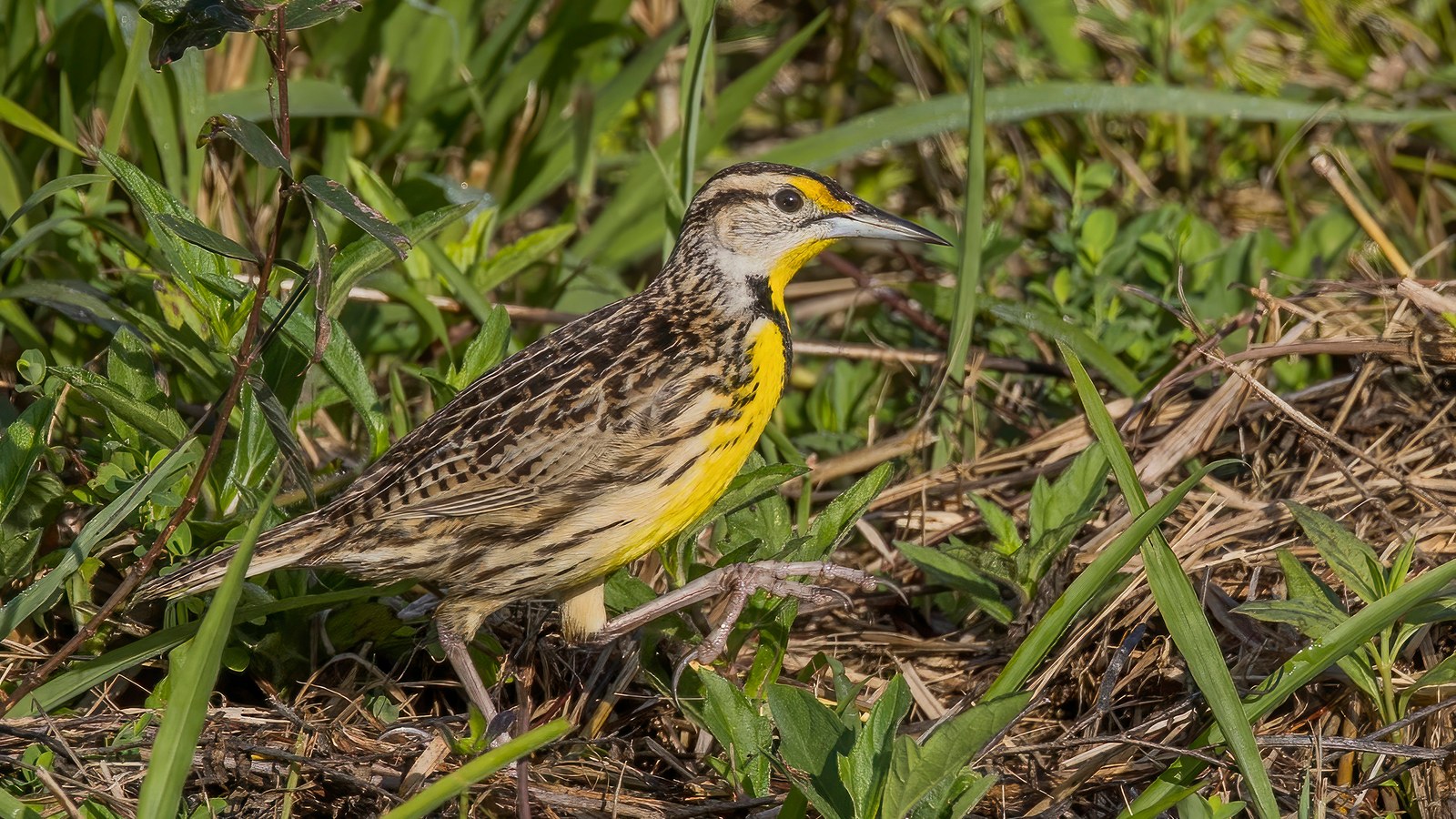
The eastern meadowlark is a ground-dwelling grassland bird with a bright yellow chest, bold black V, and clear whistled song.
Eastern meadowlarks live in pastures, prairies, airports, farms, and other open grassy sites. They forage on the ground and sing from fence posts, shrubs, and utility lines.
Florida birds nest in dense grass, where the female builds a concealed domed nest. Frequent mowing during the breeding season and conversion of open land have contributed to long-term declines.
Habitat:
Grasslands and Agricultural Areas, Scrub and Dry Prairie, Pine Flatwoods and Sandhills
Area / Range:
Statewide
Diet:
They eat grasshoppers, crickets, beetles, caterpillars, grubs, spiders, and other invertebrates. Seeds and waste grain supplement the diet.
Behavior:
Meadowlarks walk through grass and probe the soil with their bills. Males defend breeding territories with clear, flute-like songs delivered from visible perches.
Day
Active Times:
Best time to see:
Early morning in pastures, prairies, and large unmowed fields, especially during spring breeding activity.
Florida Native Status:
Native
Conservation Status:
Near Threatened globally because of sustained population declines and loss of grassland habitat.
Safety Level:
Harmless
Safety Information:
Delay mowing where meadowlarks are nesting. Keep pets out of marked nesting areas and avoid approaching alarmed adults repeatedly.
Benefits to Property:
Eastern meadowlarks consume grasshoppers, grubs, and other agricultural or turf insects. Their presence signals a functioning open-grass habitat.
Property Concerns:
They rarely create property problems. Ground nests are vulnerable to mowing, vehicles, pets, and intensive field maintenance.
Fun Fact:
The eastern meadowlark is not a true lark. It belongs to the blackbird family and uses its strong bill to pry open grass and soil while searching for food.
Wildlife Laws:
Eastern meadowlarks are protected by the federal Migratory Bird Treaty Act. Active nests, eggs, young, and adult birds must not be harmed or removed without authorization.
Identification:
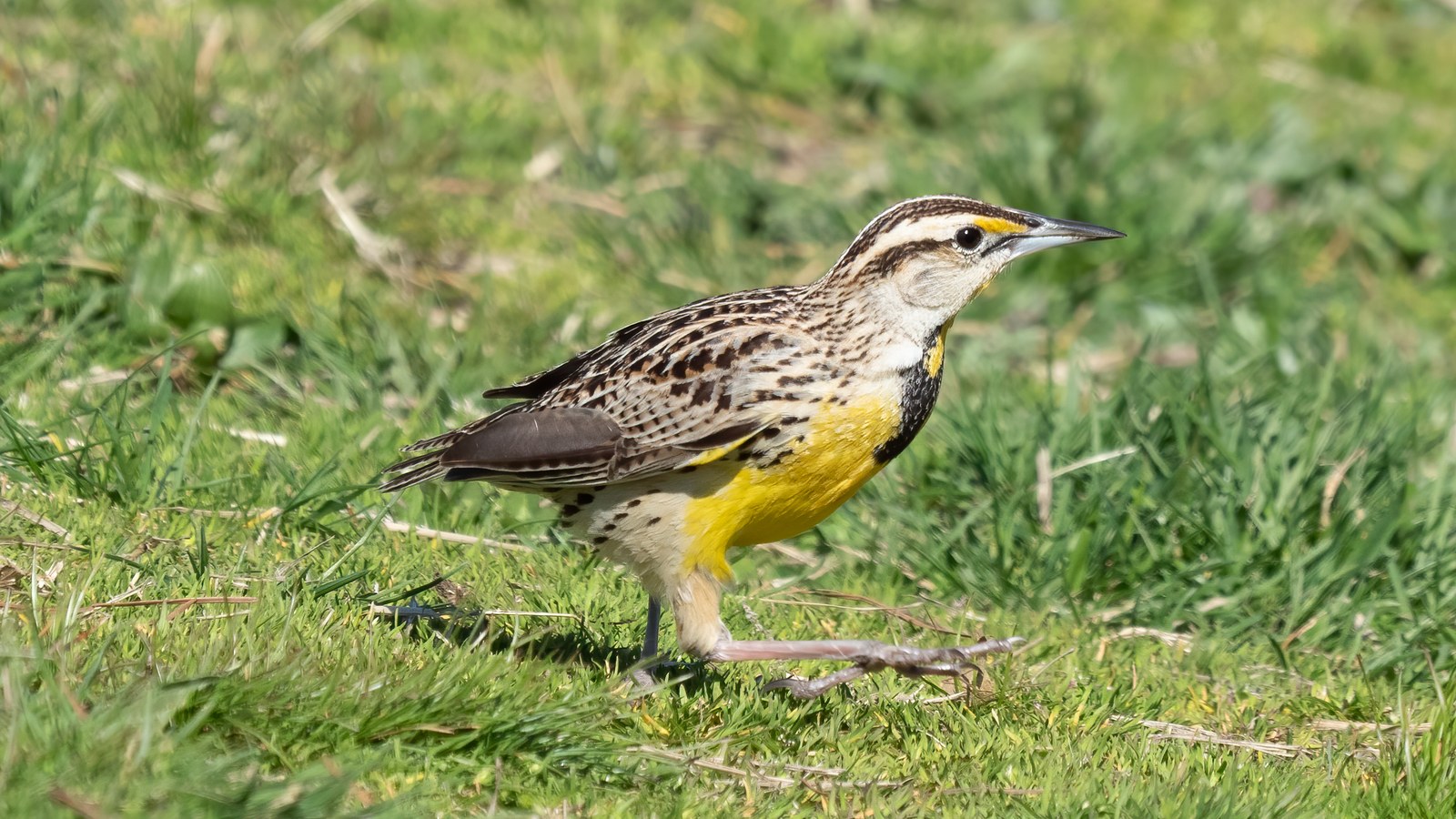
Adults have streaked brown upperparts, yellow underparts, a black V-shaped chest mark, a long pointed bill, and white outer tail feathers. Their stocky body and low walking posture suit open fields.
Credits:
Facts: Cornell Lab of Ornithology. Images: primary and secondary, Wikimedia Commons.