
Eastern Phoebe
Sayornis phoebe
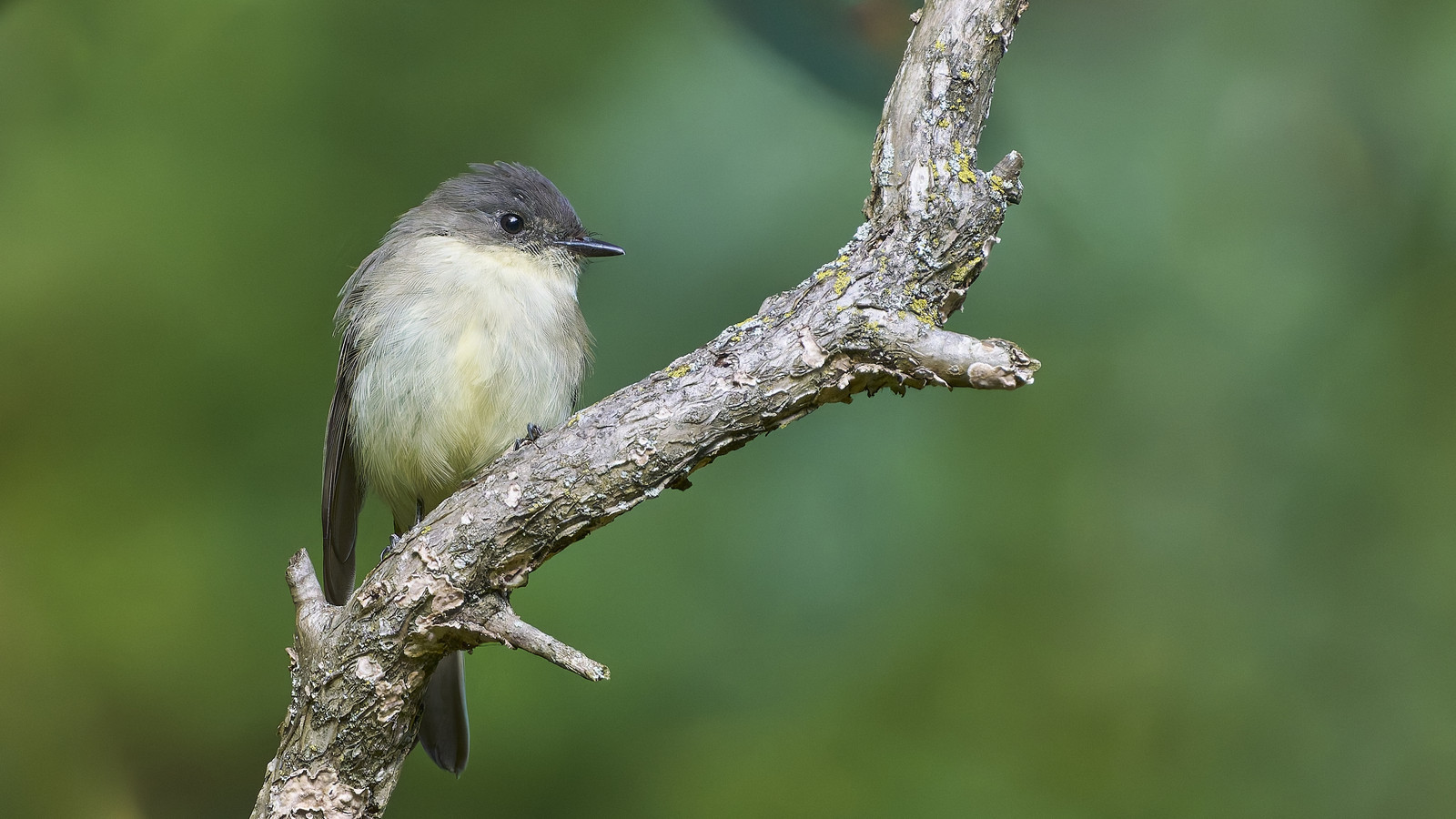
A plain gray-brown flycatcher that pumps its tail, calls its own name, and often nests on sheltered structures near water.
Eastern Phoebes are common winter visitors across Florida, with breeding concentrated farther north. They favor woodland edges, bridges, porches, culverts, and streamside structures.
From an exposed perch, a phoebe repeatedly flies out to capture insects and returns to the same spot. Sheltered ledges often support cup nests made from mud and moss.
Habitat:
Rivers and Springs, Forests and Woodlands, Urban and Residential Areas
Area / Range:
Statewide
Diet:
Eats flies, beetles, moths, wasps, spiders, and other small invertebrates, with some berries during cool weather.
Behavior:
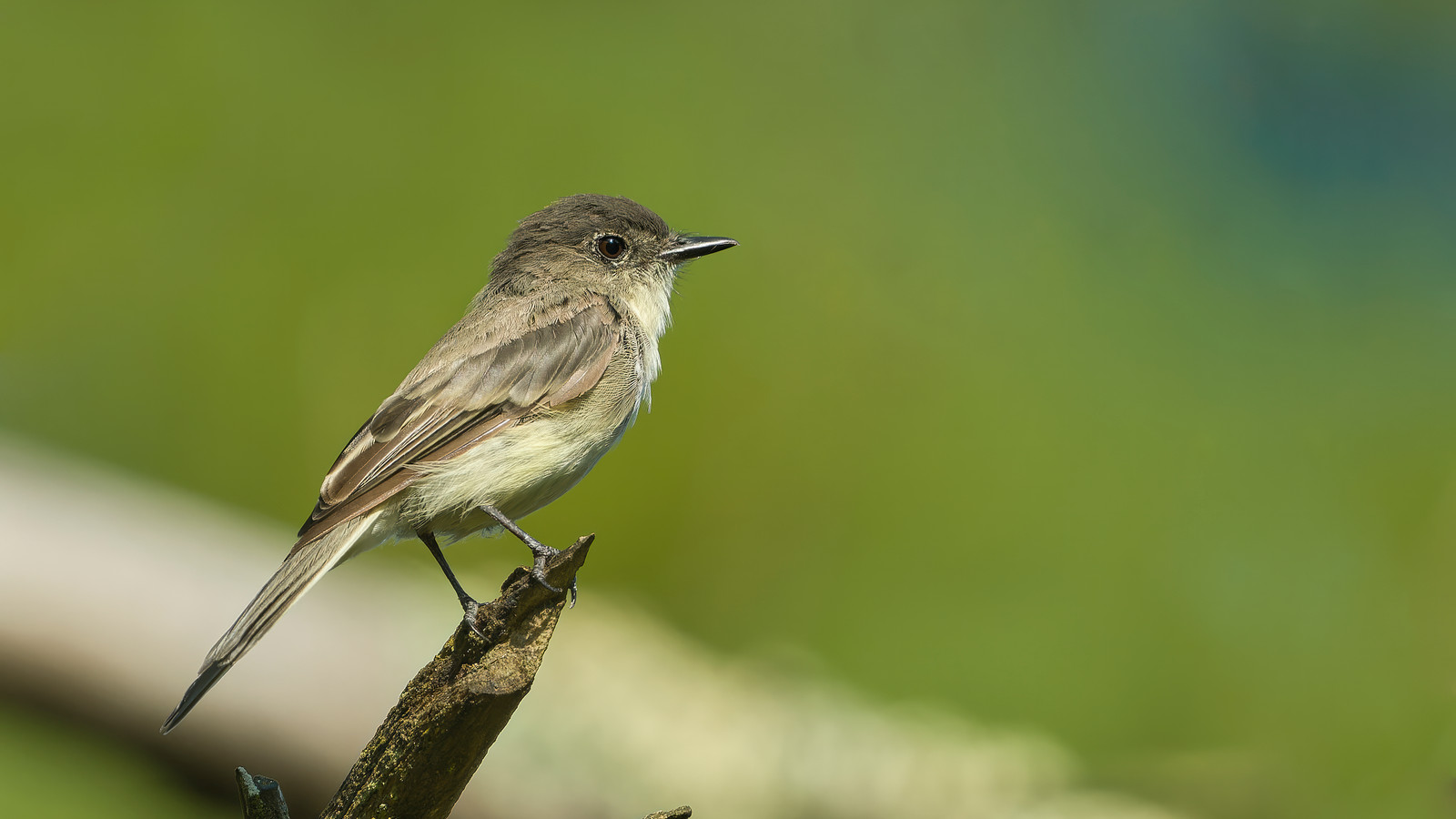
Perches upright, pumps its tail, and makes short flights to catch insects. Often returns to the same nesting ledge in successive years.
Daytime, Dawn and Dusk
Active Times:
Best time to see:
Fall through early spring across Florida, especially near bridges, ponds, shaded porches, and woodland edges.
Florida Native Status:
Native
Conservation Status:
Not federally listed; populations remain widespread, though local nesting success depends on safe sheltered sites and insect availability.
Safety Level:
Low
Safety Information:
Give active nests space and delay pressure washing, painting, or repairs near an occupied ledge until young have left.
Benefits to Property:
Removes flying insects around porches, ponds, barns, bridges, and shaded landscape edges.
Property Concerns:
Mud nests and droppings may mark walls or ledges. Place a removable board below the nest instead of disturbing an active nest.
Fun Fact:
- Its fee-bee call sounds like its common name.
- It was the first bird species banded in North America.
- Pairs often reuse the same sheltered nest location.
Wildlife Laws:
Protected under the Migratory Bird Treaty Act. Active nests, eggs, young, and adult birds must remain undisturbed.
Identification:
Small flycatcher with a dark head, gray-brown back, pale belly, thin black bill, and no strong wing bars. Frequent downward tail pumping is a useful clue.