
Eastern Red Bat
Lasiurus borealis
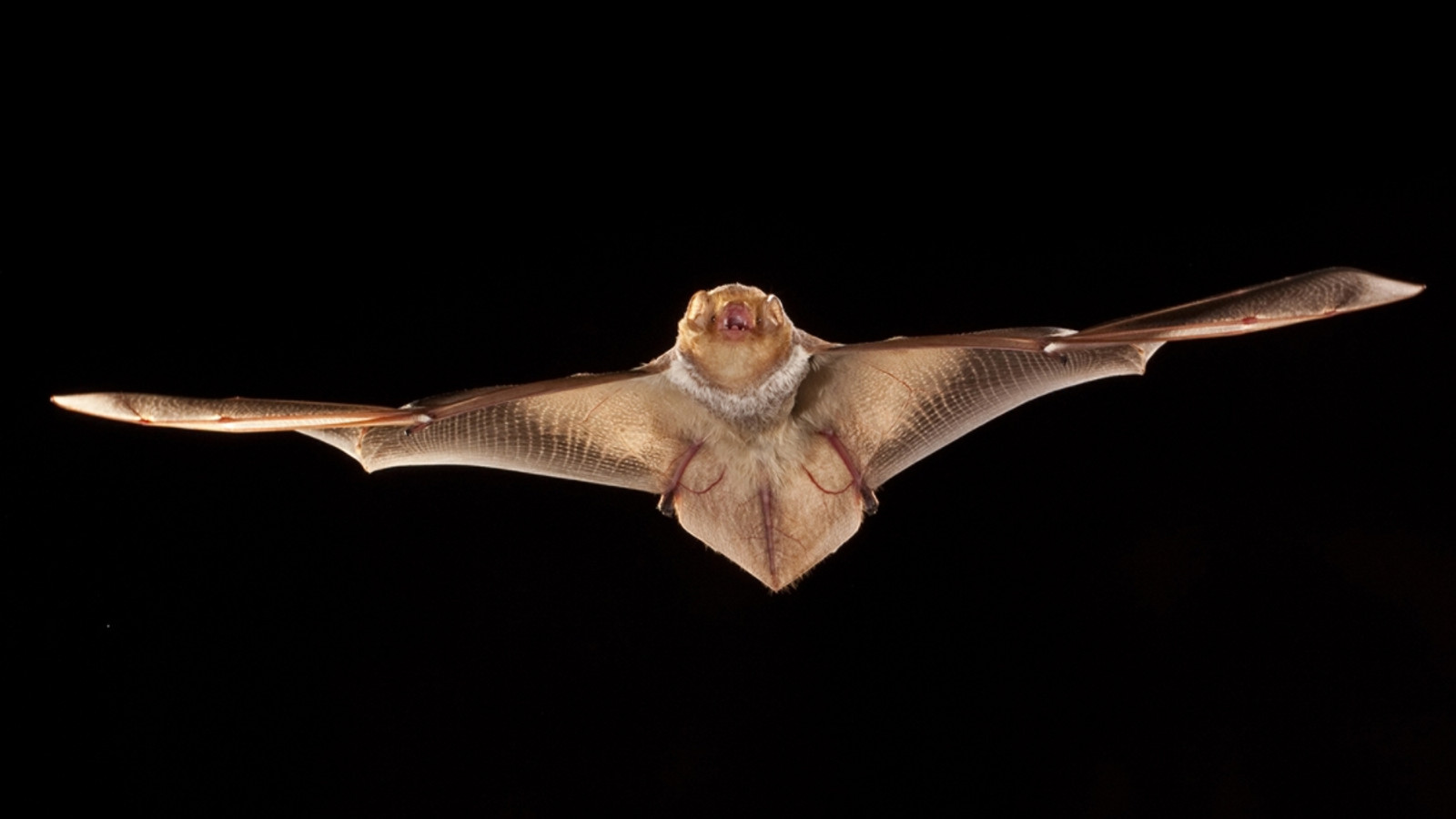
A solitary, rust-colored tree bat that roosts in foliage and hunts flying insects across Florida after sunset.
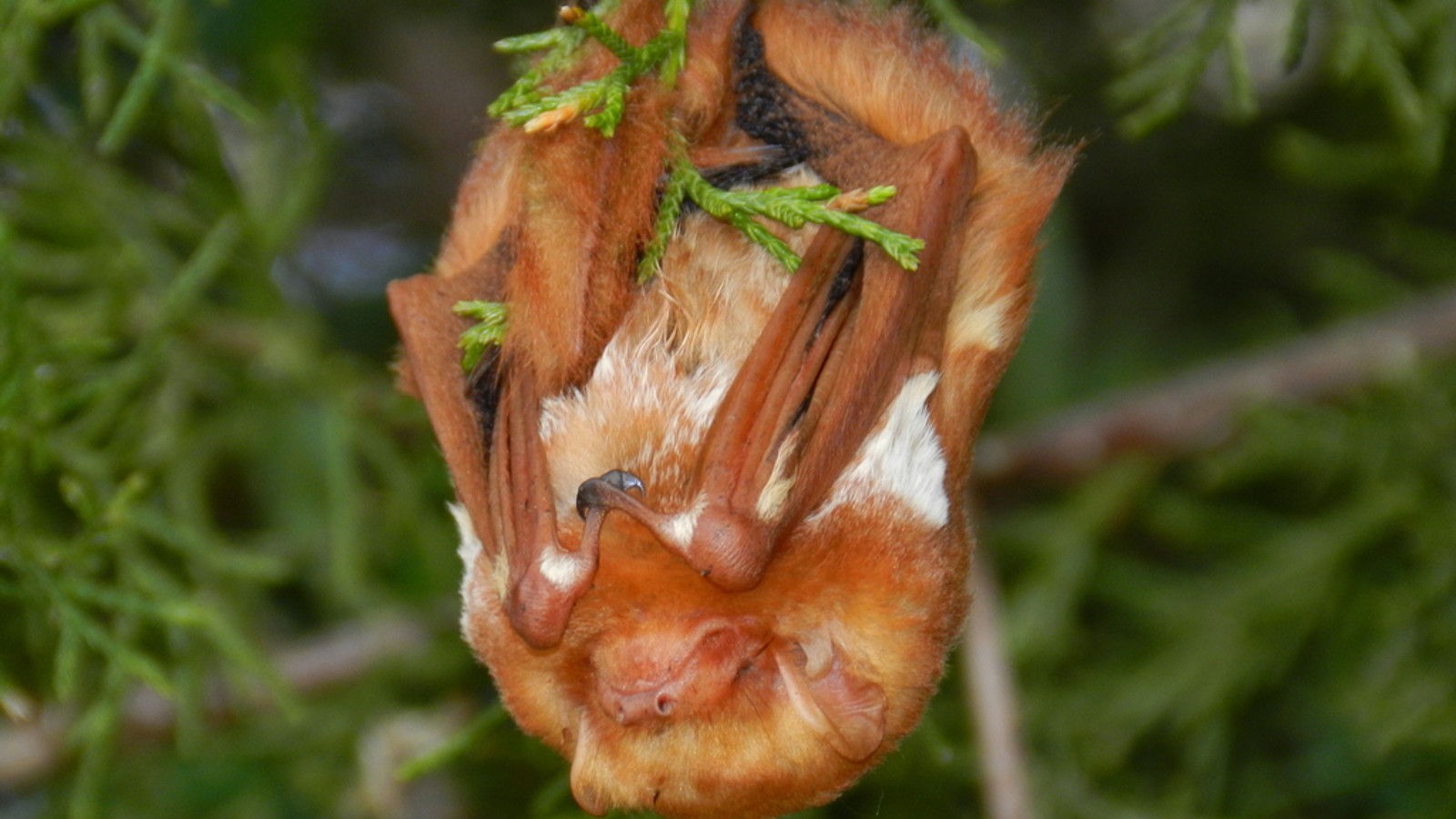
Eastern Red Bats spend daylight hours hanging from leaves and small branches, where their reddish fur resembles dead foliage. They forage over woodland edges, ponds, streets, and open yards.
Unlike colonial bats that gather in buildings or caves, this species usually roosts alone in trees. Retaining mature canopy and reducing nighttime pesticides supports natural insect control.
Habitat:
Forests and Woodlands, Urban and Residential Areas
Area / Range:
Statewide
Diet:
Eats moths, beetles, leafhoppers, flying ants, mosquitoes, and other nighttime insects captured in flight.
Behavior:
Roosts alone in foliage by day and begins aerial feeding near dusk. It migrates regionally and may fly high above roads and clearings.
Dawn and Dusk, Nighttime
Active Times:
Best time to see:
Warm evenings at woodland edges, over ponds, and near open corridors with mature trees.
Florida Native Status:
Native
Conservation Status:
IUCN Least Concern; tree loss, pesticide exposure, and wind-turbine collisions affect populations.
Safety Level:
Moderate
Safety Information:
Never handle a bat with bare hands. Keep people and pets away from grounded bats and contact local animal control or a wildlife professional.
Benefits to Property:
Consumes large numbers of night-flying insects and requires no building roost to provide this benefit.
Property Concerns:
Rarely occupies structures. A grounded or day-active bat may be injured or ill and should not be touched.
Fun Fact:
- Its fur provides leaf-like camouflage.
- Females often produce more pups than many other bats.
- It roosts mainly in trees rather than caves.
Wildlife Laws:
Florida bats are protected from poisoning and inhumane removal. Handling, exclusion, and rehabilitation must follow current FWC rules and seasonal guidance.
Identification:
Medium bat with bright reddish-orange fur, pale shoulder patches, small rounded ears, and a heavily furred tail membrane. Females tend to be duller than males.