
Eastern Velvet Ant
Dasymutilla occidentalis
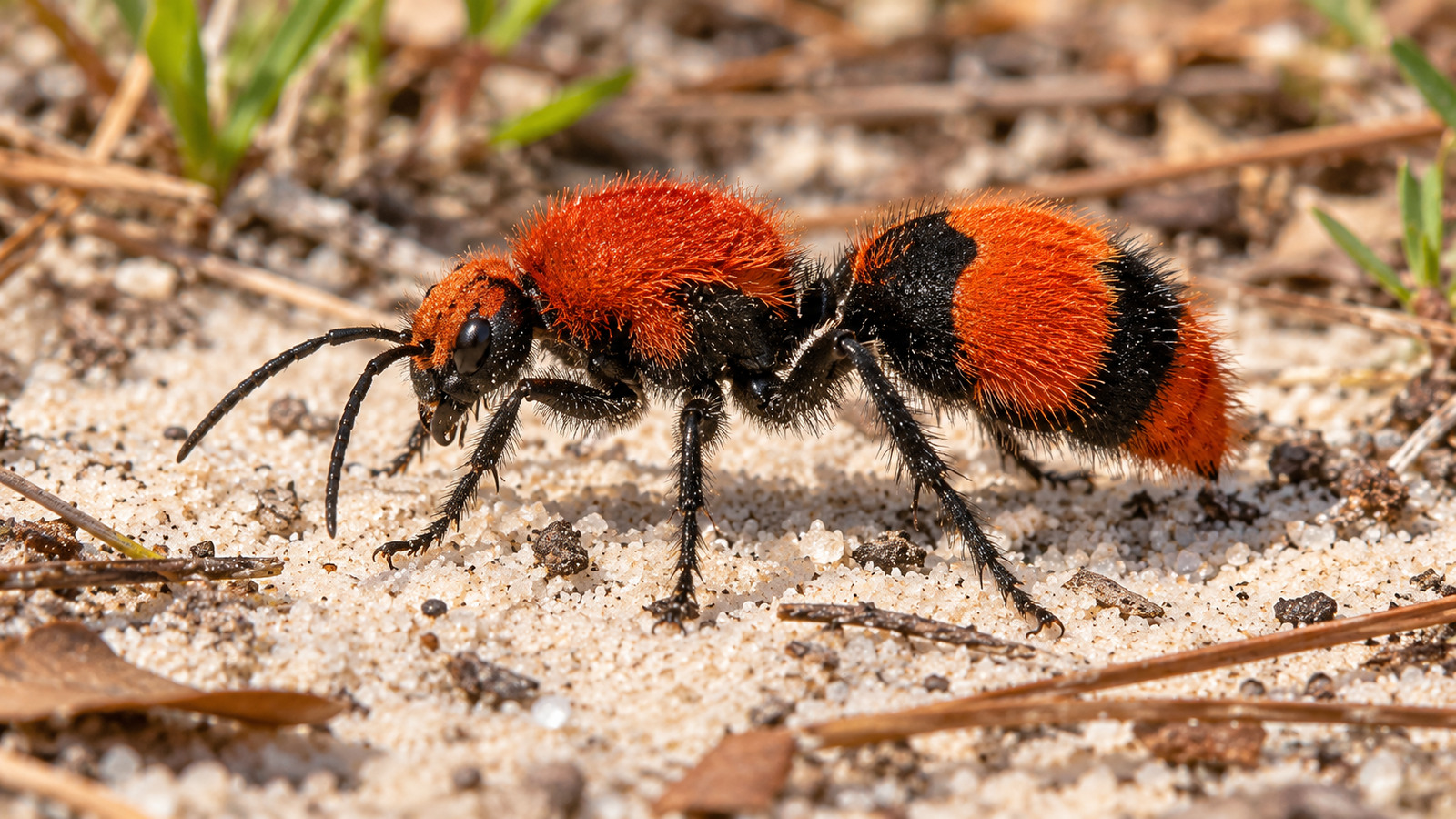
The Eastern Velvet Ant is a large wingless female wasp with bright red-orange hair and an intensely painful defensive sting.
The Eastern Velvet Ant is not an ant. It is a solitary wasp whose wingless females run rapidly across open ground. Dense red-orange and black hair gives the insect its velvetlike appearance and warns predators to leave it alone.
Females search for nests of ground-nesting bees and wasps, where their young develop as external parasites of the host larvae or pupae. Adult males have wings and look more like conventional wasps.
Habitat:
Pine Flatwoods and Sandhills, Grasslands and Agricultural Areas, Forests and Woodlands, Urban and Residential Areas
Area / Range:
Statewide
Diet:
Adults feed on flower nectar and other sugary liquids. The developing larvae consume immature stages of ground-nesting bees and wasps.
Behavior:
Wingless females move quickly across sandy soil, lawns, fields, and woodland openings while searching for host nests. They are solitary and do not defend a colony.
Day
Active Times:
Best time to see:
Look during warm daylight from late spring through early fall on open sandy ground, short grass, field edges, and pine flatwoods.
Florida Native Status:
Native
Conservation Status:
Common across much of the eastern United States and not federally or state listed in Florida.
Safety Level:
Painful Sting
Safety Information:
Never pick up or trap a wingless female. Her sting is intensely painful. Wear shoes outdoors and guide the insect away from high-traffic areas without touching it.
Benefits to Property:
Adults visit flowers, and the larvae naturally regulate some ground-nesting bee and wasp populations.
Property Concerns:
This solitary wasp does not damage lawns, buildings, or plants. The main concern is accidental contact with a barefoot person, child, or pet.
Fun Fact:
The nickname cow killer exaggerates the danger. The sting is extremely painful, but the wasp is not capable of killing cattle. Females also produce warning sounds when threatened.
Wildlife Laws:
This species has no special Florida protection. Collection rules still apply on parks, preserves, and other managed lands. Avoid handling native wildlife.
Identification:
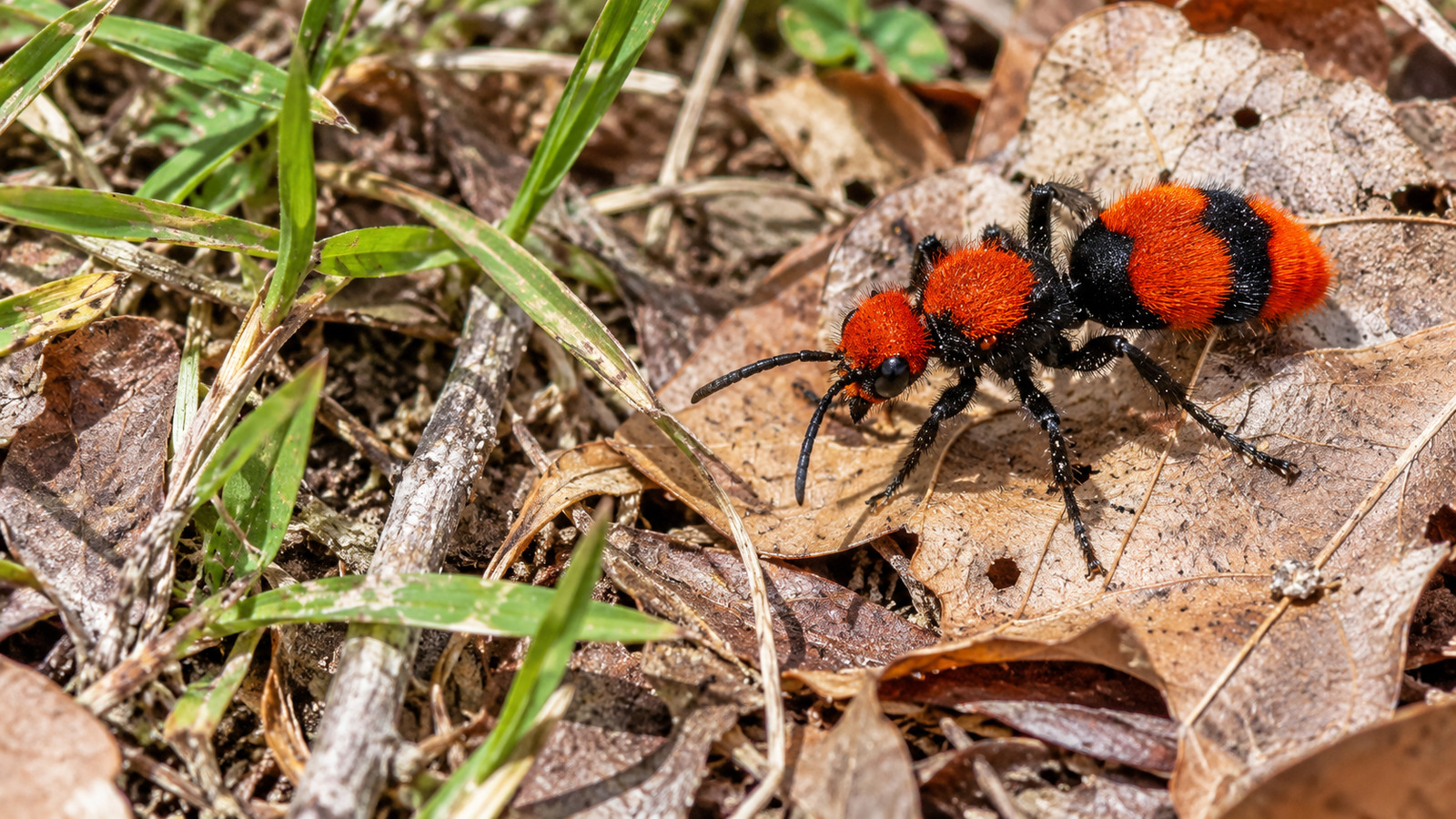
Look for a robust, fast-moving insect with a black body covered by dense red-orange hair. The female has no wings, long black legs and antennae, and bold black bands across the abdomen.
Its large size and vivid red-and-black pattern separate it from many smaller Florida velvet ants. Males are winged and differ greatly from the familiar wingless female.