
Florida Blenny
Chasmodes saburrae
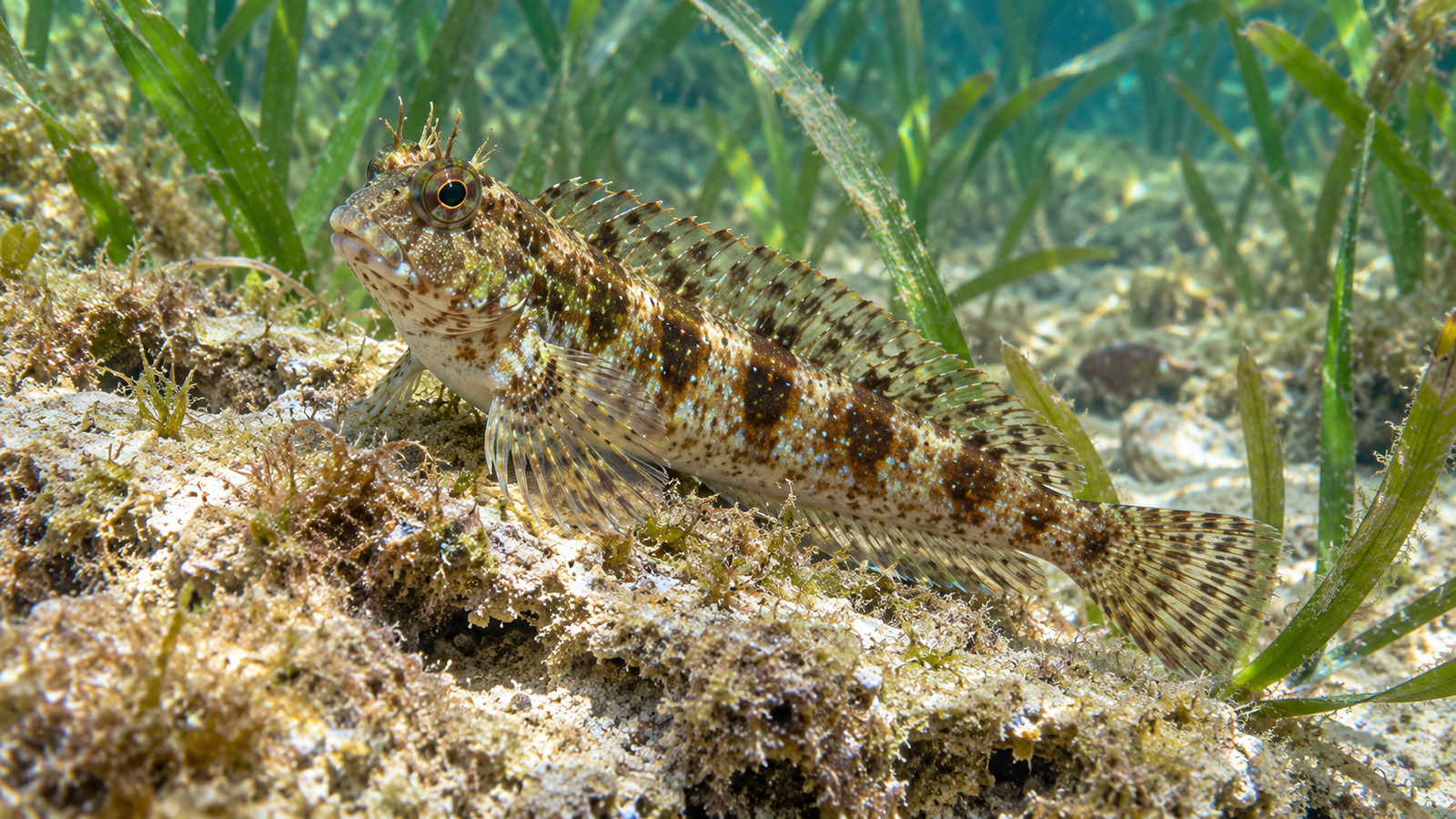
The Florida Blenny is a small mottled coastal fish that shelters among seagrass, rocks, oyster shells, and other shallow-water structure.
The Florida Blenny is a small bottom-dwelling fish native to Florida coastal waters and the Gulf of Mexico. Its mottled brown and olive pattern blends into seagrass, shell, rock, and algae-covered habitat.
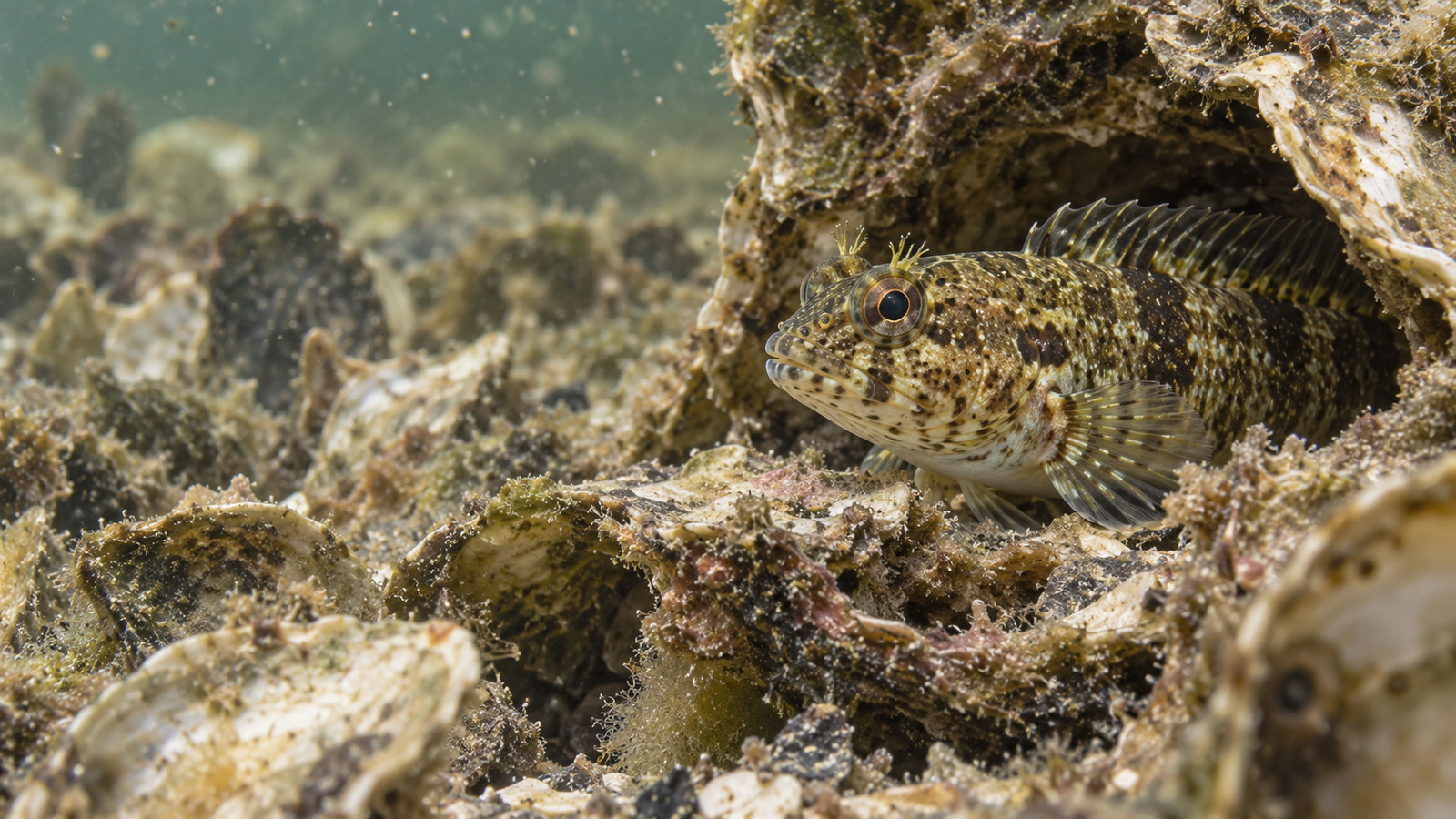
This blenny spends much of its time resting on the bottom or sheltering in small crevices. Males use protected cavities as nests and guard attached eggs until they hatch.
Habitat:
Coastal Waters, Estuaries and Bays, Mangroves and Salt Marshes
Area / Range:
Gulf Coast, Atlantic Coast, Florida Keys
Diet:
Algae, detritus, tiny crustaceans, worms, and other small organisms picked from plants, shells, rocks, and bottom sediments.
Behavior:
Rests on the bottom and quickly retreats into grass, shell, rock, or oyster crevices when disturbed. Nesting males defend cavities containing attached eggs.
Day
Active Times:
Best time to see:
Look during daylight in clear shallow seagrass beds, oyster habitat, tide pools, protected bays, and estuaries along Florida's coasts.
Florida Native Status:
Native
Conservation Status:
Not federally or state listed. Healthy seagrass beds, estuaries, oyster habitat, and water quality support local populations.
Safety Level:
Harmless. Avoid Handling
Safety Information:
This small fish is harmless to people. Avoid removing it from the water or damaging the shallow habitat where it shelters.
Benefits to Property:
Feeds on algae, detritus, and small invertebrates and contributes to coastal food webs as prey for larger fish and wading birds.
Property Concerns:
It causes no property damage. Shoreline hardening, pollution, dredging, seagrass loss, and damage to oyster habitat reduce suitable shelter.
Fun Fact:
Florida Blennies lack a swim bladder. They spend most of their time resting on the bottom and use quick movements to reach nearby shelter.
Wildlife Laws:
Follow current Florida saltwater fishing, aquarium collection, and protected-area rules before capturing or possessing coastal fish.
Identification:
Look for a small elongated fish with a blunt head, large eyes, a continuous dorsal fin, and broad pectoral fins used to brace against the bottom. The body is mottled brown, olive, and cream with irregular bars and pale spots.
Small fleshy cirri above the eyes and the perched posture help identify it as a blenny. Color and pattern can change with habitat, age, and condition.