
Florida Box Turtle
Terrapene carolina bauri
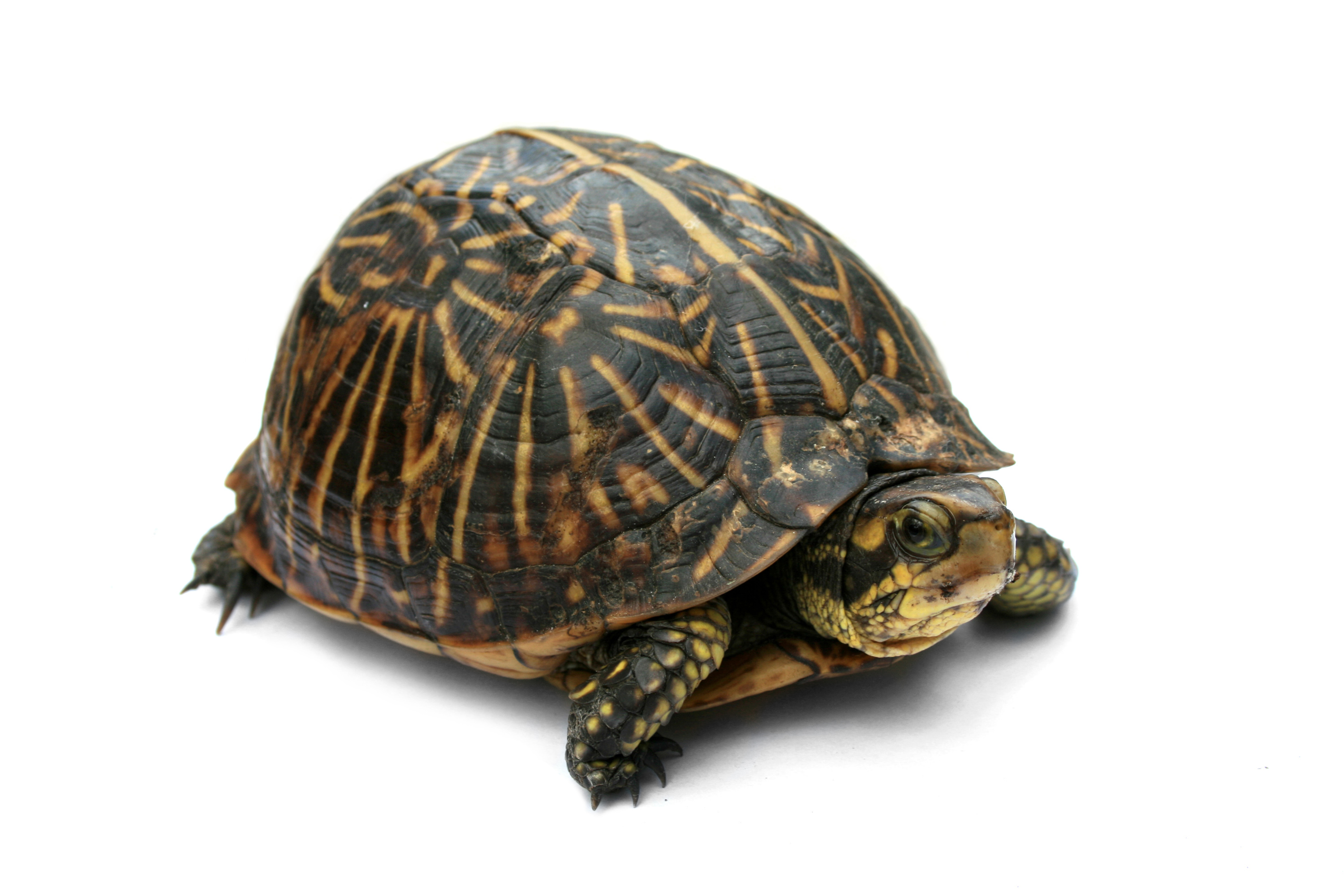
Its hinged shell allows the turtle to close itself almost completely inside.
Its hinged shell allows the turtle to close itself almost completely inside. Never relocate a healthy turtle. Move a road-crossing turtle only in the direction it was traveling. Wildlife collection and possession rules apply. Never remove turtles from protected lands.
Habitat:
Freshwater Wetlands, Pine Flatwoods and Sandhills, Forests and Woodlands, Urban and Residential Areas
Area / Range:
Central Florida, South Florida, Florida Keys
Diet:
Insects, worms, snails, mushrooms, berries, carrion, and tender plants.
Behavior:
Lives mostly on land, moves within a small home range, and hides under leaf litter.
Day, Dawn, Dusk
Active Times:
Best time to see:
Observe from a respectful distance in suitable Florida habitat.
Florida Native Status:
Native
Conservation Status:
Native terrestrial turtle
Safety Level:
Harmless. Move Only From Danger
Safety Information:
Never relocate a healthy turtle. Move a road-crossing turtle only in the direction it was traveling.
Benefits to Property:
Consumes insects, snails, fungi, and fallen fruit while spreading seeds.
Property Concerns:
Mowers, vehicles, dogs, pools, deep edging, and habitat clearing cause injuries.
Fun Fact:
Its hinged shell allows the turtle to close itself almost completely inside.
Wildlife Laws:
Wildlife collection and possession rules apply. Never remove turtles from protected lands.
Identification:
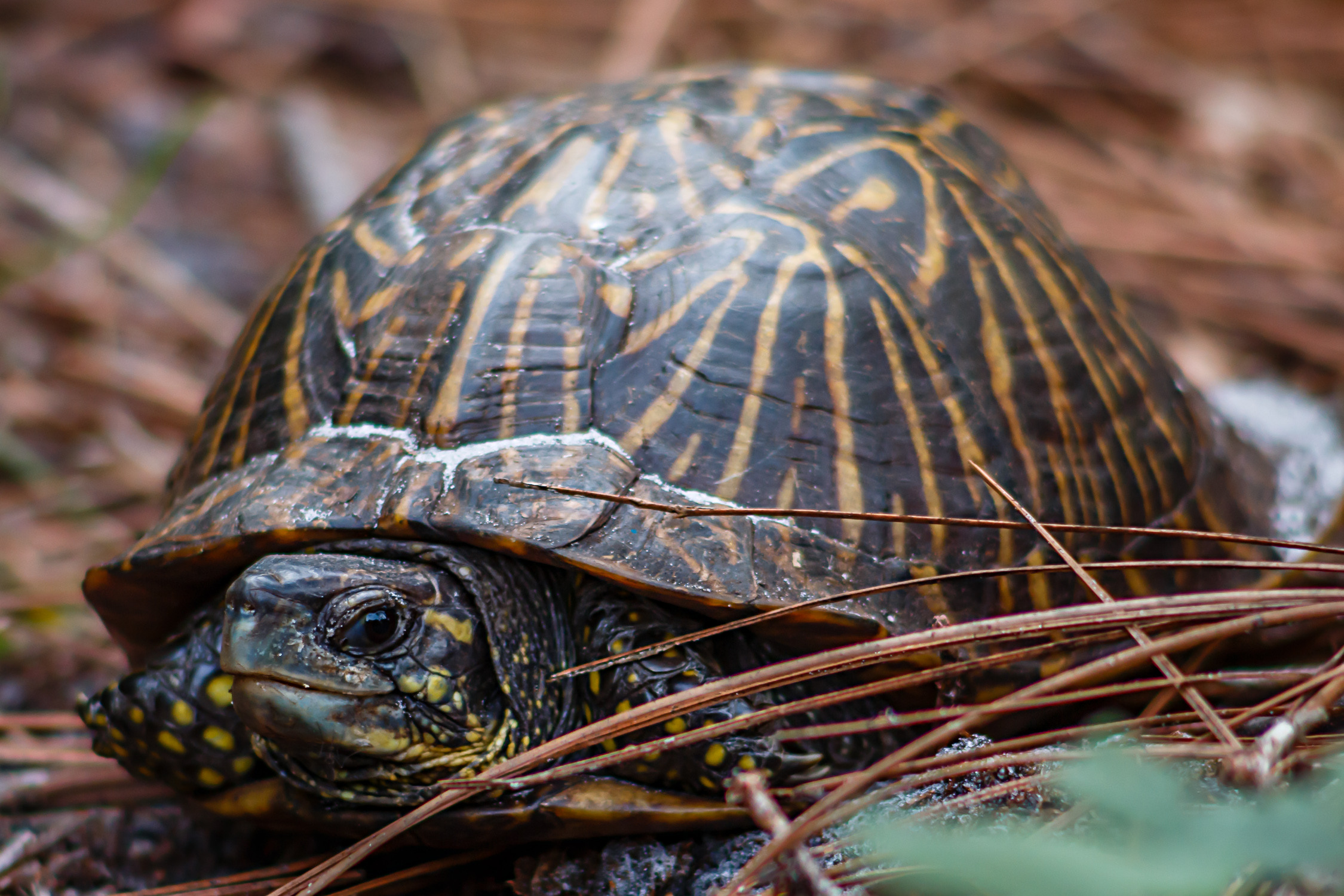
High-domed dark shell marked with yellow lines and a hinged lower shell that closes tightly.
Credits:
Facts: wildlife reference. Images: Wikimedia Commons.