
Florida Chicken Turtle
Deirochelys reticularia chrysea

The Florida Chicken Turtle is a long-necked native freshwater turtle associated with shallow seasonal ponds, marshes, and ditches.
The Florida Chicken Turtle is a long-necked native freshwater turtle associated with shallow seasonal ponds, marshes, and ditches.
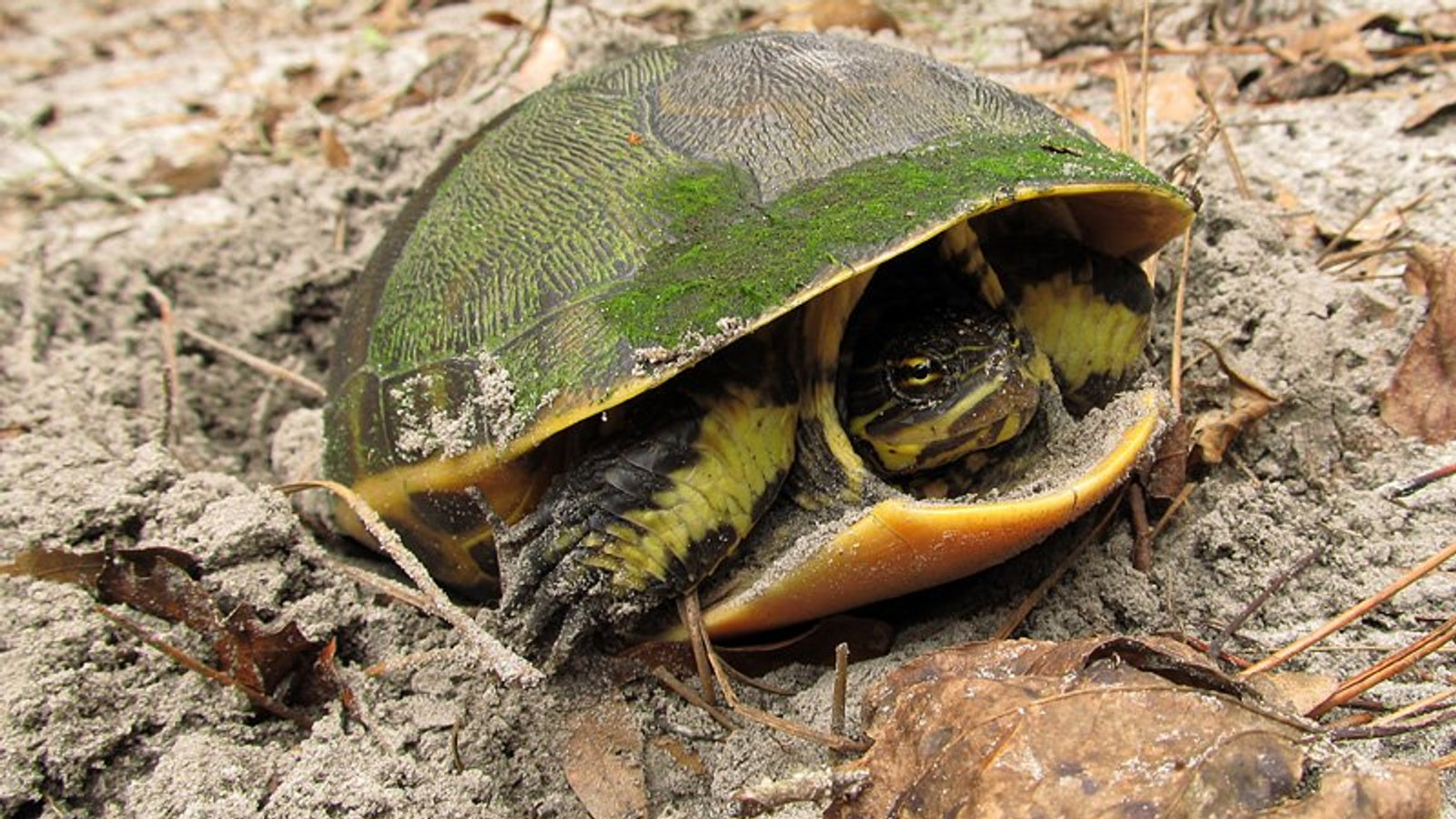
An oval turtle with a netlike pattern on the shell, yellow stripes on the head and long neck, and broad orange-yellow markings near the shell edge.
Forages in shallow water and often travels over land when wetlands dry. It may bury itself in soil or leaf litter until water returns.
Move slowly around turtles crossing roads. Do not place one in deep water or relocate it far from the direction it was traveling.
Collection and possession rules apply to native turtles. Do not collect from protected lands or disturb nests. Follow current FWC turtle regulations.
Habitat:
Freshwater Wetlands, Lakes and Ponds, Canals and Ditches
Area / Range:
North Florida, Central Florida, South Florida
Diet:
Crayfish, insects, tadpoles, small fish, snails, and aquatic plants.
Behavior:
Forages in shallow water and often travels over land when wetlands dry. It may bury itself in soil or leaf litter until water returns.
Daytime, Dawn, Dusk
Active Times:
Best time to see:
Warm wet periods near shallow seasonal ponds, marshes, and roadside ditches
Florida Native Status:
Native Florida subspecies
Conservation Status:
Not Federally Listed; Florida conservation concern
Safety Level:
Observe Without Handling
Safety Information:
Move slowly around turtles crossing roads. Do not place one in deep water or relocate it far from the direction it was traveling.
Benefits to Property:
Consumes aquatic invertebrates and small animals and adds value to seasonal wetland habitat.
Property Concerns:
Road traffic, pond drainage, shoreline mowing, and filling temporary wetlands reduce survival and nesting opportunities.
Fun Fact:
Despite being aquatic, Chicken Turtles spend substantial periods on land and may remain buried during dry conditions.
Wildlife Laws:
Collection and possession rules apply to native turtles. Do not collect from protected lands or disturb nests. Follow current FWC turtle regulations.
Identification:
An oval turtle with a netlike pattern on the shell, yellow stripes on the head and long neck, and broad orange-yellow markings near the shell edge.