
Florida Panther
Puma concolor coryi
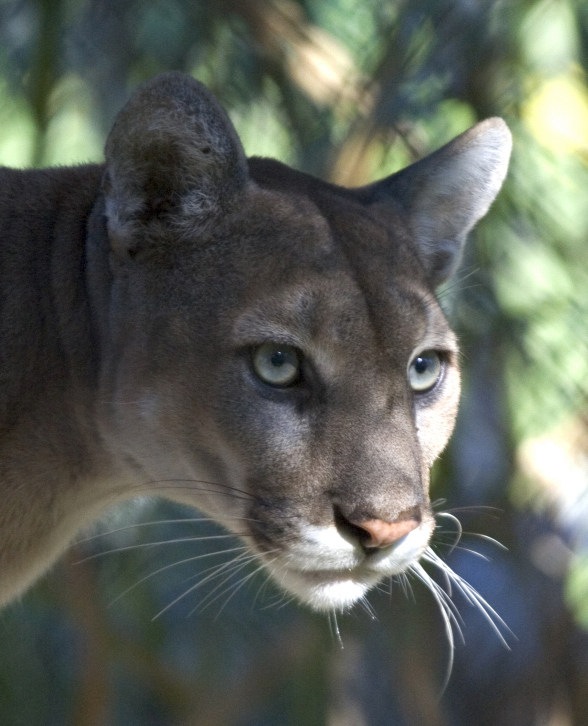
The endangered Florida panther is Florida’s state animal and the largest of the state’s two native wild cats.
Florida panthers are tawny, long-tailed cats adapted to forests, swamps, prairies, and other connected habitats. Most breeding activity occurs south of Lake Okeechobee.
Panthers are solitary and elusive. Habitat loss, road collisions, and conflict around livestock remain major challenges.
Habitat:
Freshwater Wetlands, Forests and Woodlands, Urban and Residential Areas
Area / Range:
Central Florida, South Florida
Diet:
Panthers prey mainly on white-tailed deer, feral hogs, raccoons, armadillos, rabbits, and other mammals.
Behavior:
Panthers live alone except during mating and when females raise kittens. They travel large areas and are most active from dusk through dawn.
Dusk, Night, Dawn
Active Times:
Best time to see:
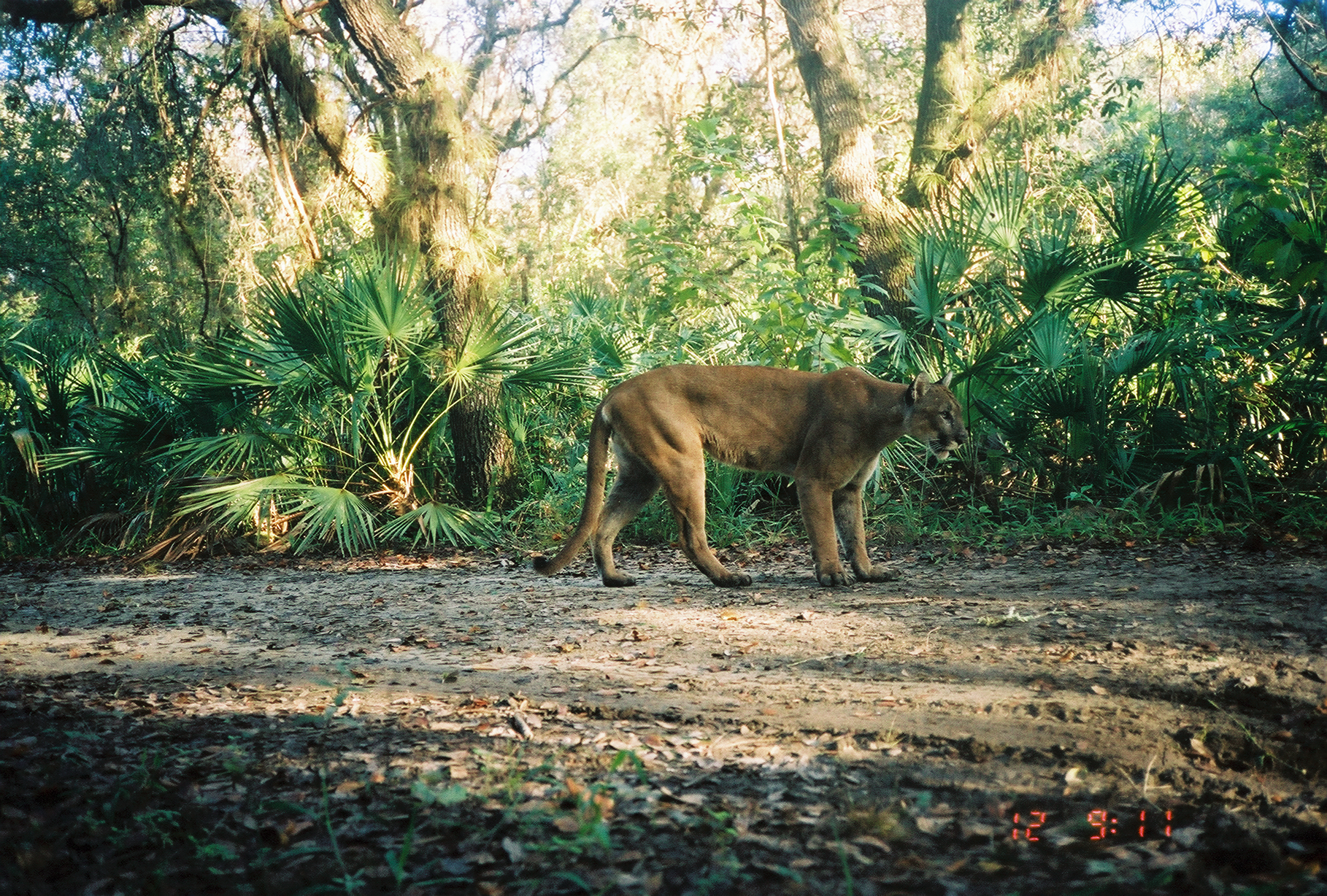
Sightings are rare. Trail cameras and tracks provide most evidence.
Florida Native Status:
Native
Conservation Status:
Endangered under the federal Endangered Species Act.
Safety Level:
Use Caution. Rare Encounter
Safety Information:
Do not run. Stand upright, face the animal, speak firmly, and make yourself look larger. Give it room to leave. Keep children close and pets secured.
Benefits to Property:
As a top predator, the panther helps maintain ecological balance and reflects the value of large connected natural areas.
Property Concerns:
Rare conflicts involve unsecured small livestock or pets near panther habitat. Use secure nighttime enclosures.
Fun Fact:
A panther’s long tail improves balance during quick turns. Adults travel extensive home ranges and often cross roads and waterways.
Wildlife Laws:
It is illegal to harm or harass a Florida panther. Report sightings, injured animals, or conflicts to the Florida Fish and Wildlife Conservation Commission.
Identification:
Adults have a uniform tawny coat, pale underside, rounded ears, and a tail nearly as long as the body. Their size and long tail distinguish them from bobcats.
Credits:
Facts: Florida Fish and Wildlife Conservation Commission. Images: Everglades panther and adult male panther, public-domain federal photographs via Wikimedia Commons.