
Florida Sandhill Crane
Antigone canadensis pratensis
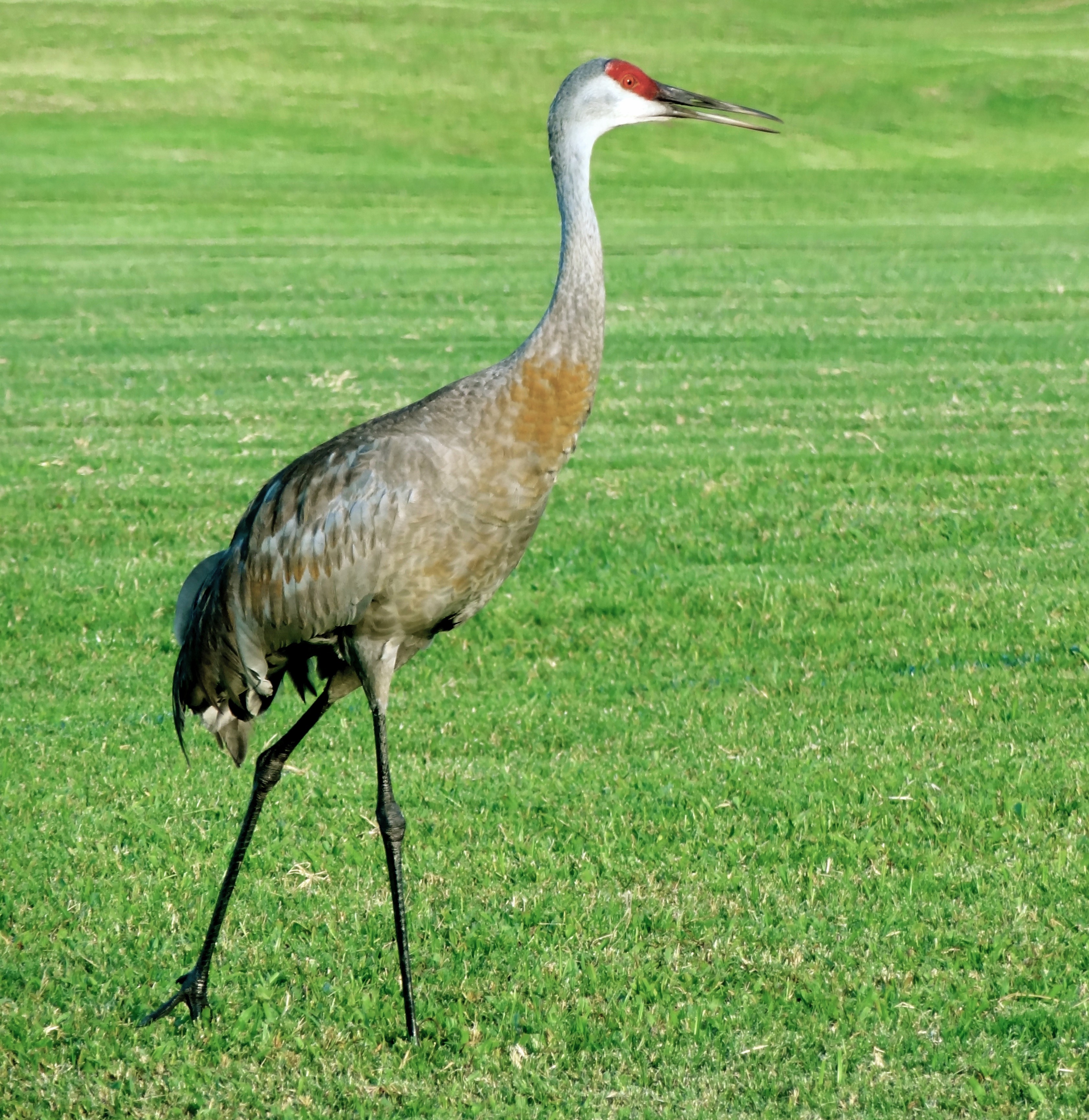
Florida Sandhill Cranes form long-term pair bonds and defend year-round territories.
Florida Sandhill Cranes form long-term pair bonds and defend year-round territories. Never feed cranes. Drive slowly and keep pets away from adults and chicks. Protected by state and federal law. Feeding cranes is illegal in Florida.
Habitat:
Freshwater Wetlands, Grasslands and Agricultural Areas, Urban and Residential Areas
Area / Range:
Central Florida, South Florida
Diet:
Seeds, grains, insects, frogs, reptiles, and small mammals.
Behavior:
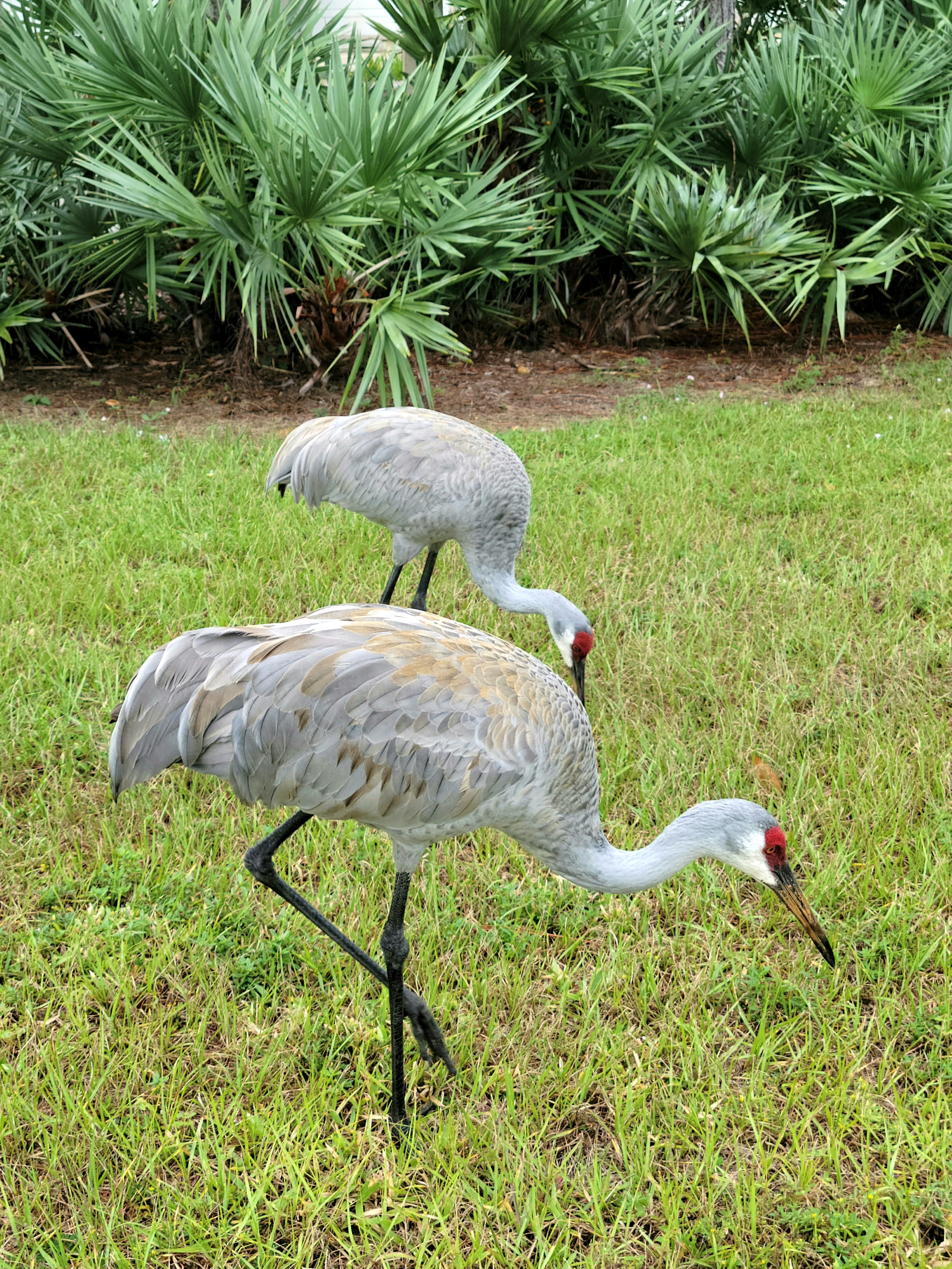
Often travels in pairs or family groups and performs energetic courtship dances.
Day, Dawn, Dusk
Active Times:
Best time to see:
Observe from a respectful distance in suitable Florida habitat.
Florida Native Status:
Native
Conservation Status:
State-designated threatened
Safety Level:
Keep Distance. Do Not Feed
Safety Information:
Never feed cranes. Drive slowly and keep pets away from adults and chicks.
Benefits to Property:
Consumes insects and helps move seeds through open habitats.
Property Concerns:
Feeding leads to vehicle danger, aggression, property damage, and loss of natural behavior.
Fun Fact:
Florida Sandhill Cranes form long-term pair bonds and defend year-round territories.
Wildlife Laws:
Protected by state and federal law. Feeding cranes is illegal in Florida.
Identification:
Tall gray bird with long legs, long neck, red crown, and a loud rolling call.
Credits:
Facts: wildlife reference. Images: Wikimedia Commons.