
Florida Trapdoor Spider
Ummidia audouini
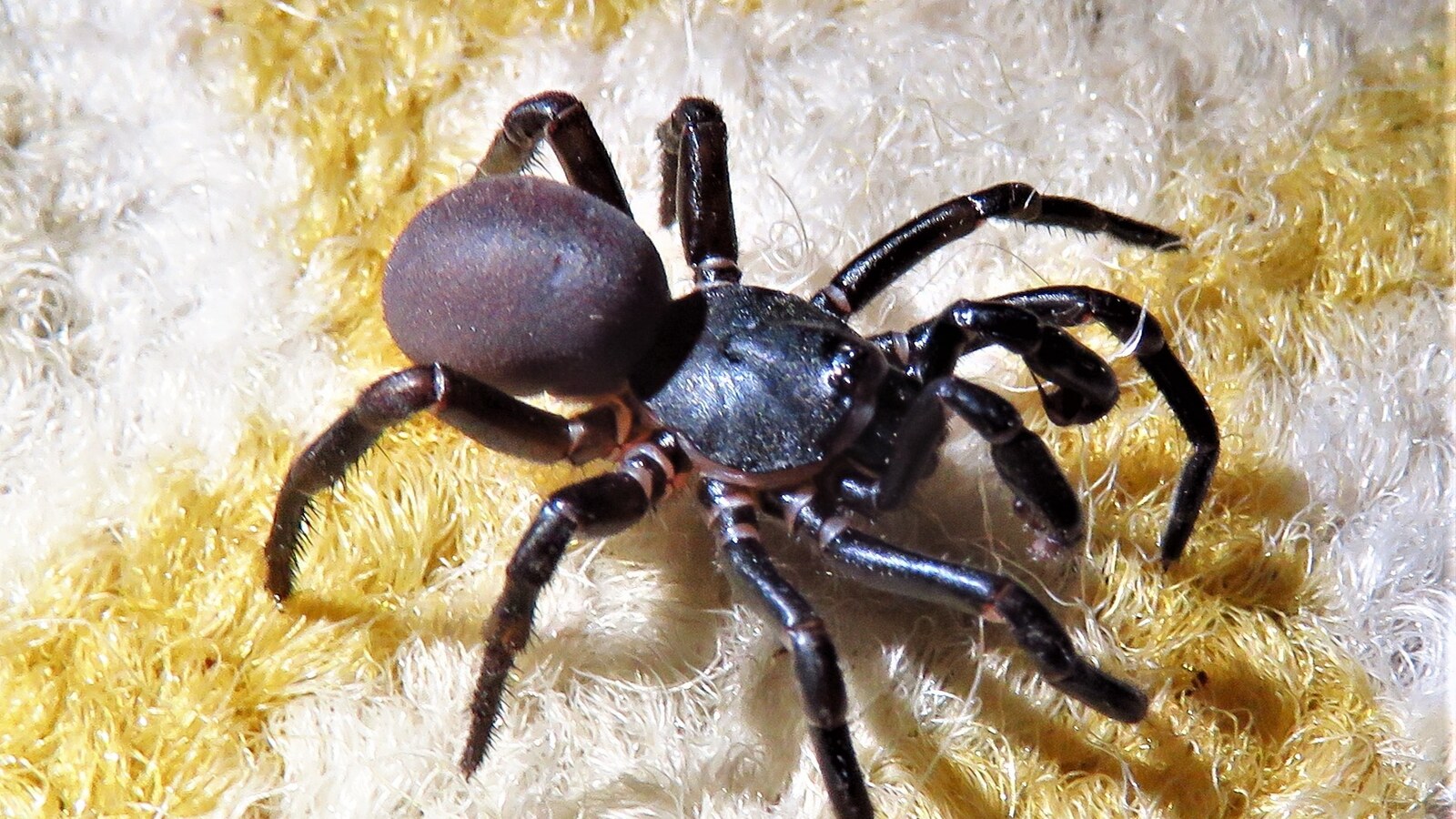
The Florida Trapdoor Spider is a stout, secretive burrow builder that waits behind a camouflaged soil door for passing prey.
This native mygalomorph spider digs silk-lined burrows in well-drained soil and covers the entrance with a hinged door made from silk, soil, and plant material.
Females remain near their burrows for years. Mature males wander across the ground while searching for mates.
Habitat:
Forests and Woodlands, Pine Flatwoods and Sandhills, Urban and Residential Areas
Area / Range:
Statewide
Diet:
Crickets, beetles, roaches, and other insects or small arthropods that pass near the burrow.
Behavior:
Mostly nocturnal. The spider senses vibration, opens the door, grabs prey, and retreats underground.
Night, Dusk
Active Times:
Best time to see:
Warm humid nights, especially when mature males wander after rain.
Florida Native Status:
Native
Conservation Status:
Generally secure where intact soil, leaf litter, and low pesticide use remain available.
Safety Level:
Low Risk
Safety Information:
Defensive bites are possible but uncommon and are not considered medically significant for most people. Do not handle the spider.
Benefits to Property:
Trapdoor spiders consume roaches, beetles, crickets, and other crawling pests.
Property Concerns:
Burrows are small and cause no meaningful landscape damage. Wandering males sometimes enter garages or pools.
Fun Fact:
A female can occupy and enlarge the same hidden burrow for many years.
Wildlife Laws:
Leave native spiders in place. Collection, sale, transport, or release must follow applicable Florida wildlife rules.
Identification:
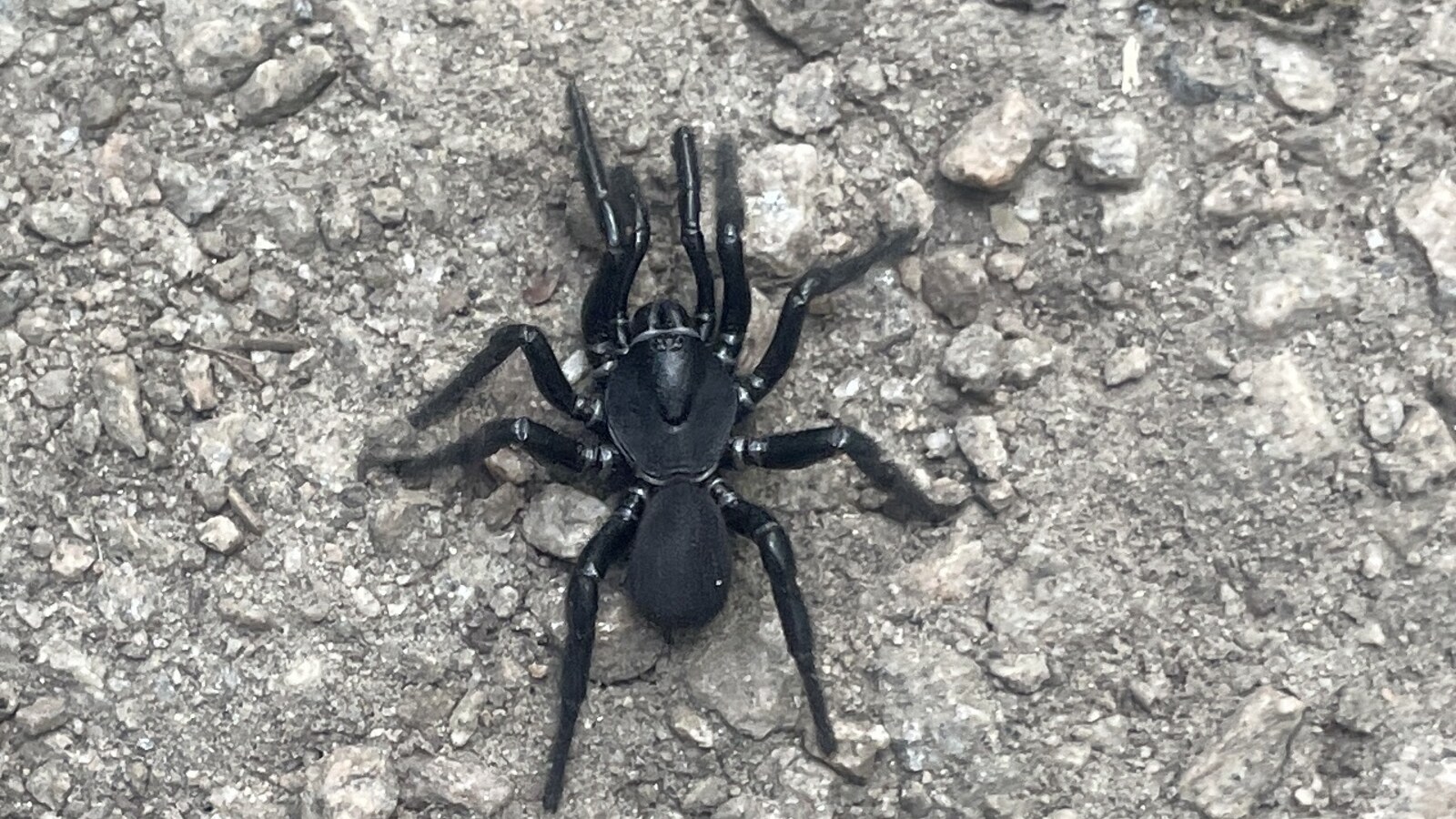
A stocky dark brown to black spider with a glossy carapace, thick legs, and large downward-pointing fangs. It is more compact than most wandering wolf spiders.
Credits:
Facts and photos: iNaturalist Ummidia audouini. Wildlife guidance: Florida FWC.