
Gray Fox
Urocyon cinereoargenteus
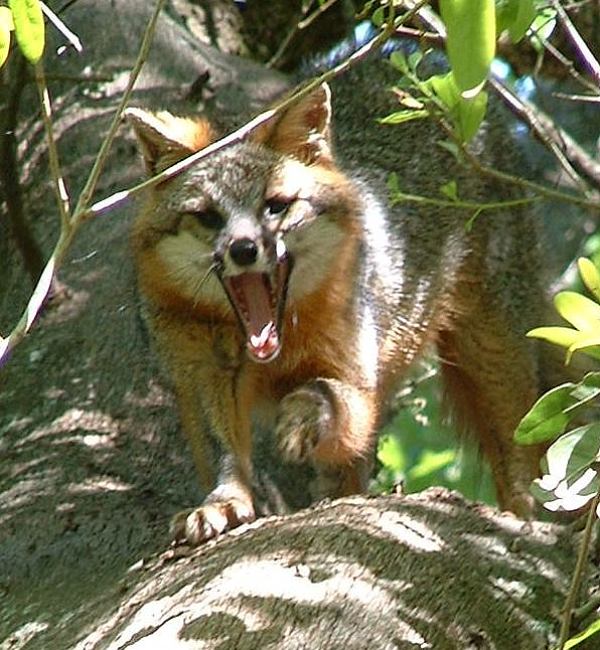
The Gray Fox is one of the few canine species able to climb trees.
The Gray Fox is one of the few canine species able to climb trees. Never feed foxes. Secure attractants, supervise small pets, and give the animal an open escape route. Hunting and trapping follow current FWC seasons and rules. Wildlife poisoning and unlawful relocation are prohibited.
Habitat:
Scrub and Dry Prairie, Forests and Woodlands, Urban and Residential Areas
Area / Range:
Statewide
Diet:
Rodents, rabbits, birds, insects, fruit, eggs, and carrion.
Behavior:
Secretive and mostly nocturnal. Climbs trees to escape danger, rest, and search for food.
Night, Dawn, Dusk
Active Times:
Best time to see:
Observe from a respectful distance in suitable Florida habitat.
Florida Native Status:
Native
Conservation Status:
Managed native furbearer
Safety Level:
Use Caution. Keep Distance
Safety Information:
Never feed foxes. Secure attractants, supervise small pets, and give the animal an open escape route.
Benefits to Property:
Controls rodents and insects while dispersing seeds from wild fruit.
Property Concerns:
Unsecured poultry, pet food, garbage, and small unattended pets attract or expose foxes.
Fun Fact:
The Gray Fox is one of the few canine species able to climb trees.
Wildlife Laws:
Hunting and trapping follow current FWC seasons and rules. Wildlife poisoning and unlawful relocation are prohibited.
Identification:
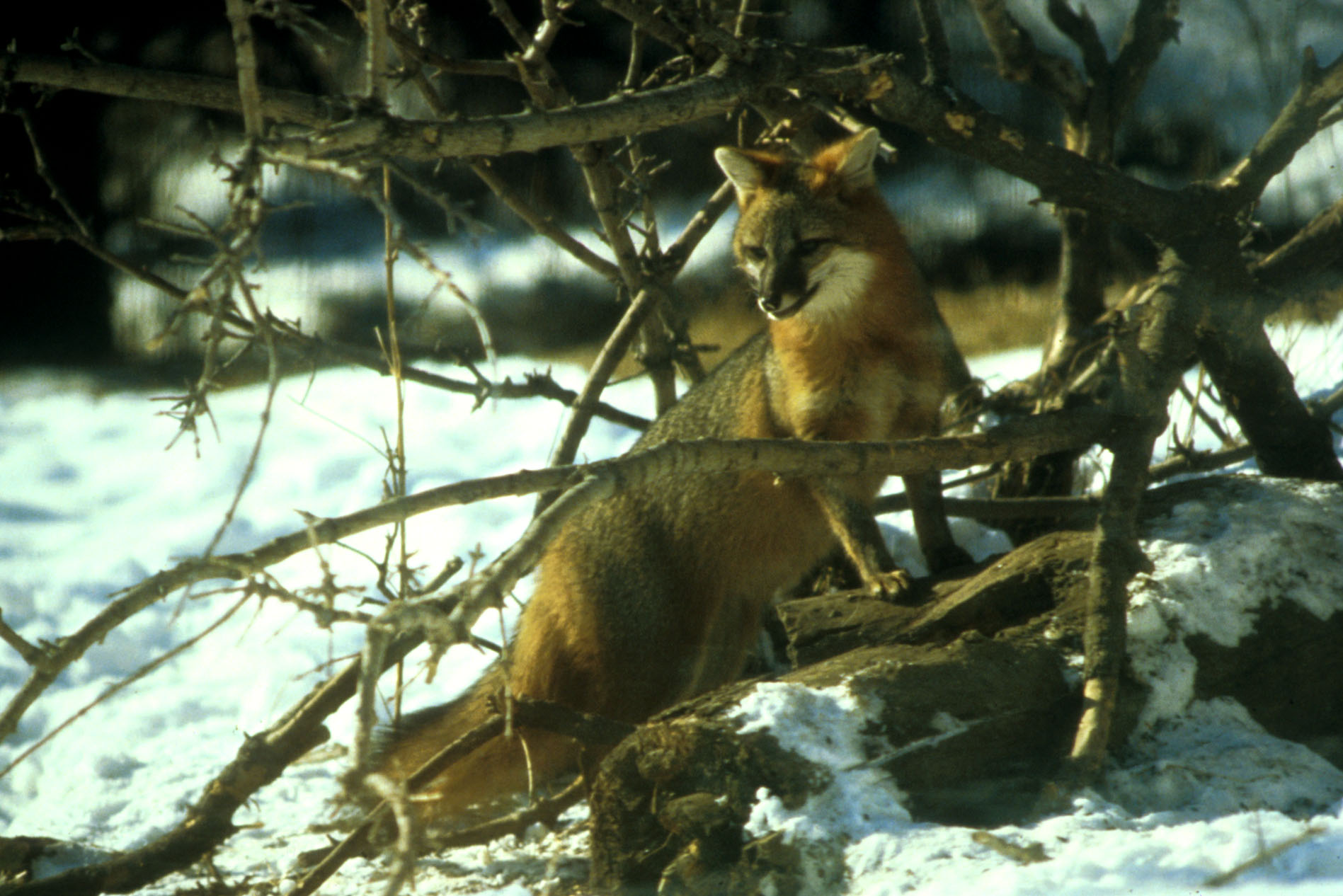
Small gray canine with reddish sides, a black stripe along the tail, pointed ears, and a short muzzle.
Credits:
Facts: wildlife reference. Images: Wikimedia Commons.