
Great Egret
Ardea alba
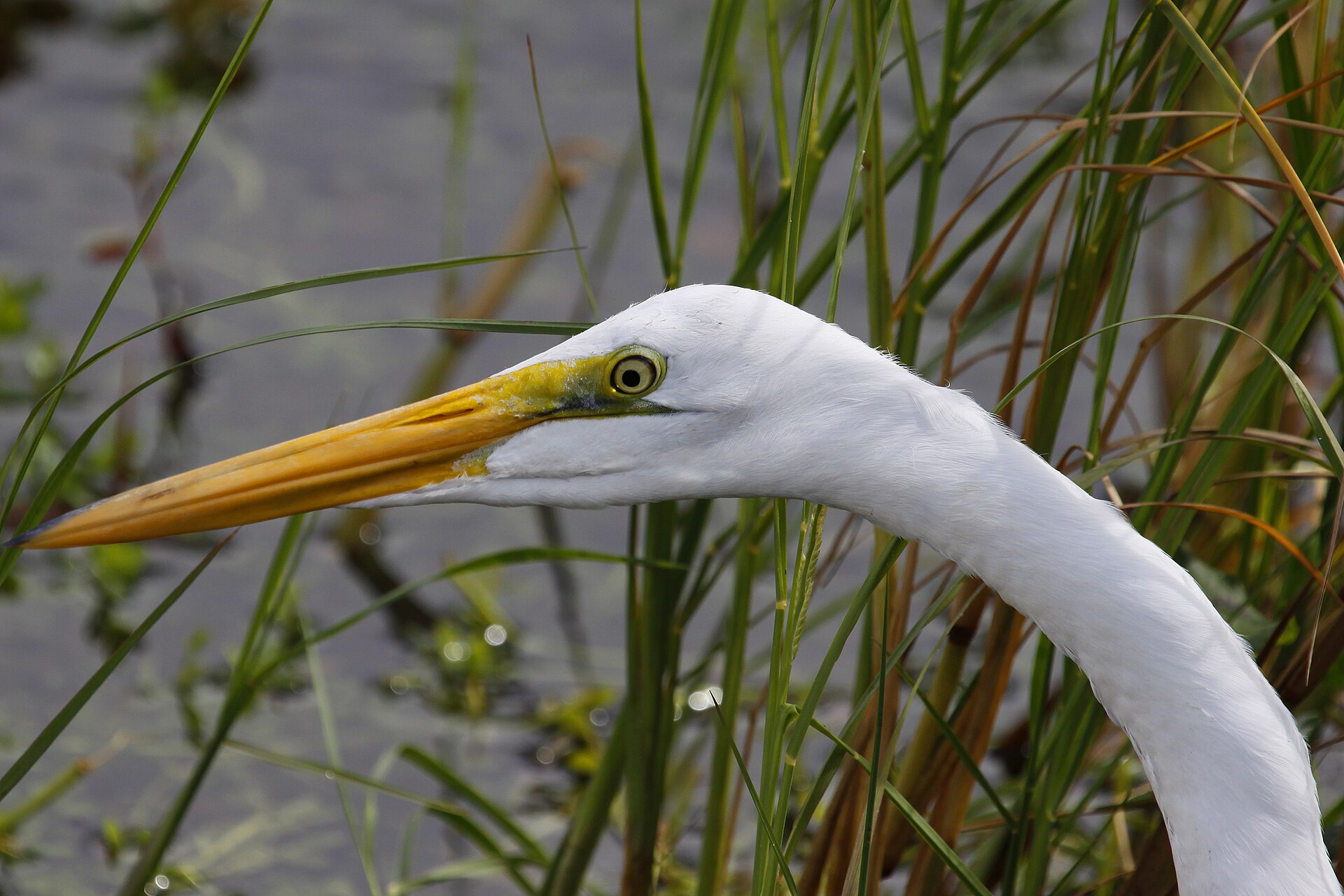
Long breeding plumes once drove heavy hunting for the feather trade.
Long breeding plumes once drove heavy hunting for the feather trade. Protected under the Migratory Bird Treaty Act. Do not disturb active nests or rookeries.
Habitat:
Freshwater Wetlands, Lakes and Ponds, Estuaries and Bays, Mangroves and Salt Marshes
Area / Range:
Statewide
Diet:
Fish, frogs, insects, reptiles, and small mammals.
Behavior:
Hunts slowly in shallow water and nests in colonies with other wading birds.
Day
Active Times:
Best time to see:
Look during day in suitable Florida habitat.
Florida Native Status:
Native
Conservation Status:
Protected migratory bird
Safety Level:
Harmless. Keep Distance
Safety Information:
Protected under the Migratory Bird Treaty Act. Do not disturb active nests or rookeries.
Benefits to Property:
Consumes aquatic insects, frogs, and small vertebrates.
Property Concerns:
May visit ornamental ponds containing fish.
Fun Fact:
Long breeding plumes once drove heavy hunting for the feather trade.
Wildlife Laws:
Protected under the Migratory Bird Treaty Act. Do not disturb active nests or rookeries.
Identification:
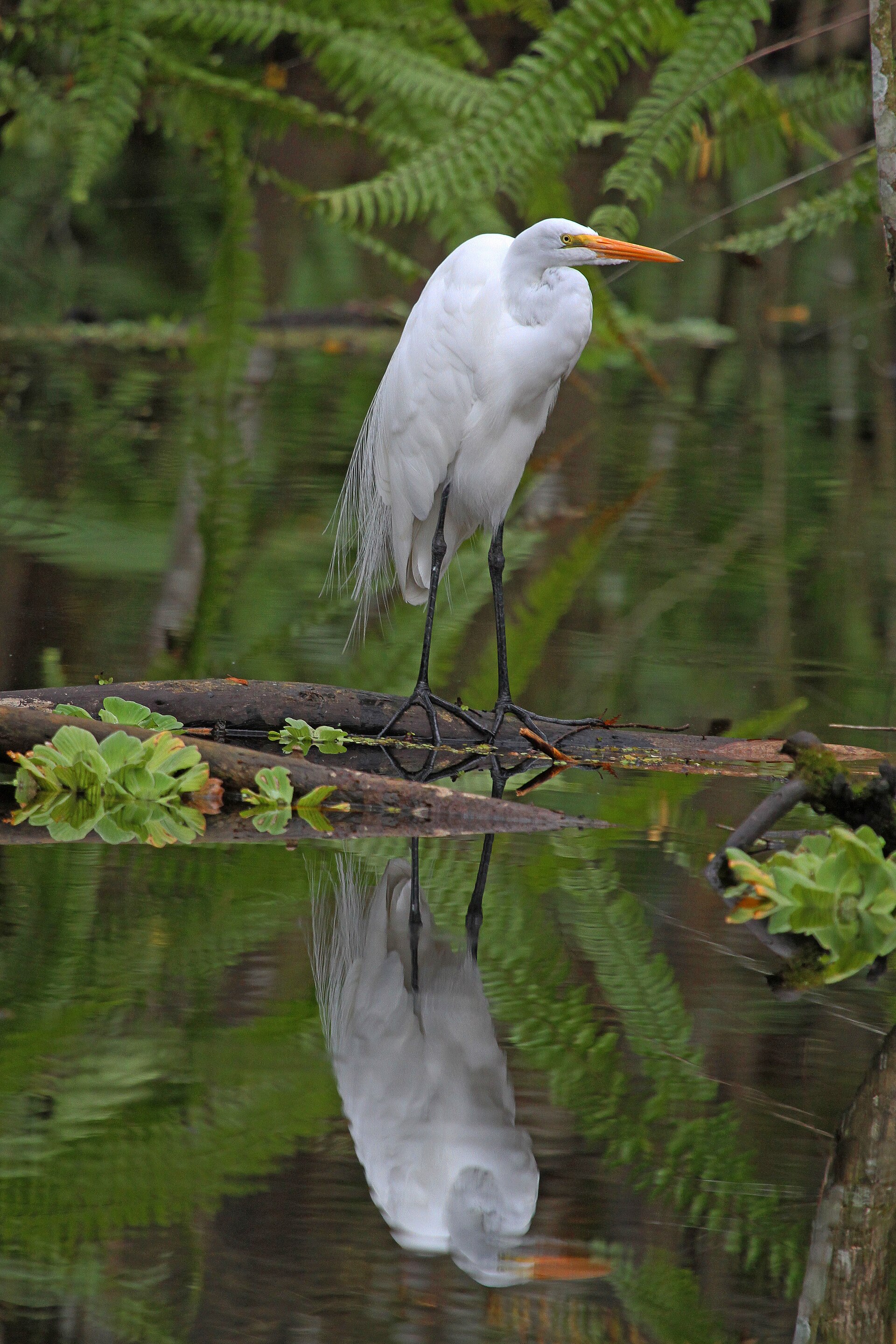
Tall white bird with a long yellow bill, black legs, and long S-curved neck.
Credits:
Facts: wildlife reference. Images: primary image and secondary image, Wikimedia Commons.