
Gulf Menhaden
Brevoortia patronus
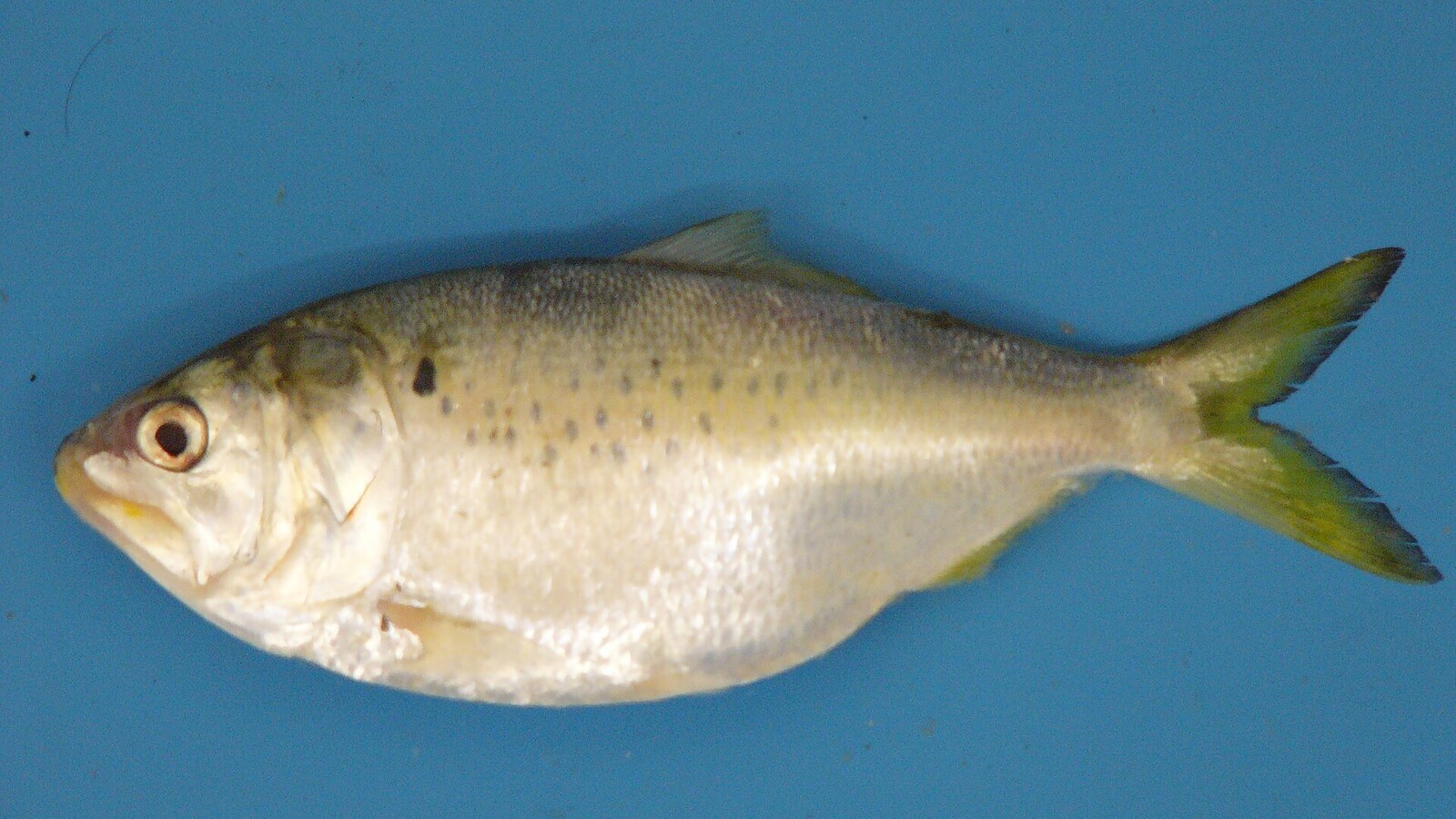
Gulf Menhaden are small schooling fish that filter plankton and support many of Florida’s most important Gulf predators.
Gulf Menhaden move between coastal waters and productive estuaries. Juveniles grow in bays and marsh-edge habitats before joining large offshore schools.
The species transfers energy from plankton to tarpon, redfish, sharks, dolphins, seabirds, and other predators.
Habitat:
Coastal Waters, Estuaries and Bays
Area / Range:
Gulf Coast
Diet:
They filter microscopic algae, zooplankton, and suspended organic particles from the water.
Behavior:
Gulf Menhaden form dense schools, swim near the surface, enter estuaries as juveniles, and move offshore with age and season.
Day
Active Times:
Best time to see:
Daytime when dense schools ripple the surface in bays, estuaries, passes, and nearshore Gulf waters.
Florida Native Status:
Native
Conservation Status:
Abundant forage fish managed as a major Gulf fishery. Population health depends on estuaries and sustainable harvest.
Safety Level:
Low Risk
Safety Information:
Observe schooling activity from a safe distance, especially when larger predators are feeding. Use gloves around dead fish and report significant fish kills.
Benefits to Property:
Healthy schools support sport fish, marine mammals, birds, and the broader Gulf food web near waterfront property.
Property Concerns:
Large schools sometimes attract feeding predators close to docks. Natural die-offs may create odor and cleanup needs after low-oxygen events.
Fun Fact:
Menhaden are often called bunker or pogies. Their filter-feeding lifestyle makes them one of the Gulf’s essential forage species.
Wildlife Laws:
Commercial and recreational harvest is subject to current federal and Florida rules, licensing, gear restrictions, and local closures.
Identification:
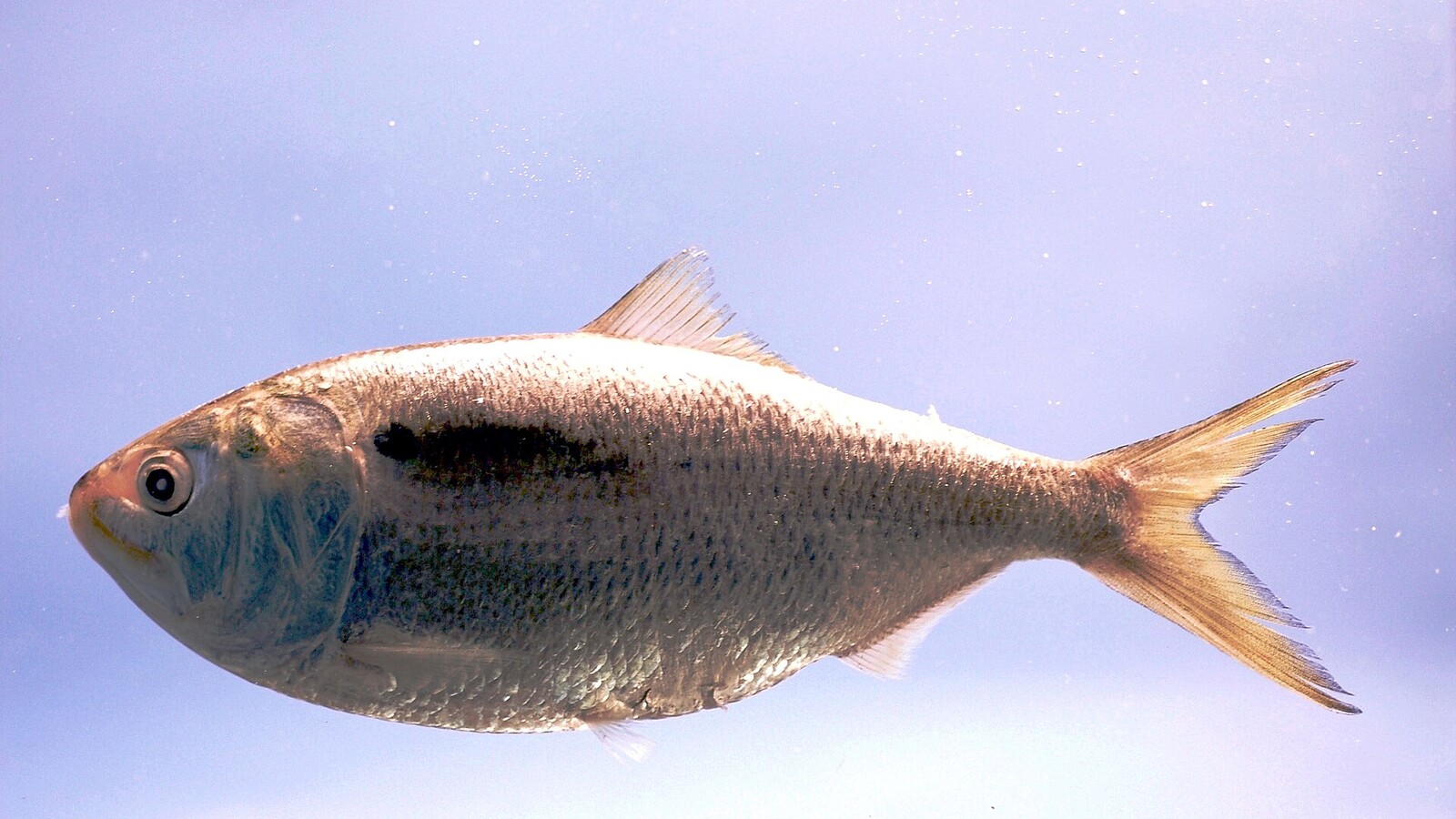
Look for a deep, silvery body, forked tail, blunt head, yellowish fins, and a dark shoulder spot behind the gill cover, sometimes followed by smaller spots.
Credits:
Facts: species reference. Images: primary and secondary, Wikimedia Commons.