
Island Glass Lizard
Ophisaurus compressus
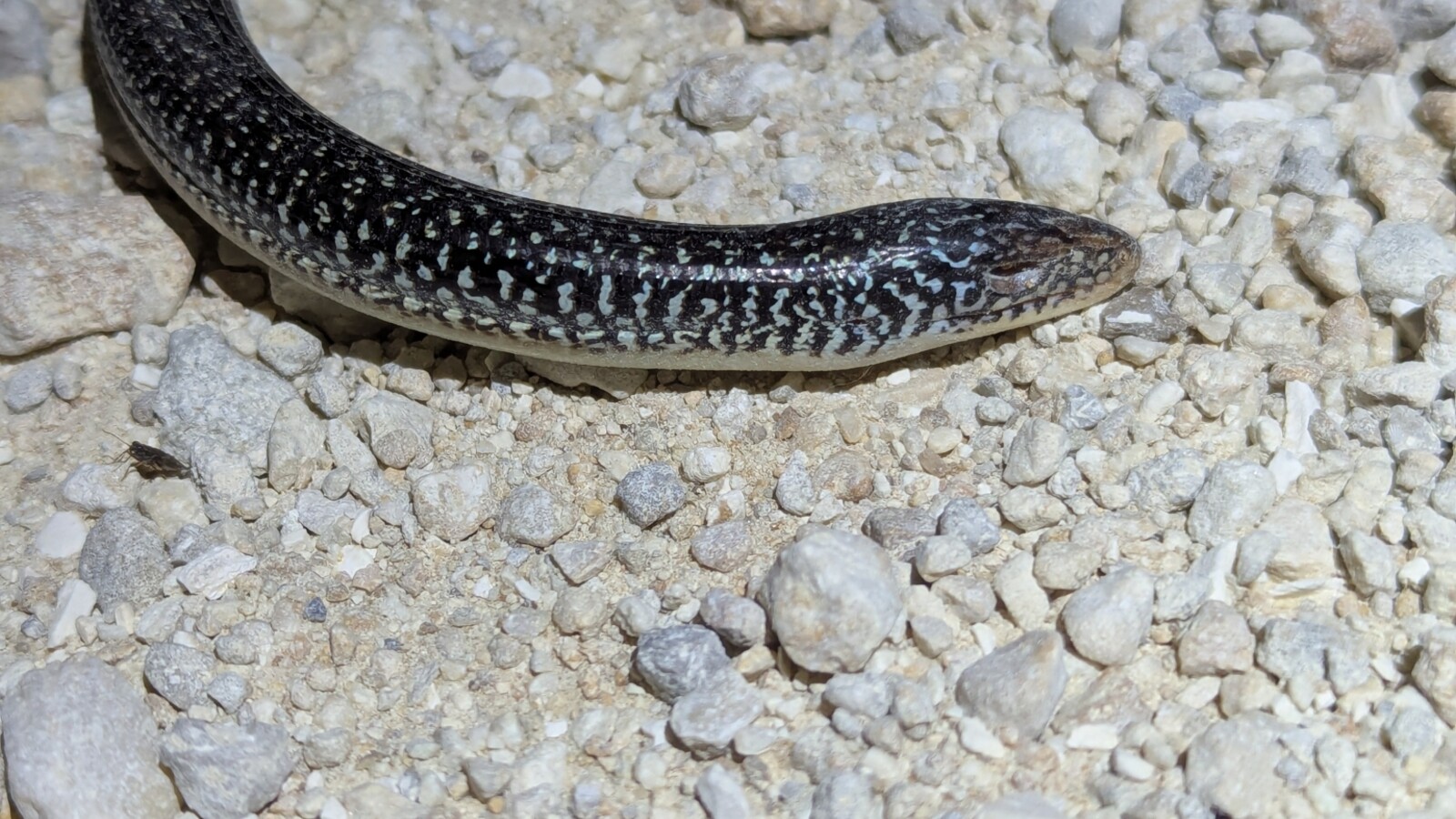
The Island Glass Lizard is a slender, legless Florida lizard of sandy coastal habitats, scrub, and pine flatwoods.
The Island Glass Lizard looks snake-like but is a true lizard. Movable eyelids, visible external ear openings, and a lateral body groove distinguish it from snakes.
This uncommon and secretive Florida native lives in dry, sandy habitats where it moves through grass, leaf litter, and loose soil. Its long tail can break away when the animal is threatened.
Habitat:
Beaches and Dunes, Pine Flatwoods and Sandhills, Scrub and Dry Prairie
Area / Range:
North Florida, Central Florida, South Florida
Diet:
Eats insects, spiders, and other small invertebrates. Larger individuals may also take small vertebrates when available.
Behavior:
Secretive and mostly active during the day or toward evening. It shelters beneath vegetation, natural debris, and loose sandy soil. When grabbed, it can detach part of its tail, which may later regrow but costs the animal energy.
Day, Dusk
Active Times:
Best time to see:
Warm days in sandy scrub, coastal grass, or pine flatwoods, especially after light rain
Florida Native Status:
Native
Conservation Status:
Not federally listed and assessed as Least Concern globally, but local populations can be vulnerable to coastal development, habitat fragmentation, road mortality, and loss of native ground cover.
Safety Level:
Low Risk
Safety Information:
Nonvenomous and harmless to people and pets. Avoid handling because the tail can break off. If one is found in danger, allow it to move away or gently direct it toward nearby cover.
Benefits to Property:
Preys on insects and spiders and adds biodiversity to sandy native landscapes. Properties with intact ground cover and limited pesticide use can provide useful habitat.
Property Concerns:
It does not damage buildings or plants. Individuals may be injured by mowers, vehicles, pets, or debris removal. Check sandy ground cover before mowing or clearing.
Fun Fact:
Despite its snake-like body, this animal can blink and has visible ear openings. The name glass lizard refers to its ability to break its tail into pieces when threatened.
Wildlife Laws:
This species is not federally listed. General Florida wildlife laws and protected-land collection rules apply. Do not collect animals from parks, preserves, or other protected property without authorization.
Identification:
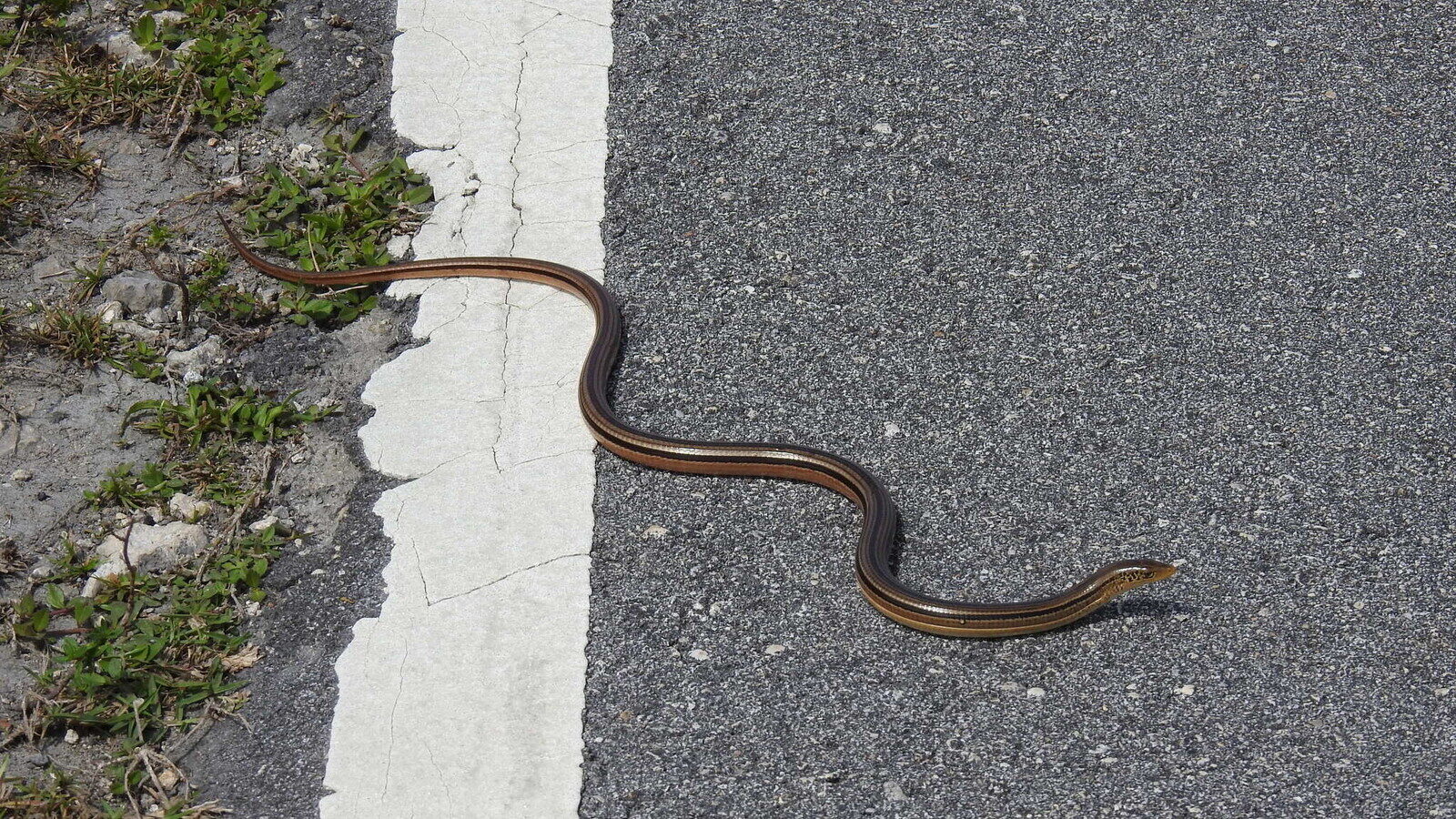
Adults are usually 15 to 24 inches long, with much of that length in the tail. The body is tan, brown, or yellowish with a dark stripe on each side above the lateral groove and often a thin dark stripe along the back.
Look for movable eyelids, external ear openings, and a stiff lateral groove. These features confirm that it is a legless lizard rather than a snake.