
Key Deer
Odocoileus virginianus clavium
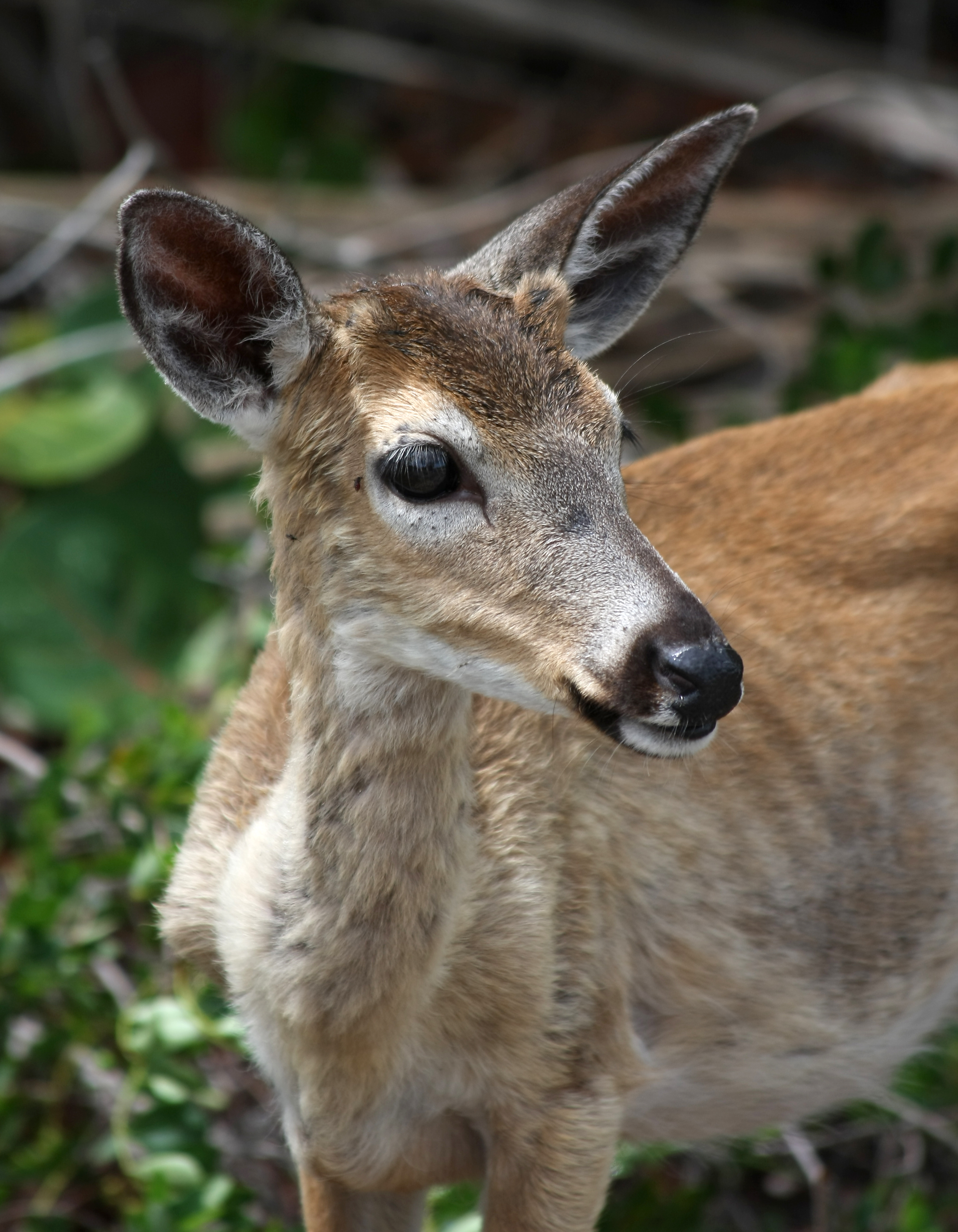
The Key Deer is the smallest subspecies of white-tailed deer in North America.
The Key Deer is the smallest subspecies of white-tailed deer in North America. Drive slowly in Key Deer habitat. Never feed, touch, chase, or block a deer’s movement. Federally endangered and protected. Feeding, harming, possessing, or harassing Key Deer is illegal.
Habitat:
Freshwater Wetlands, Mangroves and Salt Marshes, Pine Flatwoods and Sandhills, Forests and Woodlands
Area / Range:
Florida Keys
Diet:
Leaves, grasses, fruits, flowers, and mangrove vegetation.
Behavior:
Moves among islands and often swims between Keys. Some individuals lose their fear of people.
Day, Dawn, Dusk
Active Times:
Best time to see:
Observe from a respectful distance in suitable Florida habitat.
Florida Native Status:
Native
Conservation Status:
Federally endangered
Safety Level:
Harmless. Do Not Feed
Safety Information:
Drive slowly in Key Deer habitat. Never feed, touch, chase, or block a deer’s movement.
Benefits to Property:
Helps shape native plant communities through browsing and seed movement.
Property Concerns:
Vehicle collisions, feeding, loose dogs, and unsecured trash create serious risks.
Fun Fact:
The Key Deer is the smallest subspecies of white-tailed deer in North America.
Wildlife Laws:
Federally endangered and protected. Feeding, harming, possessing, or harassing Key Deer is illegal.
Identification:
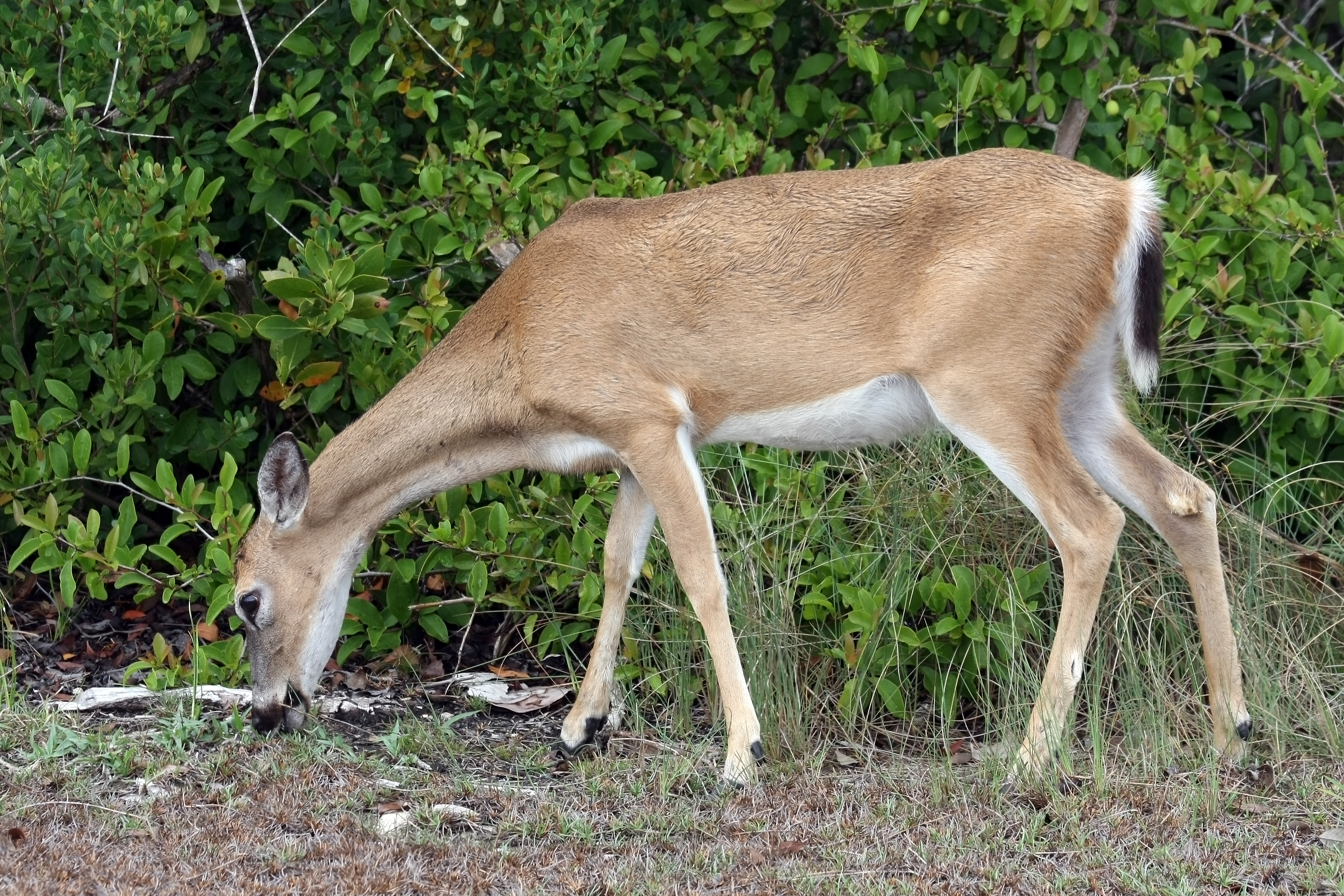
Very small white-tailed deer with a compact body, slender legs, and large ears.
Credits:
Facts: wildlife reference. Images: Wikimedia Commons.