
King Rail
Rallus elegans
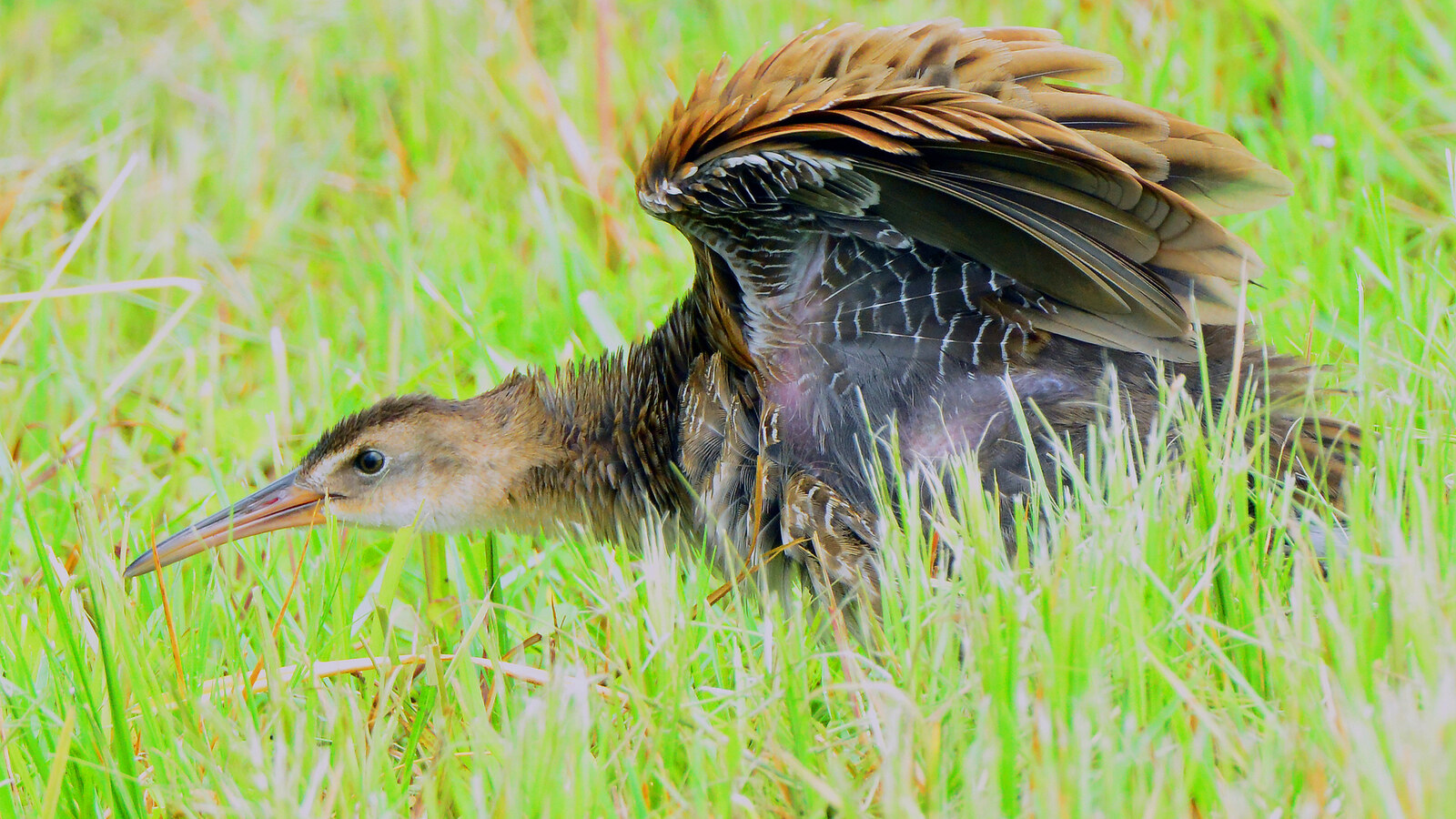
The King Rail is a large, secretive marsh bird whose rusty plumage and deep calls reveal healthy Florida wetlands.
King Rails live in broad freshwater marshes and brackish wetlands with shallow water, dense reeds, and open feeding edges.
Florida supports resident birds and seasonal movement. Drainage, saltwater intrusion, and fragmented marsh cover remain their largest long-term pressures.
Habitat:
Freshwater Wetlands, Estuaries and Bays, Mangroves and Salt Marshes
Area / Range:
Statewide
Diet:
Crayfish, crabs, aquatic insects, frogs, small fish, snails, and seeds gathered in shallow water and wet soil.
Behavior:
King Rails walk through dense cover, probe mud, and swim across narrow channels. Pairs defend nesting territories with loud repeated calls.
Dawn, Dusk, Night
Active Times:
Best time to see:
Dawn and dusk in spring and summer along quiet freshwater marsh edges.
Florida Native Status:
Native
Conservation Status:
A declining marsh specialist. Florida populations depend on large, well-managed wetlands with stable shallow water.
Safety Level:
Low Risk
Safety Information:
King Rails pose no danger. Keep pets and people away from nesting marsh cover and avoid playback near territorial birds.
Benefits to Property:
They consume crayfish, insects, and other small wetland animals and indicate a functioning marsh ecosystem.
Property Concerns:
No direct property damage. Mowing, draining, or spraying wetland margins removes food and nesting cover.
Fun Fact:
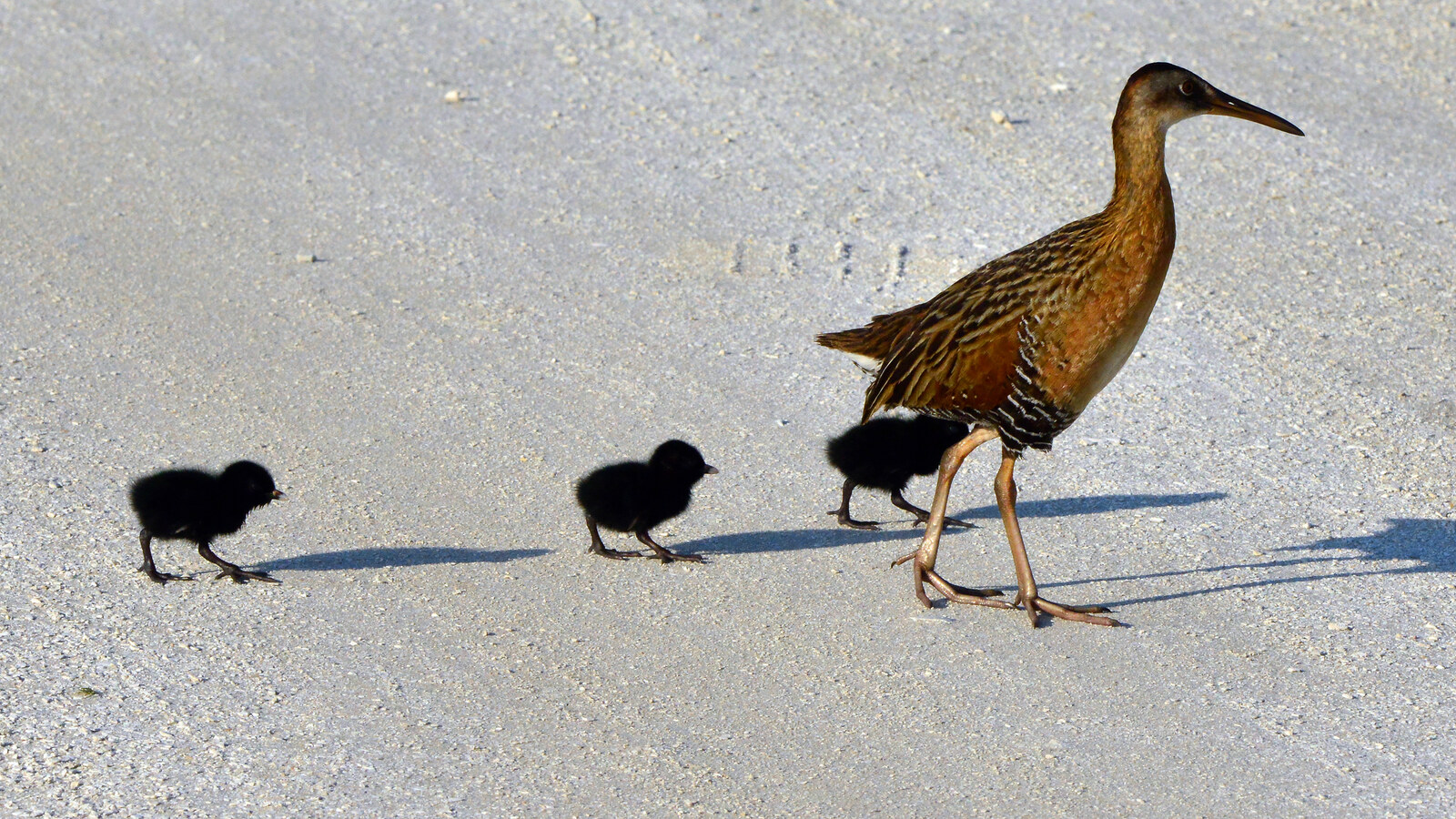
King Rail chicks leave the nest soon after hatching and follow their parents through shallow marsh vegetation.
Wildlife Laws:
Protected under the Migratory Bird Treaty Act. Any hunting must follow current federal and Florida rail seasons, limits, licenses, and approved methods.
Identification:
Look for a long slightly curved bill, rusty face and breast, brown patterned back, and bold black-and-white bars on the flanks. It is larger and warmer colored than most other rails.
Credits:
Facts: Cornell Lab of Ornithology. Photos: iNaturalist King Rail observations.