
Laughing Gull
Leucophaeus atricilla
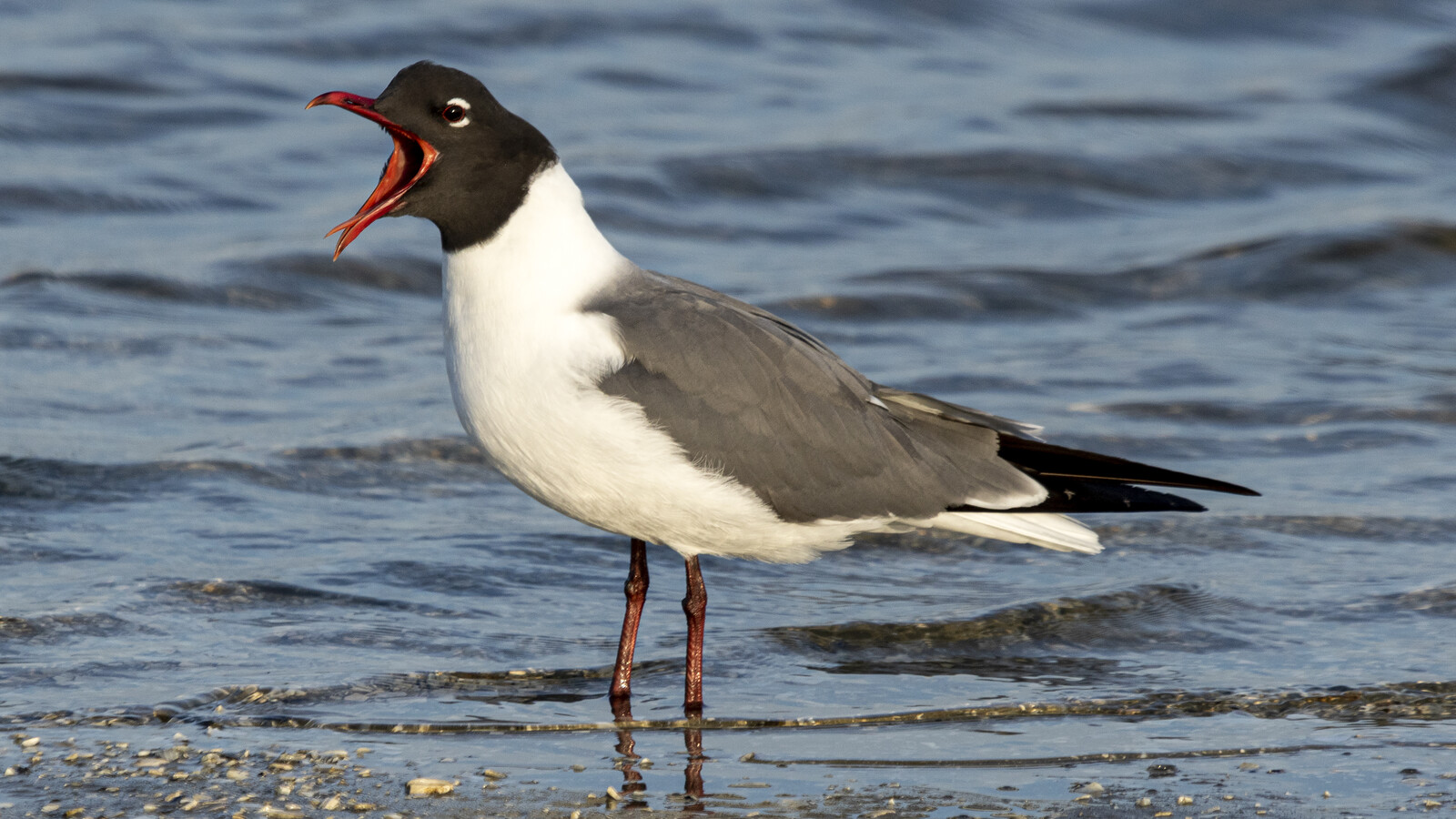
The Laughing Gull is Florida’s familiar coastal gull, recognized in breeding season by its black hood, red bill, gray back, and laughing call.
Laughing Gulls thrive along both Florida coasts and readily use beaches, bays, marinas, parking lots, and waterfront neighborhoods. Their numbers often rise around fishing activity and unsecured food.
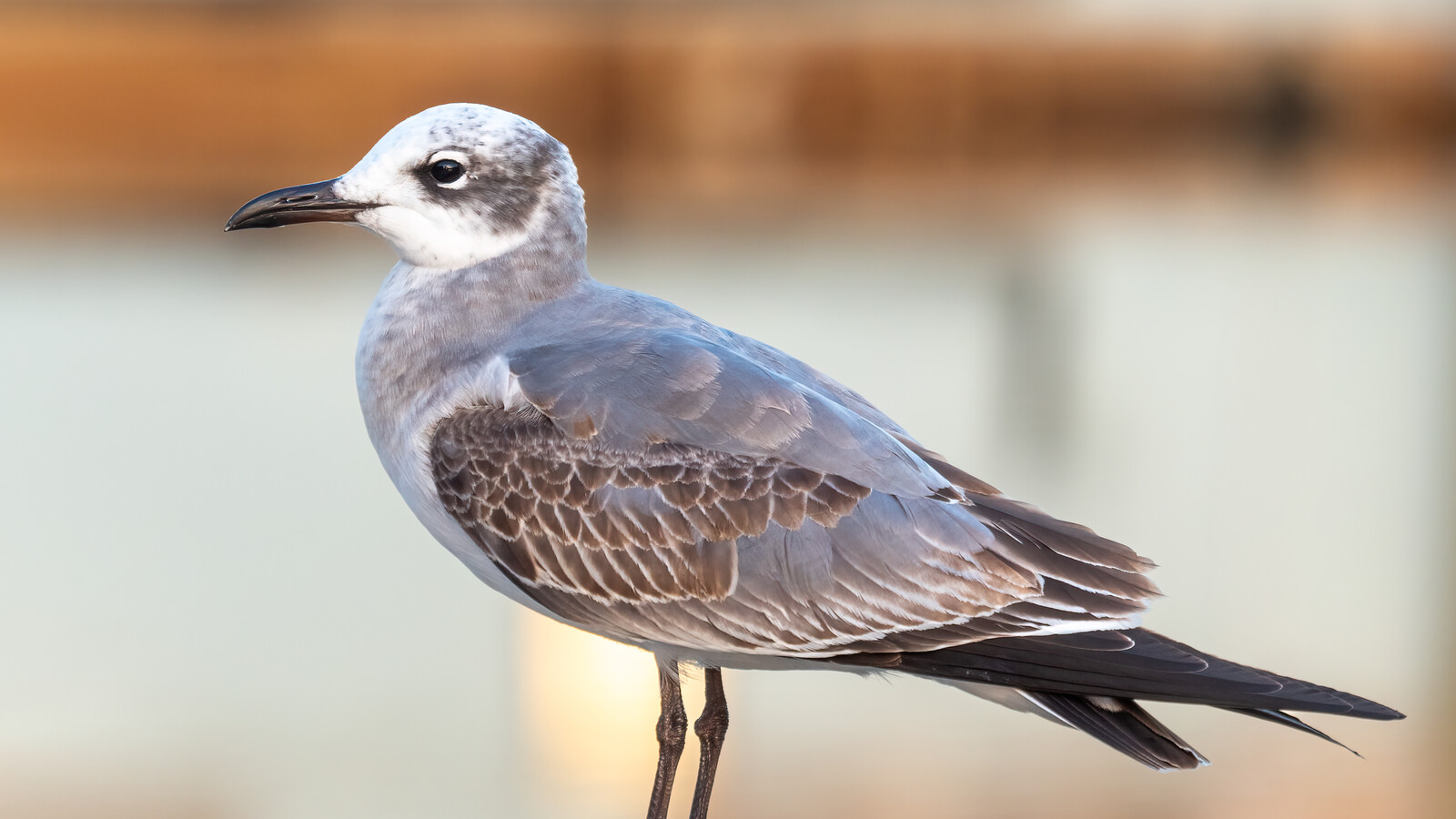
Breeding adults wear a dark hood. Young birds and winter adults look paler, so bill shape, dark wingtips, and voice help with identification.
Habitat:
Coastal Waters, Beaches and Dunes, Estuaries and Bays, Urban and Residential Areas
Area / Range:
Atlantic Coast, Gulf Coast
Diet:
They eat fish, crabs, marine invertebrates, insects, eggs, carrion, and discarded human food.
Behavior:
Laughing Gulls gather in active flocks, patrol shorelines, follow boats, and steal food from other birds. They nest colonially on protected coastal islands and marshes.
Day
Active Times:
Best time to see:
Daytime along beaches, fishing piers, marinas, causeways, and coastal parking areas.
Florida Native Status:
Native
Conservation Status:
Common and widespread, though nesting colonies remain vulnerable to disturbance, predators, and coastal habitat loss.
Safety Level:
Low Risk
Safety Information:
Secure trash, never feed gulls, and keep pets away from grounded chicks. Avoid nesting areas and report injured or entangled birds to a licensed wildlife rehabilitator.
Benefits to Property:
They remove carrion and food waste and consume insects and small coastal prey.
Property Concerns:
Food-conditioned gulls tear open trash, leave droppings, crowd docks, and become bold around outdoor dining. Nesting birds may defend rooftops or nearby colony sites.
Fun Fact:
The species receives its name from a repeated call that sounds like laughter. Florida birds may retain partial dark head markings well into winter.
Wildlife Laws:
Laughing Gulls, their active nests, eggs, and young are protected under the Migratory Bird Treaty Act. Do not remove or disturb an active nest without required authorization.
Identification:
Breeding adults have a black hood, white eye arcs, a reddish bill, dark gray wings, and black wingtips. Immatures are mottled brown and gray. The call sounds like a loud series of laughing notes.
Credits:
Facts: species reference. Images: primary and secondary, Wikimedia Commons.