
Mudflat Fiddler Crab
Minuca rapax
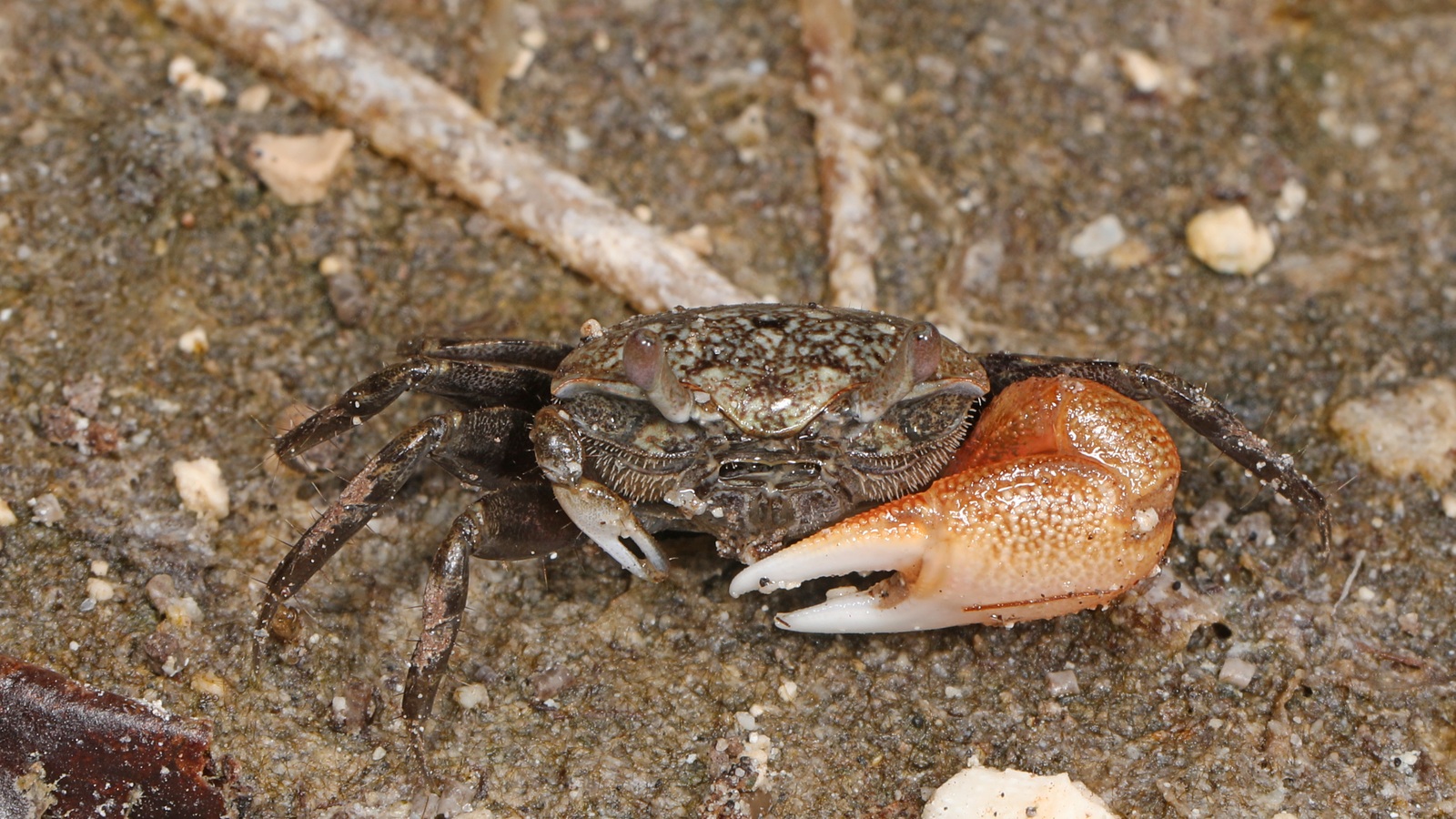
A small tidal crab whose males wave one oversized claw across Florida mangrove edges, salt marshes, and sheltered mudflats.
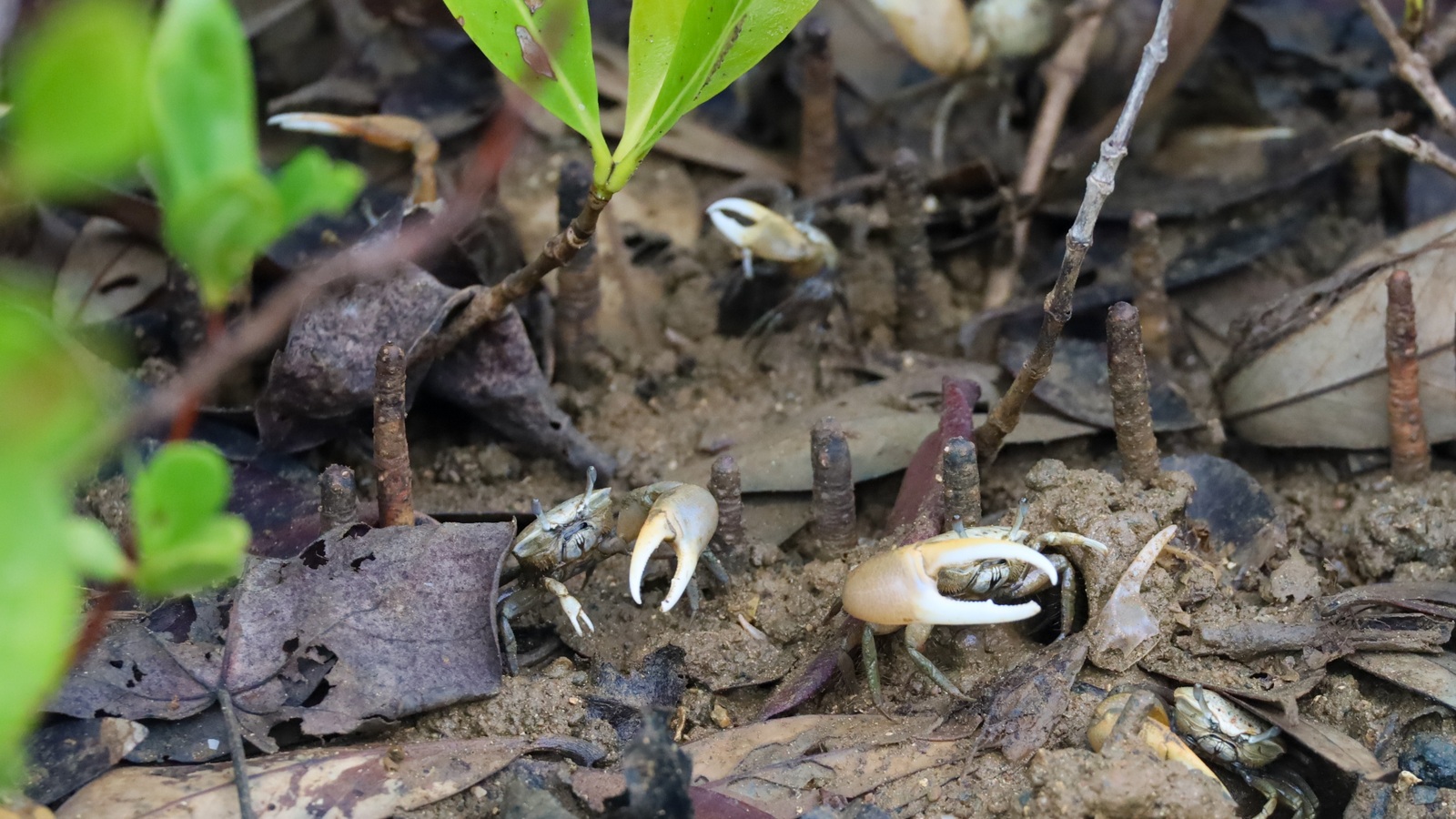
Mudflat Fiddler Crabs build burrows in soft intertidal sediment and emerge as the tide falls. Dense colonies process surface material and aerate wet soils.
Males use an enlarged claw for courtship displays and territorial contests. The smaller claw handles feeding while the large claw signals.
Habitat:
Estuaries and Bays, Mangroves and Salt Marshes, Beaches and Dunes
Area / Range:
Florida Keys, Atlantic Coast, Gulf Coast
Diet:
Filters algae, bacteria, and organic particles from wet sediment and returns cleaned sand or mud as small pellets.
Behavior:
Lives in colonies, retreats into burrows at high tide or when threatened, and becomes active on exposed mud during falling and low tides.
Daytime, Dawn and Dusk
Active Times:
Best time to see:
Falling or low tide on warm days along sheltered mud and mangrove edges.
Florida Native Status:
Native
Conservation Status:
Not listed; dependent on intact intertidal mudflat and marsh habitat.
Safety Level:
Low
Safety Information:
Harmless when left alone. Avoid digging into colonies or handling crabs because legs and claws are easily injured.
Benefits to Property:
Burrowing aerates tidal sediment, recycles nutrients, and provides food for fish and shorebirds.
Property Concerns:
Burrows are a normal part of healthy tidal habitat and do not damage properly designed coastal landscapes.
Fun Fact:
- Only males develop the oversized signaling claw.
- The large claw cannot feed; the small claw does the work.
- Burrows provide protection from heat, predators, and rising water.
Wildlife Laws:
Recreational collection, bait harvest, protected-area rules, and fishing-license requirements may apply. Check current FWC regulations before taking crabs.
Identification:
Small square-bodied crab with tall eye stalks. Males have one greatly enlarged orange, white, or reddish claw; females have two smaller feeding claws.