
Northern Dwarf Siren
Pseudobranchus striatus
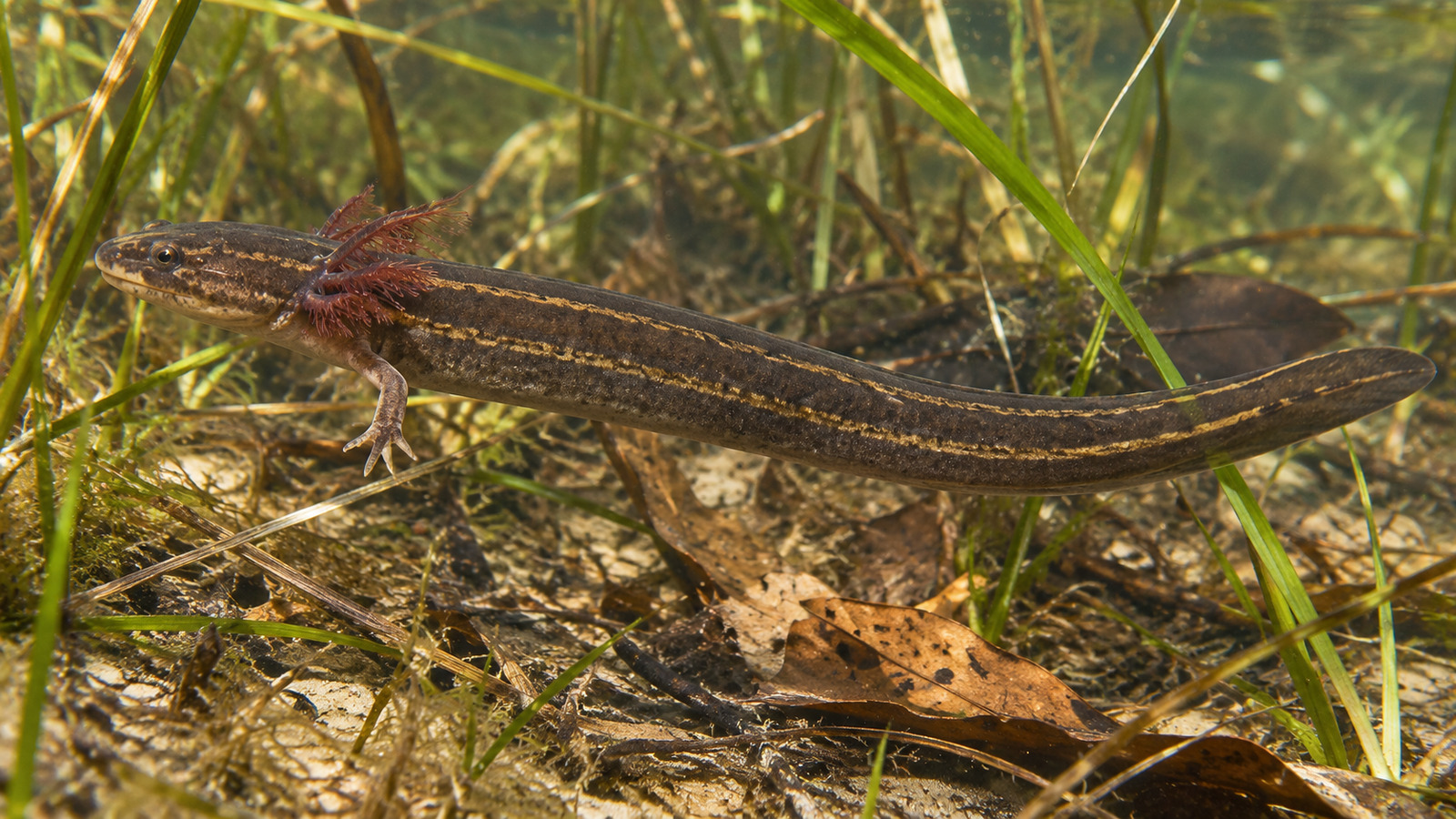
The Northern Dwarf Siren is a small aquatic salamander with an eel-like body, feathery external gills, tiny forelimbs, and pale lengthwise stripes.
The Northern Dwarf Siren is a permanently aquatic salamander of shallow, heavily vegetated wetlands in northern and central Florida. Its long slender body, external gills, and absence of hind limbs can make it look more like a small eel than a typical salamander.
It survives seasonal changes by hiding in dense vegetation and soft organic sediments. Healthy marsh edges, ponds, ditches, and cypress wetlands provide the cover and prey this secretive amphibian needs.
Habitat:
Freshwater Wetlands, Lakes and Ponds, Canals and Ditches
Area / Range:
Florida Panhandle, North Florida, Central Florida
Diet:
Aquatic insect larvae, tiny crustaceans, worms, snails, and other small invertebrates found among submerged plants and bottom debris.
Behavior:
Secretive and mostly nocturnal. It moves through dense aquatic vegetation, burrows into soft mud and leaf litter, and can remain concealed during dry periods when shallow wetlands contract.
Night
Active Times:
Best time to see:
Look after dark or following warm rains in shallow, plant-filled ponds, marsh edges, cypress wetlands, and quiet ditches. Observe without disturbing bottom sediments.
Florida Native Status:
Native
Conservation Status:
Native wetland species and not federally listed. Local populations depend on intact shallow wetlands, natural hydroperiods, and good water quality.
Safety Level:
Harmless. Avoid Handling
Safety Information:
This small salamander is harmless to people and pets. Its delicate skin and external gills are easily injured, so observe it in place and avoid handling.
Benefits to Property:
Consumes mosquito larvae and other small aquatic invertebrates and serves as prey for fish, wading birds, snakes, and larger wetland animals.
Property Concerns:
It causes no property damage. Draining shallow wetlands, removing all aquatic vegetation, or allowing fertilizer and pesticide runoff can eliminate suitable habitat.
Fun Fact:
Unlike most salamanders, dwarf sirens retain external gills throughout life and have only one pair of tiny legs. They can also produce faint clicking or squeaking sounds when disturbed.
Wildlife Laws:
Follow current Florida wildlife and protected-area rules before capturing or possessing native amphibians. Never release captive animals or move wild sirens between wetlands.
Identification:
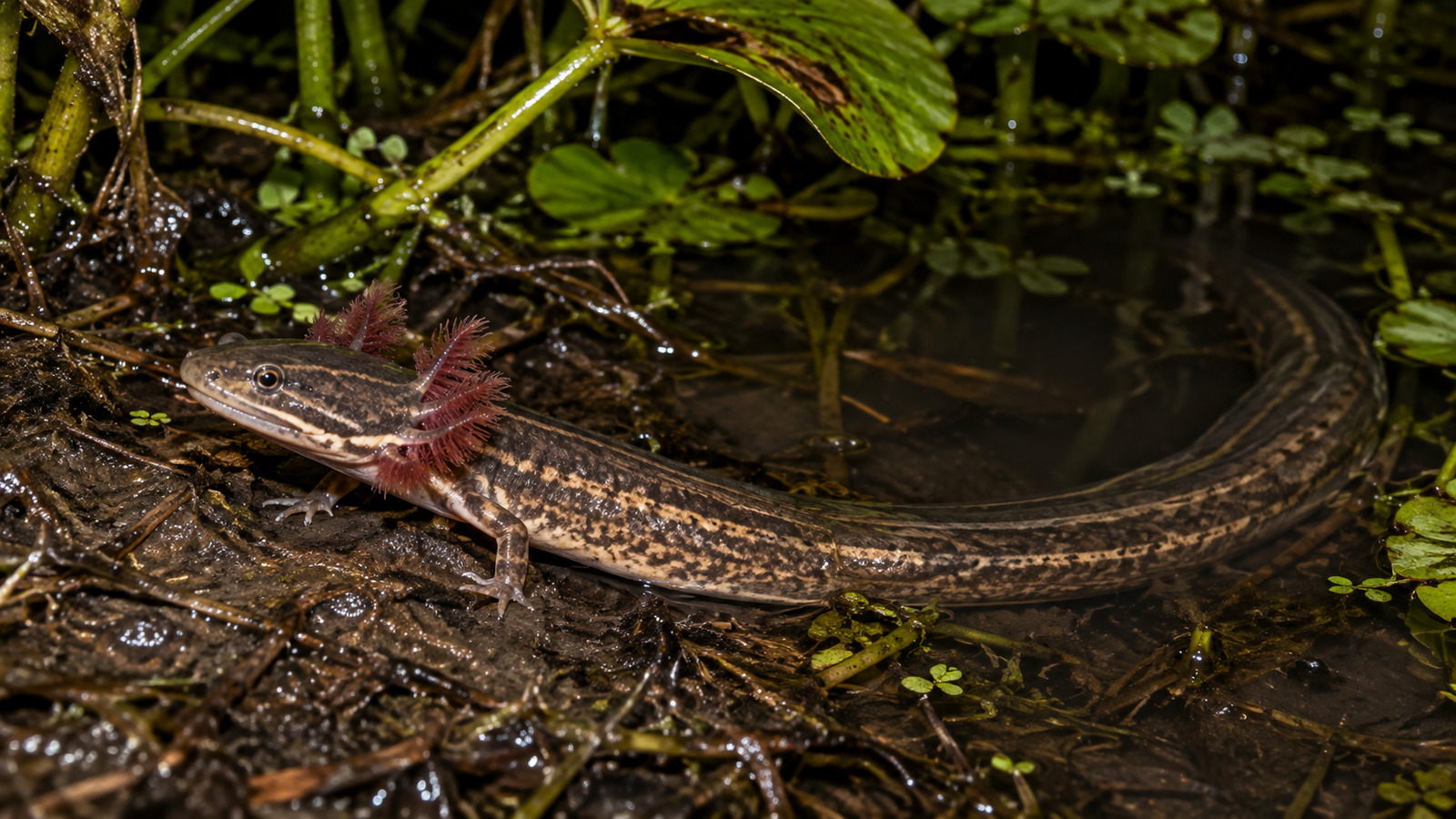
Look for a narrow eel-like salamander with bushy red external gills, two very small forelimbs, no hind limbs, and a fin along the tail. The dark olive to brown body usually has one or more pale tan or yellowish stripes along each side.
Adults are much smaller and more slender than Greater or Lesser Sirens. The combination of external gills, forelimbs only, and lengthwise striping is distinctive.