
Ornate Chorus Frog
Pseudacris ornata
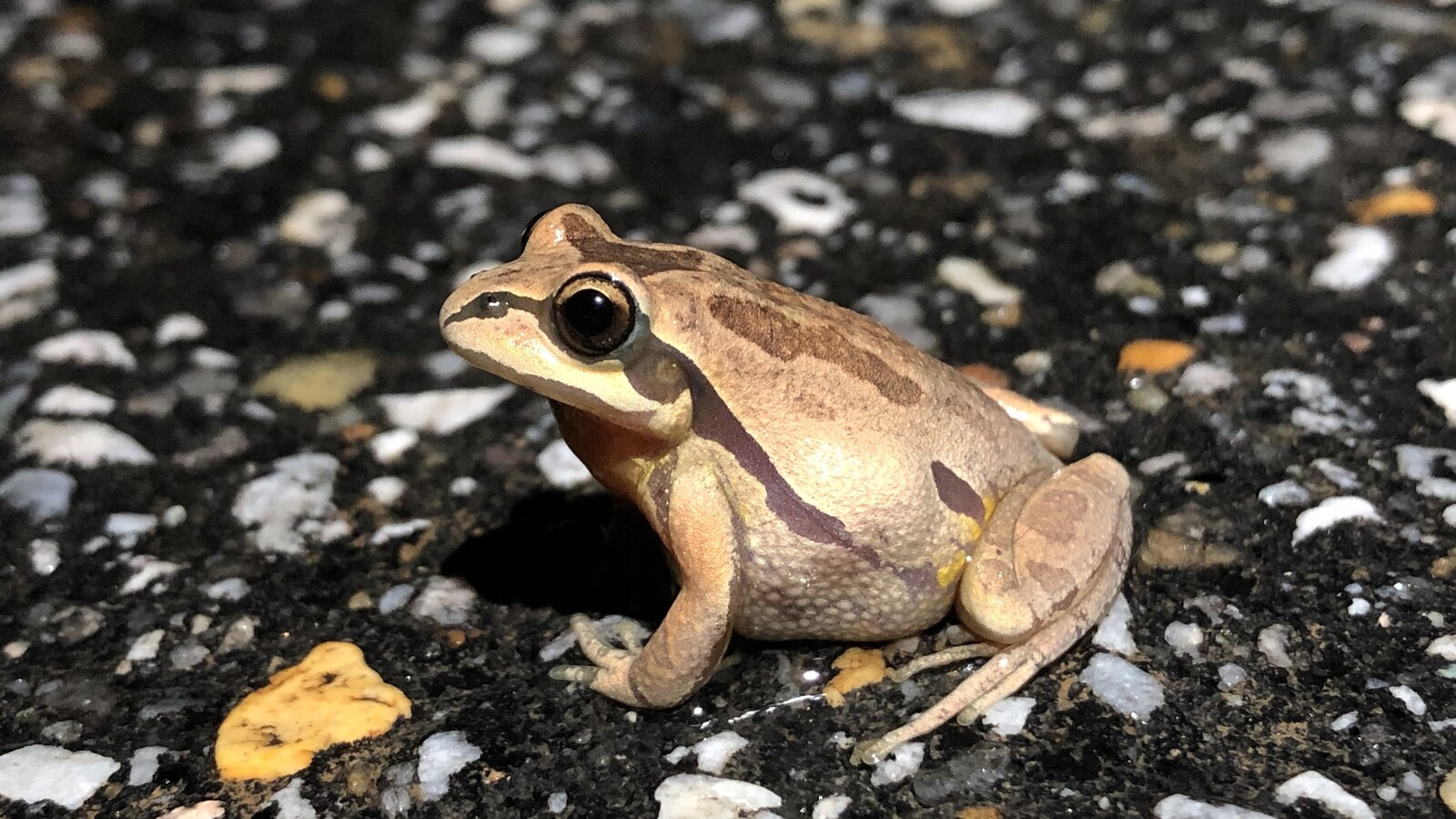
The Ornate Chorus Frog is a boldly patterned winter-breeding frog of temporary ponds and sandy Florida uplands.
Ornate Chorus Frogs spend much of the year hidden in burrows, leaf litter, and loose soil near pine flatwoods and sandhills.
Cool seasonal rains draw adults to shallow temporary ponds where fish are absent and tadpoles develop quickly.
Habitat:
Freshwater Wetlands, Pine Flatwoods and Sandhills, Grasslands and Agricultural Areas
Area / Range:
Florida Panhandle, North Florida, Central Florida
Diet:
Small insects, spiders, beetles, and other ground-dwelling invertebrates.
Behavior:
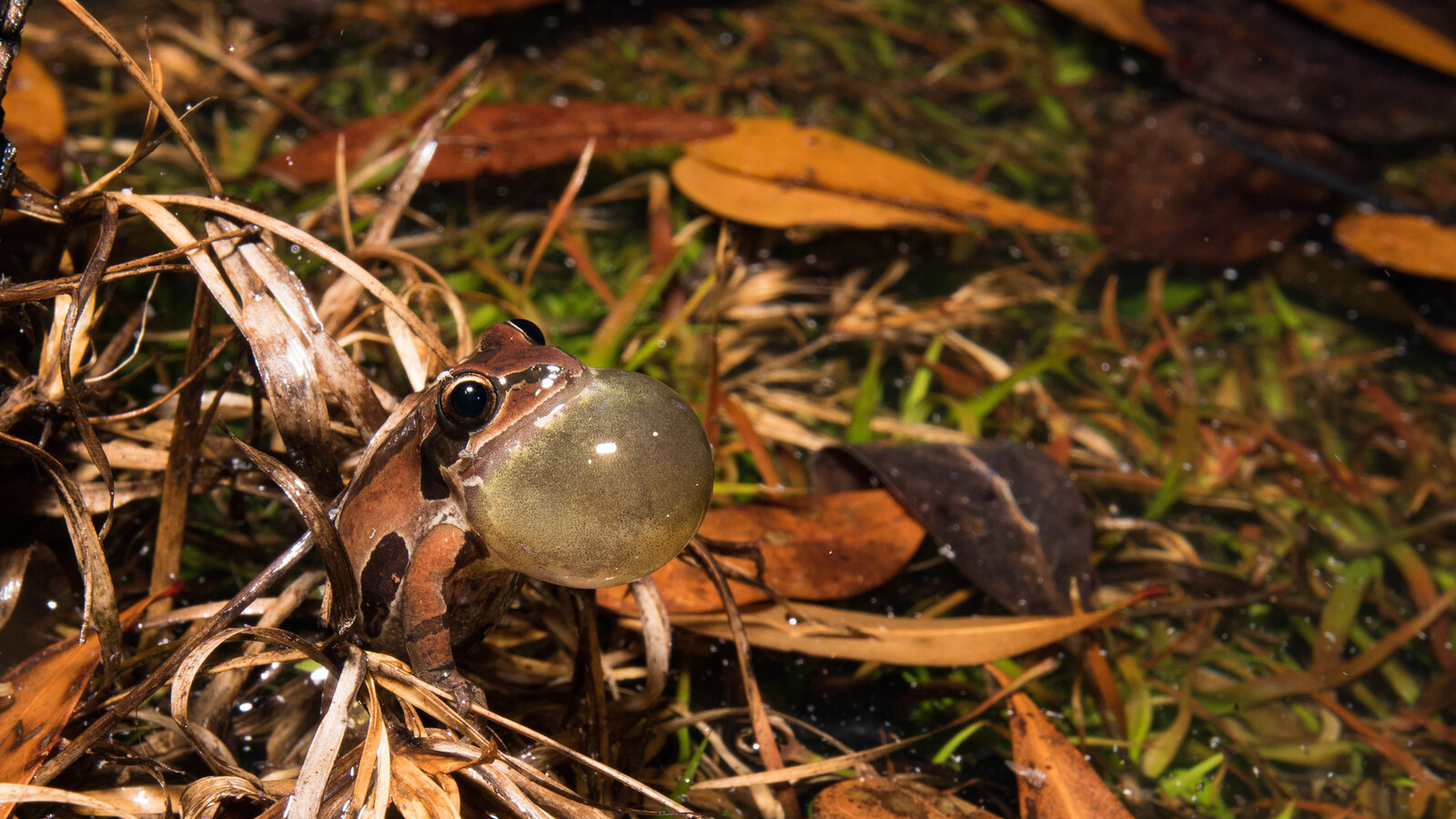
Mostly hidden outside the breeding season. Males call from shallow water after cool-season rain with a sharp metallic note.
Night, Dusk
Active Times:
Best time to see:
Rainy winter nights near temporary ponds in intact pine flatwoods and sandhills.
Florida Native Status:
Native
Conservation Status:
Locally declining where temporary ponds are drained, stocked with fish, or isolated from upland habitat.
Safety Level:
Low Risk
Safety Information:
Harmless. Observe without handling and keep soaps, repellents, and lawn chemicals away from amphibians and ponds.
Benefits to Property:
Adults consume insects and tadpoles add energy and nutrients to temporary pond food webs.
Property Concerns:
No property damage. Filling shallow seasonal ponds or mowing their upland buffer removes breeding habitat.
Fun Fact:
Breeding often peaks during cooler months when many other Florida frogs are quiet.
Wildlife Laws:
Native frogs must not be collected, sold, transported, or kept contrary to Florida rules. Leave eggs, tadpoles, and adults in place.
Identification:
A stout small frog in gray, reddish, greenish, or brown tones with a dark stripe through the eye, dark side blotches, and bright yellow or orange color hidden inside the thighs.
Credits:
Facts and photos: iNaturalist Ornate Chorus Frog. Amphibian guidance: Florida FWC.