
Phaon Crescent
Phyciodes phaon

The Phaon Crescent is a small orange, black, and cream butterfly commonly found around frogfruit in Florida lawns, roadsides, dunes, and open ground.
Phaon Crescents stay close to low patches of frogfruit, their primary caterpillar host. Adults fly a few feet above the ground and visit small flowers in sunny open areas.
Maintaining unmowed frogfruit patches gives the butterfly places to lay eggs and feed. Frequent mowing and broad insecticide use remove both host plants and developing caterpillars.
Habitat:
Grasslands and Agricultural Areas, Beaches and Dunes, Urban and Residential Areas
Area / Range:
Statewide
Diet:
Adults nectar on frogfruit, asters, and other low flowers. Caterpillars feed mainly on frogfruit leaves.
Behavior:
It flies low and quickly, basks with open wings, and repeatedly returns to host-plant patches for feeding, courtship, and egg laying.
Day
Active Times:
Best time to see:
Warm sunny days around blooming frogfruit in lawns, roadside edges, parks, dunes, and open fields.
Florida Native Status:
Native
Conservation Status:
Secure and not listed as threatened. Local abundance depends strongly on frogfruit and reduced pesticide exposure.
Safety Level:
Low Risk
Safety Information:
This butterfly does not bite, sting, or threaten people, pets, or plants.
Benefits to Property:
Adults pollinate small flowers and add wildlife value to low native groundcover plantings.
Property Concerns:
Caterpillar feeding on frogfruit is minor. Avoid treating the host patch because the plant normally recovers without help.
Fun Fact:
Frogfruit works as both a nectar plant for adults and a nursery plant for the caterpillars.
Wildlife Laws:
No special Florida listing applies. Collecting without permission is prohibited on many protected public lands.
Identification:
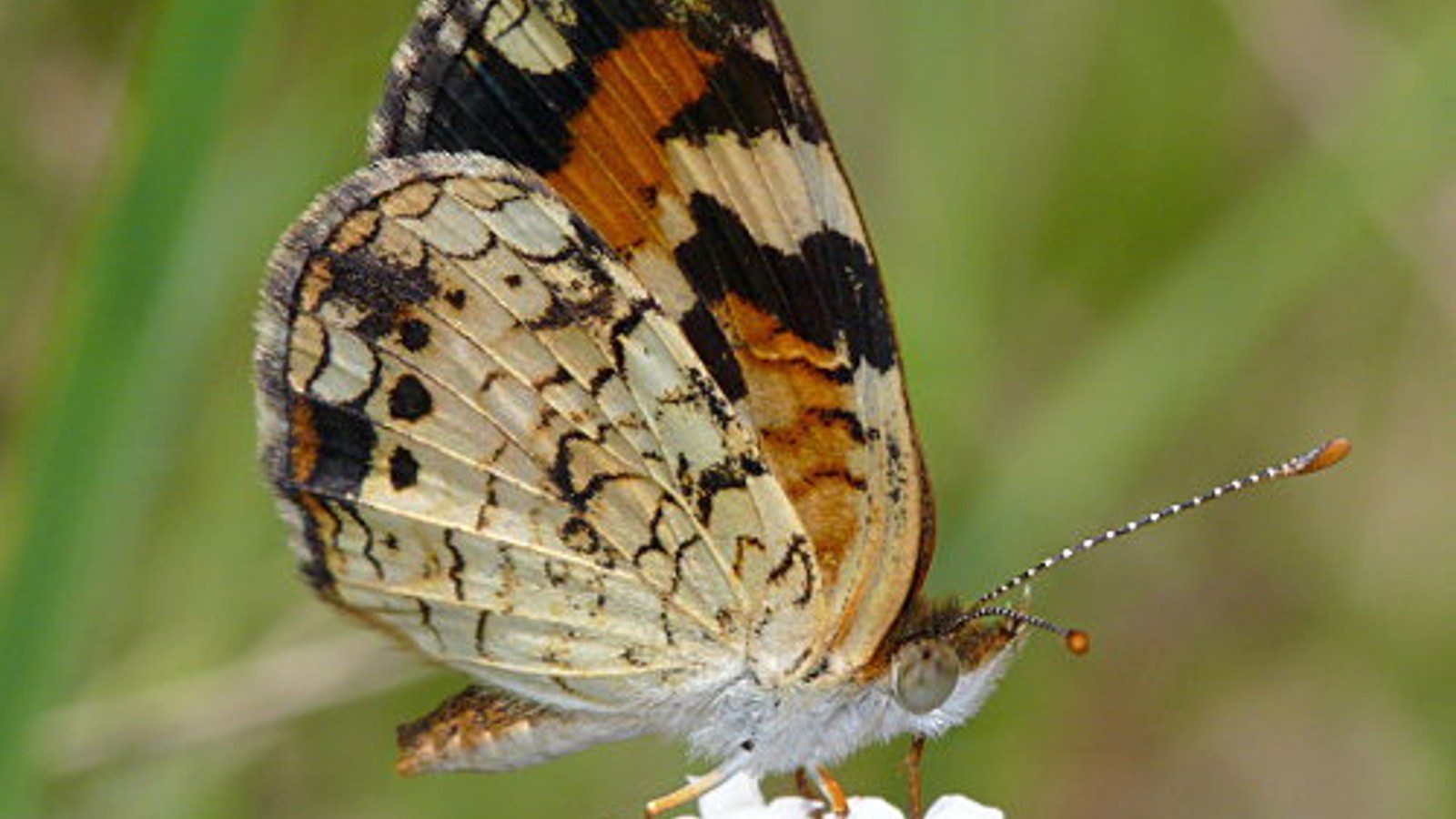
The wings show orange and black checkering with a pale cream band crossing the forewing. The underside is lighter with fine brown markings and small orange accents.
Credits:
Facts and primary image: Butterflies and Moths of North America. Secondary image: Carolina Nature.